
Inside Look: How Flood Insurance Companies Are Gaming the System in South Florida
In particular, flood insurance companies are re-evaluating what kind of coverage they can provide to coastal areas with greater threat of flooding, storm surge, and unpredictable weather.
It is indisputable that the Earth’s climate is changing, just as it always has throughout history. Most of these climate changes are attributed to small variations in Earth’s orbit that change the amount of solar energy the planet receives, but experts argue that the current warming trend might have been accelerated by human activity. Regardless of the driving force, scientists have observed shrinking ice sheets, extreme weather patterns, an increase in global temperatures, and sea levels rising.
Notorious for being risk-averse, the insurance industry has taken the lead in researching climate change and the risks it poses to their business. In particular, flood insurance companies are re-evaluating what kind of coverage they can provide to coastal areas with greater threat of flooding, storm surge, and unpredictable weather. Peter Höppe, who heads Geo Risks Research at the reinsurance giant Munich Re, said “The rise in sea level caused by climate change will further increase the risk of storm surge.”
Since insurers bear the ultimate risk, they are comfortable with the scientific literature and consensus on climate change, which right-wing circles like Florida’s Governor, Rick Scott, deny. Insurance coverage, however, is based on scientific thought and is therefore less sensitive to politicized debate. Last year alone, natural disasters in the United States generated $35 billion in privately insured property losses, $11 billion more than the average over the last decade. Low-lying coastal areas like Miami-Dade, Broward, and Palm Beach counties are most susceptible to greater damages from flooding, which could double the average annual losses from excess water by 2030.
Miami Beach is a barrier island that lies a few feet above sea level. The Federal Emergency Management Agency (FEMA) has classified much of the City of Miami and surrounding areas as a Special Flood Hazard Area (SFHA), which has the highest risk of flooding. Anyone wishing to purchase a home in an SFHA area is required by their lender to purchase flood insurance through the National Flood Insurance Program (NFIP). However, since no flood risk is considered uninsurable by the NFIP, property owners are sheltered from more volatile weather patterns.
NFIP was originally founded in the 1960s when private insurance companies refused to cover flood-prone homes because they were deemed too risky, the assumption being that people wouldn’t stay in these areas permanently. Asking those homeowners to move may seem like a simple solution, but buyers aren’t willing to purchase properties that have a history of flooding and disaster buyout programs are underfunded.
In addition to perpetuating a cycle that hurts the people it was designed to help, NFIP leaves government and federal taxpayers as the ones shouldering the damage caused by flooding. Because the government is responsible for covering any NFIP losses, private flood insurance companies end up making more money when a big storm hits. Along the Gulf Coast in Florida, 1% of the homes insured by the NFIP account for 25% of claims made and these so called “repetitive loss properties” get paid out repeatedly. Many of these properties are second or vacation homes.
Despite the threat of stronger storms, VICE News reports that Miami’s waterfront real estate market hasn’t slowed down. Without a state income tax, property tax revenues from these properties will be necessary to continue funding the city’s infrastructure improvement efforts like raising streets above sea level and installing water pumps. By denying climate change, Governor Rick Scott has continued to usher in buyers and developers whose projects will be important tax revenue contributors. If people want to live in South Florida, the appropriate infrastructure investments will be pivotal in mitigating the risks posed by natural hazards.
Special thanks to: Ta-Shana Taylor, University of Miami’s Geological Sciences Department
Article by: Katya Demina
Tour The Hibiscus Island Contemporary Designed By Choeff Levy Fischman To Combat Sea-Level Rise
When it comes to designing for the future in Miami, architects and developers must take steps to protect against the elements, storms, etc. which can cause rigors to the property. Progressive architects like Miami-based Choeff Levy Fischman are using climate change and sea level rise as an opportunity to make a statement and create a solution for the future.
When it comes to designing for the future in Miami, architects and developers must take steps to protect against the elements, storms, etc. which can cause rigors to the property. Progressive architects like Miami-based Choeff Levy Fischman are using climate change and sea level rise as an opportunity to make a statement and create a solution for the future.
One of the globally-acclaimed architect's newly completed luxury waterfront homes on Miami Beach’s Hibiscus Island addresses two of the area’s major issues; sea-level rise and low, regularly flooded streets. They did this by incorporating elaborate grade changes to create a significantly steeper driveway and dramatic front entryway stairs all while making the residence accessible from the street and exceeding base flood elevation requirements. They also designed a system to filter storm water on-site, and retained additional site fill required to raise the residence to 10’ NGVD – the FEMA required base flood elevation.
Choeff Levy Fischman also designed the home to include several green features to help protect the home against Miami’s various natural elements including a full, onsite rainwater retention system. The architects designed a combination of swales, subsoil, and underground exfiltration trenches where water is cleaned, filtered and maintained on the property. The storm water is then naturally filtered and redirected to the City storm sewer. They also incorporated insulated glazing utilizing low-e film to minimize solar heat gain and glare. This green method also reduces energy impact costs, and a high Albedo roof membrane was installed to minimize heat and cooling loads. Choeff Levy Fischman also designed the south facing waterfront home to withstand hurricane winds, storm surges, and ongoing rising sea levels. The residence’s sea wall stands at 7.26 NGVD – the code requirement at the time of the design was 4.8 NGVD. The home also sits 22' to 26' away from the seawall, allowing for additional storm barriers. Choeff Levy Fischman anticipates forecasted sea level rise, and believes being proactive while practicing what they so often preach are just some ways these homes can sustain the test of time.
The home itself is a two-story, five-bedroom, five and a half bath residence that spans just short of 6,000 SF. They incorporated limestone flooring and accenting Cumaru wood throughout different areas of the home. The kitchen boasts carefully crafted Italian millwork and a designated bar area made of stained Italian Oak that comes with two Sub-zero wine coolers, one for reds, one for whites. Calacatta marble was integrated into the kitchen’s backsplash and countertops, and the kitchen island to brighten up the area. One of the signature features of the home are the pocketing sliding glass doors which blend indoor and outdoor living. They open to reveal a shaded limestone patio and pool area perfect for avoiding South Florida’s heat.
Upstairs was uniquely designed with a floating master bedroom suite offering bay views, Brazilian Oak wood floors, and walls of white stucco and warm Cumaru. The master bath includes a large soaking tub that sits across from the balcony facing the water and a large gray marble shower with glass swivel door.
Outside is an entertainment paradise complete with a bayside pool situated beneath the floating master bedroom suite and includes a cascading water feature. The grounds off a lush tropical ambiance with foliage including a Bamboo garden.
Enjoy the photo and video tours below:
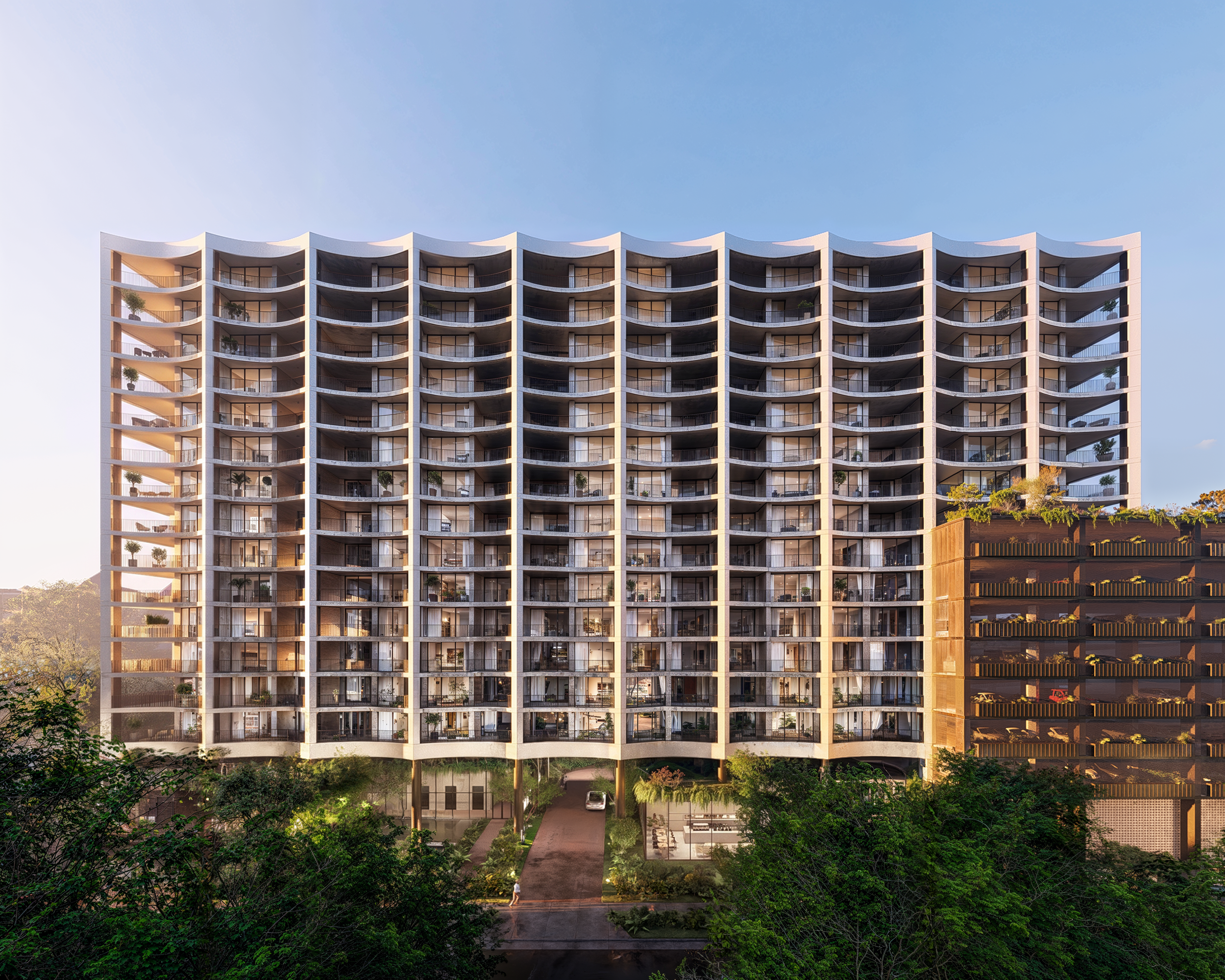
Mast Capital and BH Group have announced Raffles Residences Coconut Grove, the brand’s first standalone residential development, with 35 homes from $4.5 million and architecture by Brandon Haw.