
Inside Look: How Flood Insurance Companies Are Gaming the System in South Florida
In particular, flood insurance companies are re-evaluating what kind of coverage they can provide to coastal areas with greater threat of flooding, storm surge, and unpredictable weather.
It is indisputable that the Earth’s climate is changing, just as it always has throughout history. Most of these climate changes are attributed to small variations in Earth’s orbit that change the amount of solar energy the planet receives, but experts argue that the current warming trend might have been accelerated by human activity. Regardless of the driving force, scientists have observed shrinking ice sheets, extreme weather patterns, an increase in global temperatures, and sea levels rising.
Notorious for being risk-averse, the insurance industry has taken the lead in researching climate change and the risks it poses to their business. In particular, flood insurance companies are re-evaluating what kind of coverage they can provide to coastal areas with greater threat of flooding, storm surge, and unpredictable weather. Peter Höppe, who heads Geo Risks Research at the reinsurance giant Munich Re, said “The rise in sea level caused by climate change will further increase the risk of storm surge.”
Since insurers bear the ultimate risk, they are comfortable with the scientific literature and consensus on climate change, which right-wing circles like Florida’s Governor, Rick Scott, deny. Insurance coverage, however, is based on scientific thought and is therefore less sensitive to politicized debate. Last year alone, natural disasters in the United States generated $35 billion in privately insured property losses, $11 billion more than the average over the last decade. Low-lying coastal areas like Miami-Dade, Broward, and Palm Beach counties are most susceptible to greater damages from flooding, which could double the average annual losses from excess water by 2030.
Miami Beach is a barrier island that lies a few feet above sea level. The Federal Emergency Management Agency (FEMA) has classified much of the City of Miami and surrounding areas as a Special Flood Hazard Area (SFHA), which has the highest risk of flooding. Anyone wishing to purchase a home in an SFHA area is required by their lender to purchase flood insurance through the National Flood Insurance Program (NFIP). However, since no flood risk is considered uninsurable by the NFIP, property owners are sheltered from more volatile weather patterns.
NFIP was originally founded in the 1960s when private insurance companies refused to cover flood-prone homes because they were deemed too risky, the assumption being that people wouldn’t stay in these areas permanently. Asking those homeowners to move may seem like a simple solution, but buyers aren’t willing to purchase properties that have a history of flooding and disaster buyout programs are underfunded.
In addition to perpetuating a cycle that hurts the people it was designed to help, NFIP leaves government and federal taxpayers as the ones shouldering the damage caused by flooding. Because the government is responsible for covering any NFIP losses, private flood insurance companies end up making more money when a big storm hits. Along the Gulf Coast in Florida, 1% of the homes insured by the NFIP account for 25% of claims made and these so called “repetitive loss properties” get paid out repeatedly. Many of these properties are second or vacation homes.
Despite the threat of stronger storms, VICE News reports that Miami’s waterfront real estate market hasn’t slowed down. Without a state income tax, property tax revenues from these properties will be necessary to continue funding the city’s infrastructure improvement efforts like raising streets above sea level and installing water pumps. By denying climate change, Governor Rick Scott has continued to usher in buyers and developers whose projects will be important tax revenue contributors. If people want to live in South Florida, the appropriate infrastructure investments will be pivotal in mitigating the risks posed by natural hazards.
Special thanks to: Ta-Shana Taylor, University of Miami’s Geological Sciences Department
Article by: Katya Demina
Inside Florida's Newly-Signed State Law Regarding Public Access to Private Beaches
The bill, signed by Gov. Rick Scott last month, has spurred questions from beach residents and businesses alike; some fear access to Florida’s coastline will be cut off immediately. State ownership of Florida beaches extends from the mean high tide mark (wet sand) seaward to navigable waters, and private ownership extends from the mean high tide mark upland.
The bill, signed by Gov. Rick Scott last month, has spurred questions from beach residents and businesses alike; some fear access to Florida’s coastline will be cut off immediately. State ownership of Florida beaches extends from the mean high tide mark (wet sand) seaward to navigable waters, and private ownership extends from the mean high tide mark upland (dry sand).
Starting July 1, H.B. 631 will make it harder for local governments to mandate access to the privately owned beaches. It prevents municipalities from adopting ordinances to allow public entry when private property owners want to block off their beaches. Instead, the city or county would need to get a judge’s approval — by suing the private landowners. Litigation is likely inevitable as the public expects open access to beaches and would add a burden on the courts without providing any additional funding.
In the past, municipalities were able to issue a Customary Use Ordinance to allow public access. The term “customary use” refers to the general right of the public to enjoy public beach access based on the legal doctrine of custom. The Florida Supreme Court recognizes such ordinances when the public’s use has been “ancient, reasonable, without interruption, and free from dispute.”
According to the state Department of Environmental Protection, Florida has 825 miles of sandy beaches. Opponents of the new law worry that it will encourage private owners to restrict access by posting signs or roping off sand to prevent trespassing. Public officials worry how the limits will affect tourism, as beach recreation is a primary draw for visitors.
Unfortunately, the effects of the law will be revealed on a case-by-case basis. Florida Senator Kathleen Passidomo, R-Naples, sponsored the bill in response to a complaint by Walton County residents, who were tired of beachgoers setting up chairs and leaving trash behind on their properties. They sued the county for not allowing them to restrict public access, and lost. Most resorts along the Eastern coastline, however, say they have no intention of restricting their beaches. Miami Beach says the law will have no impact there because the beachfront is public and state owned.
Article by Katya Demina
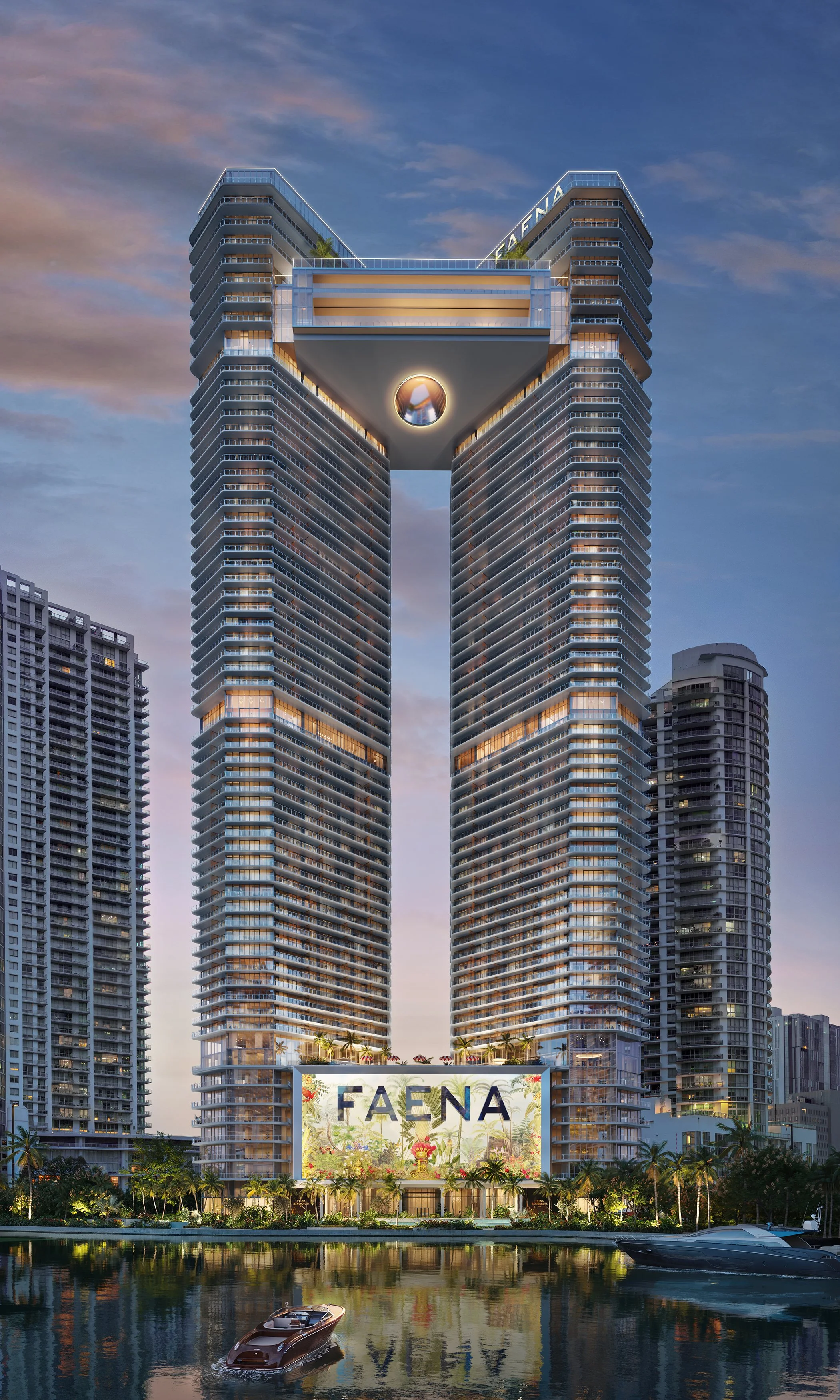

Mast Capital and BH Group have announced Raffles Residences Coconut Grove, the brand’s first standalone residential development, with 35 homes from $4.5 million and architecture by Brandon Haw.