
The Mess At Melreese Golf Club Gets Worse As Miami Freedom Park Gets Delayed Again
There is just no telling where the supposed deal to bring a professional soccer stadium to Miami will end up after Miami city commissioners voted on Tuesday to continue negotiations with the group, led by Jorge Mas of MasTec, in regards to the projected $1 billion mixed-use office and retail project.
There is just no telling where the supposed deal to bring a professional soccer stadium to Miami will end up after Miami city commissioners voted on Tuesday to continue negotiations with the group, led by Jorge Mas of MasTec, in regards to the projected $1 billion mixed-use office and retail project. Although Miami has a state-of-the-art stadium in Hard Rock Stadium, Inter Miami CF has decided that they need a dedicated soccer stadium to accommodate what are expected to be masses of fans, albeit one that is decidedly much smaller than the capacity Hard Rock Stadium could accommodate. It was proposed to voters that they could “vote to bring a soccer stadium to Miami along with a public park” where the public Melreese Golf Course currently operates, which passed in 2018.
Since then plans have changed significantly. The public park portion has been significantly scaled back to being a nearly non-existent part of the planned development. In fact, the 25,000 seat soccer stadium would potentially not even sit on the same lot if built. What is planned, should negotiations work out, is a massive private office park matched with a retail mall and a hotel. Those negotiations though are getting pushback from commissioner Manolo Reyes as well as local opponents such as Bruce Matheson, who claims the redevelopment of the golf course should have gone through a public competitive bidding process and that the city has continuously misled voters through the process. Numerous other opponents argue that there is no reason to get rid of one of the city’s last remaining public golf courses, all of which are heavily used, irreplaceable and support the local youth with programs such as The First Tee, especially with a state-of-the-art Hard Rock Stadium already built.
Reyes worked to force a vote on the proposed agreement before Commissioner Will Gort steps down at the end of the month as he maxes out his term limits but was shot down by majority vote from the commission which claims that the deal is nearly closed and is just pending 3 fair market value appraisals as well as traffic and environmental studies. Already environmental studies have shown the the ground underneath the golf course is full of toxic material and remediation would be in the range of $40 million.
Beckham first moved to have a stadium built at PortMiami in 2014 before the proposal bounced around 4 other sites including county-owned parking lot in Overtown. Inter Miami CF will play at their new Fort Lauderdale Stadium and Training Complex, which is currently under construction. If Miami Freedom Park is ultimately approved the timeframe for development would extend into 2022-2023.
Voters Approve Privately Funded Miami Beach Convention Center Hotel
In the highly anticipated election on Tuesday night, Miami Beach residents approved the construction of an 800-room convention center hotel. The referendum needed a 60 percent vote in order to lease public land from the city and passed at 64 percent in its third attempt to bring a headquarter hotel to Miami. The hotel will be built on a city-owned parking lot adjacent to the newly renovated convention center.
The previous attempt in 2016 failed due to concerns over the size, originally twice as large as the current proposal, and traffic congestion. The tourism bureau estimates Miami Beach lost at least $250 million in economic revenue over the last several years because it was unable to accommodate larger scale conventions.
South Beach resident Andres Montejo, 43, said that the convention center hotel was one of the issues that drove him to the polls. Montejo, a businessman who travels frequently for work, said that the other cities he visits already have hotels connected to their convention centers.
“A convention center is great, but without a hotel it’s just another convention center,” he said after casting his ballot at Miami Beach Senior High School. “Anybody that travels ... you know that’s how the game works. It’s like that all over the world.”
Other residents, annoyed with the constant flow of construction and resulting noise and traffic in the area, decided to vote against the hotel.
The hotel will connect to the convention center via a pedestrian bridge and include a 53-foot podium containing parking, meeting spaces and ballrooms as well as two 185-foot-tall wings of hotel rooms. Voters authorized the lease and the construction of an 800-room hotel with a maximum height of 185 feet, but specifics of the hotel design will be evaluated by the city’s Design Review Board at a later date.
The group behind the proposal — Turnberry’s Jackie Soffer, Terra Group’s David Martin, Miami Design District developer Craig Robins and architecture firm Arquitectonica — emphasized that the hotel would be roughly 100 feet shorter than the previous proposal and include six times more space for cars to queue on the property so that they don’t spill onto the street.
“This is the right project for our city at the right time, and Jackie, Craig and I look forward to working with the community to deliver a hotel that will make Miami Beach proud,” said developer David Martin.
On a related ballot item, residents voted to earmark the guaranteed hotel rent payments for traffic reduction measures, stormwater projects and education initiatives, rather than sending the money to the city’s general fund where it could be used for a broader range of expenses.
According to the terms of the lease agreement, the hotel will have to pay Miami Beach either fixed rent totaling $16.6 million over the first 10 years or a percentage of hotel revenue, whichever is greater. Miami Beach estimates that the city will also collect $96 million in taxes from the hotel over the next 30 years.
Article by: Katya Demina
Crescent Heights Proposes 60-Story Mixed-Use Project At 1370 NE 2nd Ave. In Downtown Miami
Crescent Heights is nearing a final agreement to bring a 60-story mixed-use project to 1370 NE 2nd Ave. The proposal is expected to bring 1,100 residential units split between condos and rentals, 100,000 SF of office space and 1,100 parking spaces.
Crescent Heights is nearing a final agreement to bring a 60-story mixed-use project to 1370 NE 2nd Ave. The proposal is expected to bring 1,100 residential units split between condos and rentals, 100,000 SF of office space and 1,100 parking spaces. The office space will be used by Miami-Dade County Public School Board and 600 parking spaces to be dedicated to the Omni Community Redevelopment Agency. The proposal was designed by Perkins + Will and John Moriarity & Associates would be the general contractor. In March 2017 details surfaced that Crescent Heights had put a $64 million purchase value on the 1.13 acre site. The deal would represent $40 million in cash and $24 million in paid in-kind consideration. Crescent Heights is led by Chairman and CEO Sonny Kahn, Managing Principal Russell Galbut and principal Bruce Menin.
Miami Voters Approve Hotel On City-Owned Watson Island As Part of Jungle Island Redevelopment
Miami voters have approved a new hotel to be built on city-owned land on Watson Island as part of a redevelopment of Jungle Island. 59% of voters said yes in support of waiving competitive bidding on the property to extend Jungle Island's lease to 2099 and approve the owners of Jungle Island to have the right to build a 13-story, 300 room hotel.
Miami voters have approved a new hotel to be built on city-owned land on Watson Island as part of a redevelopment of Jungle Island. 59% of voters said yes in support of waiving competitive bidding on the property to extend Jungle Island's lease to 2099 and approve the owners of Jungle Island to have the right to build a 13-story, 300 room hotel. The lease has an option for a 15-year extension. If built the hotel would be privately financed and would have a maximum height of 130'. The owners would provide the city with $750,000 towards the Affordable Housing Fund and $700,000 for maintenance to the adjacent Ichimura Miami-Japan Garden. Jungle Island now has 4 years to secure a master building permit and 6 years to complete construction of the hotel, the lease be void if either deadline is missed. The hotel will pay $250,000 in annual rent for the first 3 years of operation and $1.22 million or 5% of the hotel's total gross revenue thereafter. Jungle Island was purchased in 2017 for $60 million by ESJ Capital Partners.
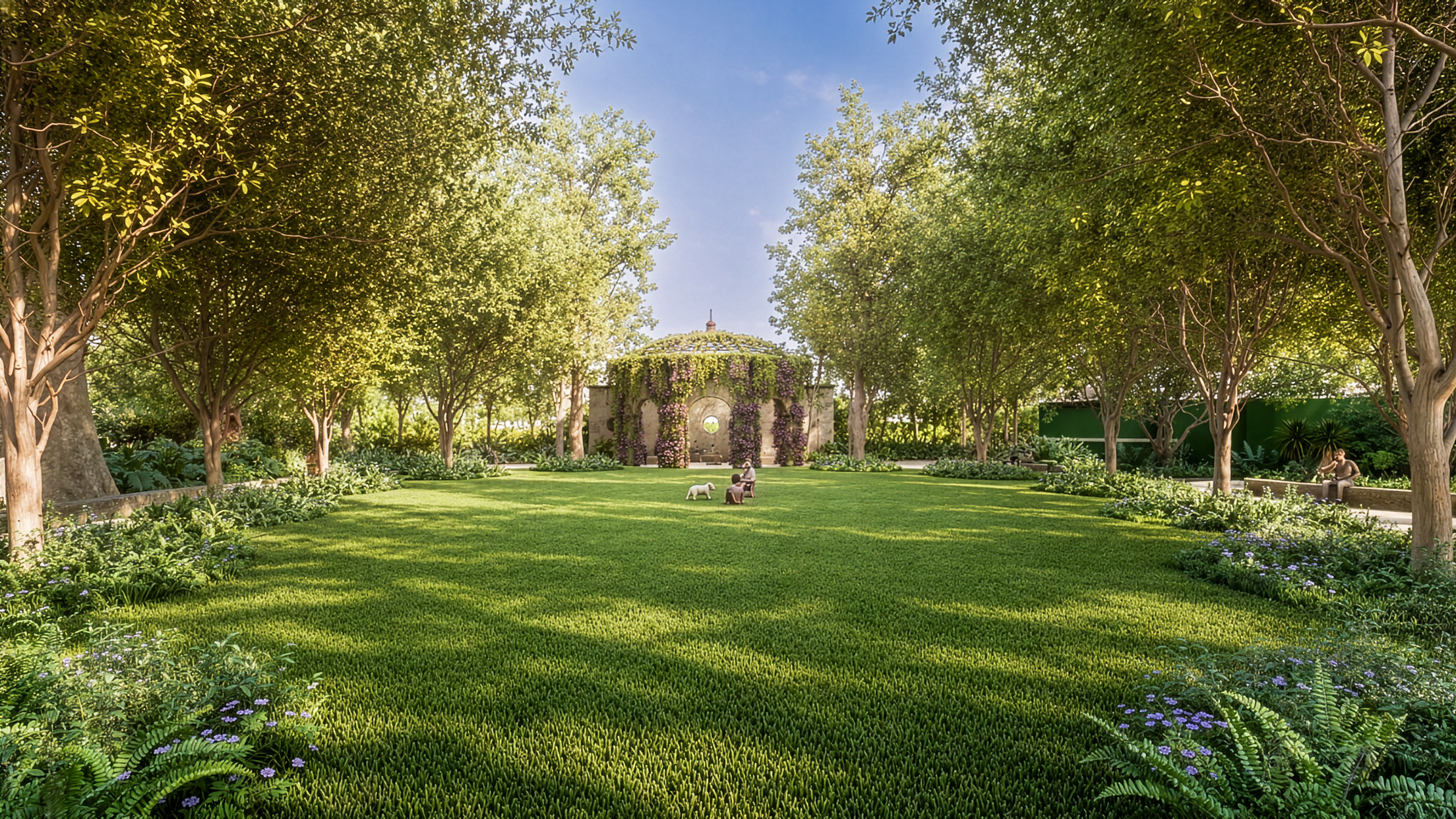
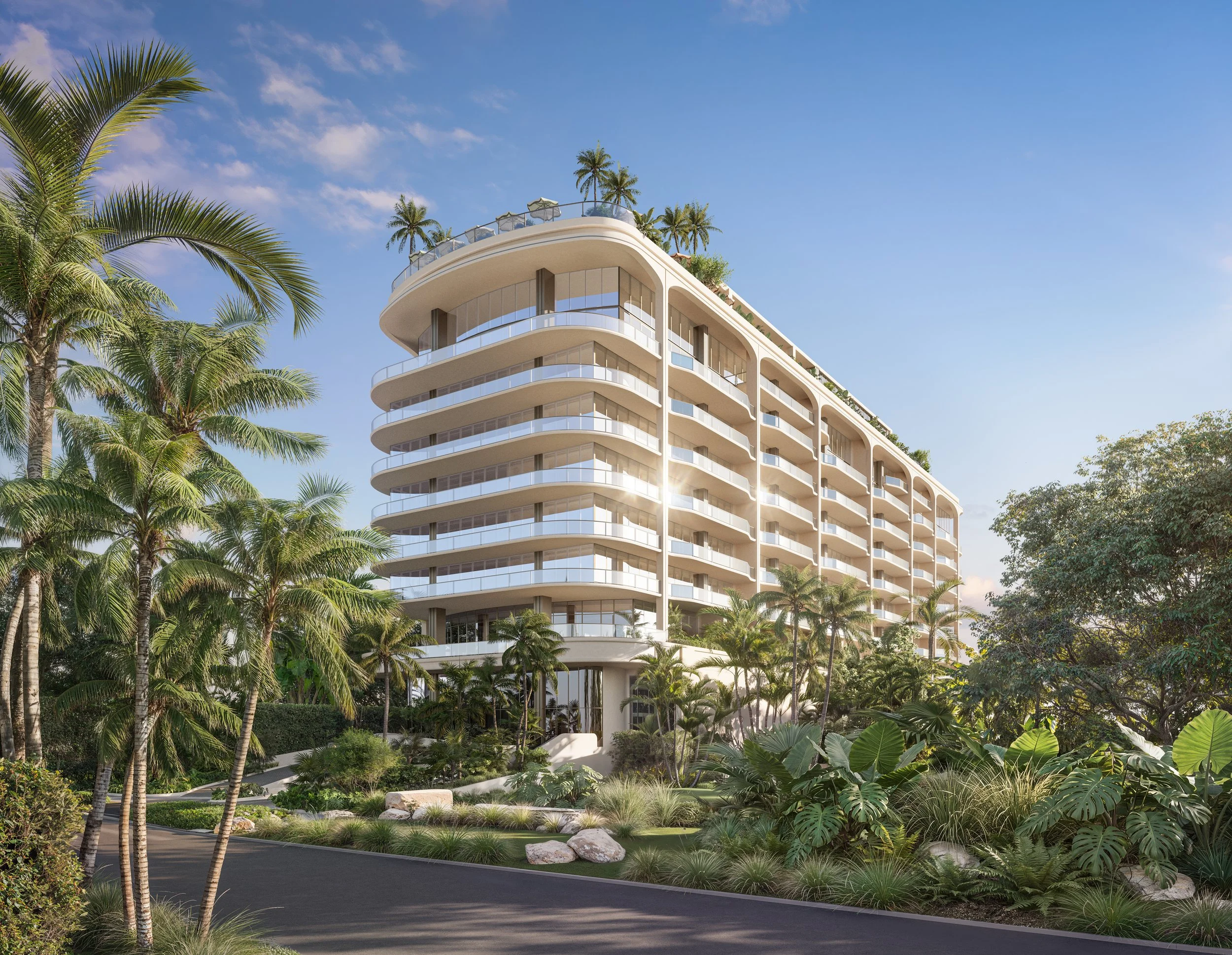
Ytech has unveiled 75 Broadway in Brickell: a 52-story collection of 106 homes from $3 million, designed by KPF with ACPV interiors and Enea landscapes. Completion is anticipated in late 2029.