
PROFILE Guide: A Beginner's Guide To 1031 Exchanges
"In this world, nothing is certain except death and taxes," as the famous quote by Benjamin Franklin goes. But what if we told you that there's a way to potentially defer paying those pesky capital gains taxes on the sale of an investment or business property? Enter the 1031 exchange, also known as a like-kind exchange or a Starker exchange.
"In this world, nothing is certain except death and taxes," as the famous quote by Benjamin Franklin goes. But what if we told you that there's a way to potentially defer paying those pesky capital gains taxes on the sale of an investment or business property? Enter the 1031 exchange, also known as a like-kind exchange or a Starker exchange.
So, what exactly is a 1031 exchange and how does it work? Simply put, it's a tax-deferred exchange of investment or business property that allows you to sell a property, reinvest the proceeds in a new property, and defer paying capital gains taxes on the transaction. This means that you can potentially save a significant amount of money on your investments.
To qualify for a 1031 exchange, the properties being exchanged must be of "like-kind," meaning they must be similar in nature or character, even if they are not exactly the same. For example, a rental property could be exchanged for a commercial property, or a vacation home could be exchanged for an investment property.
There are a few important rules to keep in mind when conducting a 1031 exchange:
The exchange must be made for business or investment purposes, not for personal use.
Both the original property and the new property must be held for productive use in a trade or business or for investment.
The properties being exchanged must be of "like-kind," as described above.
The exchange must be completed within specific time limits. The investor must identify the new property within 45 days of the sale of the original property, and the exchange must be completed within 180 days of the sale of the original property.
The exchange must be conducted through a qualified intermediary, a third party who holds the proceeds from the sale of the original property until they are reinvested in the new property.
The investor must not receive any cash or other personal benefits from the exchange.
So, if you're looking to potentially save money on your investments and reduce the impact of taxes, a 1031 exchange may be worth considering. You can partner with a real estate broker to help you navigate the acquisition and disposition of assets: Just be sure to carefully review the rules and requirements and seek the advice of a qualified professional, such as a tax lawyer or CPA, before proceeding.
Investment Spotlight: Reinvigorating Miami’s Real Estate with Opportunity Zones
The opportunity zone program is a little-known provision of the Tax Cuts and Jobs Act that could be a powerful economic development tool for designated low-income communities. The program provides tax incentives to developers who invest in these areas, including 427 tracts of land in Florida, 68 of which are in Miami-Dade County.
The opportunity zone program is a little-known provision of the Tax Cuts and Jobs Act that could be a powerful economic development tool for designated low-income communities. The program provides tax incentives to developers who invest in these areas, including 427 tracts of land in Florida, 68 of which are in Miami-Dade County. From a policy perspective, it was designed to connect new sources of capital to neighborhoods that haven’t realized economic growth in years.
The provision allows unrealized capital gains from prior investments - including other asset classes like stocks and securities - to be rolled into an opportunity fund to defer taxation. An opportunity fund is created in the private sector and is the first community investment tax incentive vehicle introduced since the Clinton Administration. The notion behind opportunity zones is that the longer the investment is held, the lower the tax burden is. So long as 90% of the investment remains in the community, the capital gains tax is reduced by:
10% if the investment is held for five years, or
15% if the investment is held for seven years
Fully exempt if the investment is held for at least ten years
This is an innovative advance for investors to redirect their capital to support low-income communities like Little Haiti with underappreciated value. It’s a generous incentive compared to previous economic development programs because there is no government intermediary to approve projects. Now the question of intent remains: will investment spillover enough into these neighborhoods or will this just be a chance for developers and investors to cash in?
Germaine Smith-Baugh, CEO and President of Broward County’s Urban League, worries that despite the potential for growth, with investment comes a pattern of gentrification. As property values, rents, and taxes rise, longtime residents can get priced out. “I’m right here on Sistrunk Boulevard,” an economically distressed neighborhood in Fort Lauderdale, said Smith-Baugh. “Folks are buying left and right. The foreign dollars coming in to purchase here — it’s unreal.”
Smith-Baugh hopes the program doesn’t displace local business and residents, and says the solution is to attract the right kind of impact investors, or people who will work with the neighborhoods to create workforce housing and transit. “We would like to see organizations that can aggregate potential projects and make the residents and businesses feel as though they are part of the process,” she said.
In order to qualify, the real estate asset would need to be built or be converted with improvements totaling at least the purchase price of the property. It must also be an active conduct business, meaning the asset can’t simply be a home that appreciates in value over time.
The opportunity zone program is an attractive vehicle for moving capital of scale into low-income neighborhoods with enough parameters to ensure it is being deployed toward economically productive investments that ultimately create jobs and businesses.
Article by: Katya Demina

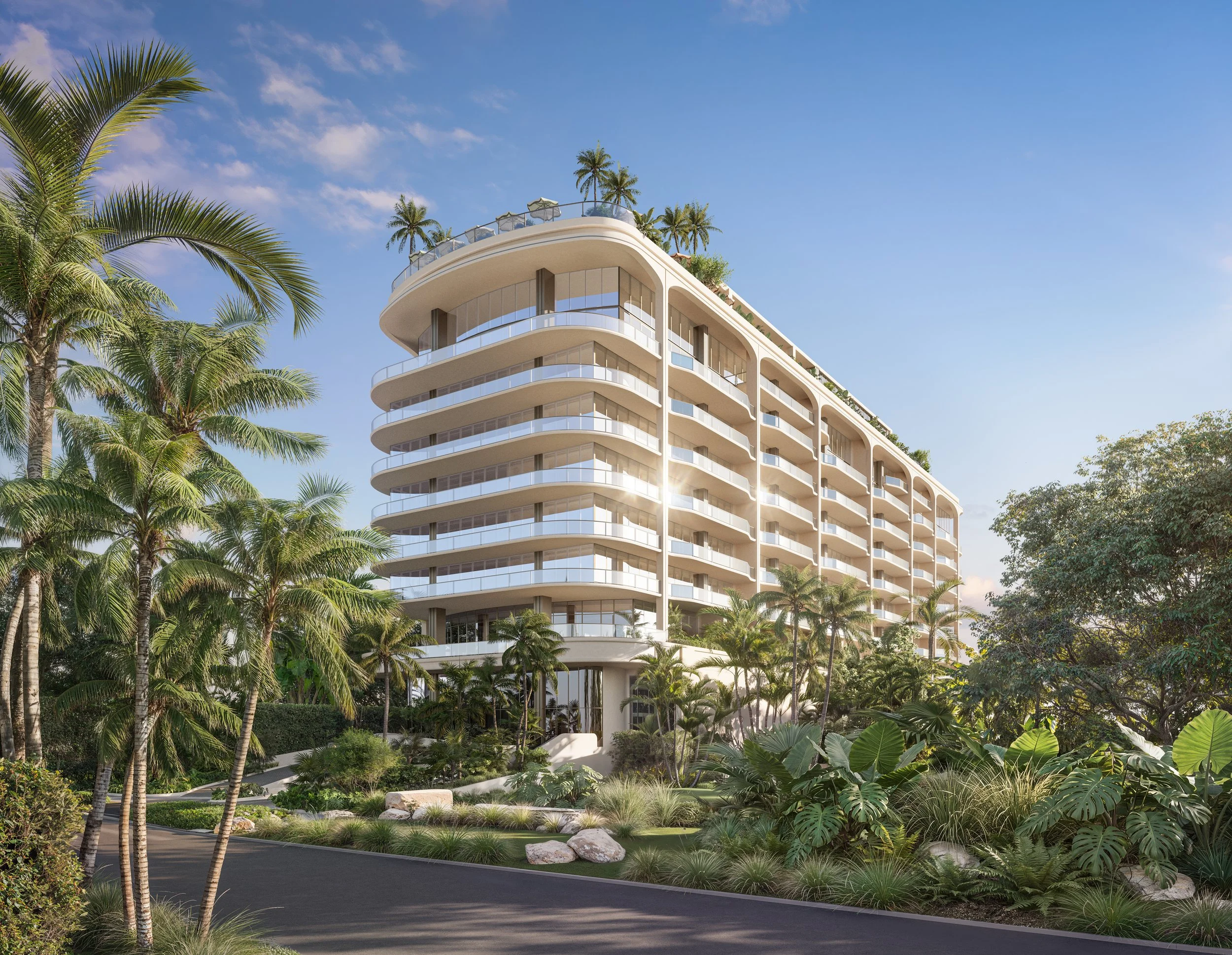
Ytech has unveiled 75 Broadway in Brickell: a 52-story collection of 106 homes from $3 million, designed by KPF with ACPV interiors and Enea landscapes. Completion is anticipated in late 2029.