
Building the Dream: How Bluenest is Redefining Affordable Homeownership in Miami-Dade
PROFILEmiami had the exclusive opportunity to sit down Bluenest Development CEO Salim Chraibi to discuss how his company is reshaping Miami-Dade’s attainable housing market. As home prices in Miami-Dade continue to soar, the dream of homeownership feels increasingly out of reach for the region's workforce.
PROFILEmiami had the exclusive opportunity to sit down Bluenest Development CEO Salim Chraibi to discuss how his company is reshaping Miami-Dade’s attainable housing market. As home prices in Miami-Dade continue to soar, the dream of homeownership feels increasingly out of reach for the region's workforce. Enter Bluenest Development—a homebuilder focused on attainable, for-sale housing for those earning between 80% and 140% of the area median income.
Since launching in 2018 with just six single-family homes, Bluenest has rapidly scaled by targeting emerging neighborhoods and working alongside local governments to deliver homes priced well below the county median. Their mission goes beyond housing—it's about creating generational wealth and long-term community stability.
PROFILEmiami caught up with Salim to learn about how Bluenest Development is providing homeownership opportunities to the workforce while navigating the challenges of scaling in one of America’s most competitive real estate markets.
PROFILEmiami: What inspired you to launch Bluenest Development, and how has your mission evolved since 2018?
Salim Chraibi: We started in 2018, building just six single-family homes, and right away, I saw how many people were struggling to buy a home, priced out of the American dream of homeownership. That’s what inspired me to scale. Today, we are focused on developing homes in emerging neighborhoods throughout Miami-Dade County, catering to the workforce earning between 80% and 140% of the area median income. What surprised me early on was that nearly all the workforce housing being built was for rent. No one was offering for-sale options. I’ve always believed that every business should solve a real problem, and this one matters. It’s not just a high-demand product—it’s good karma. We're building something that meets a real need and doing it at scale.
PROFILEmiami: How does Bluenest define "attainable housing," and why is this concept so important in Miami-Dade today?
Salim Chraibi: The median home sale price in Miami-Dade is $665,000, and we bring homes to market that are substantially below that number, around $450,000. We partner with local governments to offer incentives that help buyers layer financing—combining a traditional first mortgage with a second provided by the county. With the blended interest rate of 4.5%, their total monthly payment comes out to much less than what they'd pay to rent the same home. Another benefit is that they don’t have to pay for private mortgage insurance. We've had people break down in tears at the closing table because they never thought this would be possible. Years later, some still reach out to thank us.
PROFILEmiami: What’s your approach to scaling without compromising quality?
Salim Chraibi: We’ve developed a series of efficient, well-designed 3- and 4-bedroom models that we build consistently across our communities. These models are already approved in Miami-Dade, which allows us to bypass lengthy approval timelines and pull permits in under two weeks. We adapt each model to suit the character of the area, so only the elevations are different. This repeatable approach reduces costs and accelerates delivery, key factors in keeping costs down. Our scale also gives us purchasing power, and we’ve secured volume discounts with manufacturers. Homes priced around $450,000 often sell before construction is even complete, which helps reduce interest costs and our overall risk.
PROFILEmiami: Tell us more about your projects in Miami-Dade. What makes these locations strategically important for workforce housing?
Salim Chraibi: About 95% of our projects are in unincorporated Miami-Dade county, which makes the approval process easier. These areas are composed of infill locations and properties within the urban development boundary that are ideal for redevelopment
PROFILEmiami: What are some of the biggest challenges you've faced with zoning and land use in converting farmland to housing communities?
Salim Chraibi: The biggest challenge is local opposition - classic NIMBYism. Everyone agrees we need more workforce housing, but nobody wants it near them. You have residents on half-acre lots who bought over 3 decades ago and don’t want the character of the area to change with the addition of townhomes or single-family homes on smaller lots. We're not building high-rises — we're proposing compatible, low-density projects that provide homeownership opportunities. This kind of resistance is the main barrier to adding much-needed inventory.
PROFILEmiami: Your 1% down payment program is a bold step—how does it work, and what kind of buyer response have you seen?
Salim Chraibi: The program is available to buyers who make up the workforce of Miami-Dade County, typically between 80 and 140% of the Area Median Income. Buyers get pre-approved with one of our preferred lenders, who typically finance 75% of the purchase price, and the county provides the remainder through a second mortgage at 1%. The response has been incredible. Buyers are extremely grateful and are happy at the opportunity to own a home.
PROFILEmiami: Beyond building homes, how do you see Bluenest contributing to long-term neighborhood stability and generational wealth?
Salim Chraibi: We’re making generational wealth possible by lowering the barriers to homeownership. Many of our buyers can move in with less than half a month’s rent as a down payment, compared to the years it might take to save traditionally.
In many cases, our buyers gain more in home appreciation within two years than we earned as the developer. Over time, that equity builds. After 20 or 30 years, the home is paid off and can be passed down, worth significantly more than what was originally paid. We’re also building multi-generational options, like duplexes, where families can live together under one mortgage.
PROFILEmiami: Looking ahead, where do you see Bluenest in five years?
Salim Chraibi: In the next 3 to 5 years, we aim to expand across Florida because affordability is a statewide issue, starting with markets like Palm Beach County where we’re already looking at sites. We’ll continue building in Miami-Dade for as long as land is available. This is the market we know best and we’ve built strong relationships here.
PROFILEmiami: Tell us a war story
Salim Chraibi: Let’s just say—make sure you’re well insured if you’re in land development. One night my wife forgot her laptop at work and asked me to give her a ride. I was in pajamas, thinking it would be a quick ride. On the way, I got a call that there was a fire at one of our job sites—in Homestead, an hour away. So we rerouted immediately and stayed until 8 in the morning. Thankfully, everyone was safe, but it was chaos.
I was so nervous that I left the car running the entire night. When I tried to leave, the battery was dead. And of course, the skies opened up with pouring rain just as I tried to jump it. It was the longest, most stressful night of my life—and a great reminder that anything can happen in this business, usually at the worst possible time.
Transformative $3 Billion, 63-Acre 'Little River District' Led by SG Holdings Approved Paving Way For Miami's Largest Affordable Housing Development
The Miami-Dade County Commission has granted final approval for SG Holdings’ Little River District, a transformative $3 billion, mixed-use development that will redefine the urban landscape of Miami’s underserved Little River and Little Haiti neighborhoods.
The Miami-Dade County Commission has granted final approval for SG Holdings’ Little River District, a transformative $3 billion, mixed-use development that will redefine the urban landscape of Miami’s underserved Little River and Little Haiti neighborhoods. Spanning 63 acres, the large-scale project aims to build more than 5,700 affordable and workforce housing units, alongside major big-box retail stores, small businesses, major grocery operator, green public space, and transit infrastructure with the addition of a new train station, marking a historic investment in Miami’s future.
Led by SG Holdings, a joint venture comprised of Swerdlow Group, SJM Partners, and Alben Duffie, the partnership stands at the forefront of affordable housing development, following its successful delivery of the 1.5 million-square-foot, mixed-use development Sawyer’s Walk featuring 578 affordable senior housing units in Miami’s historic Overtown neighborhood.
The Little River District project is considered the largest affordable housing development in Miami-Dade County’s history. It will feature 2,284 affordable housing units at an average 60% Area Median Income (AMI), 1,398 workforce rental units at up to 120% AMI, in addition to 2,048 potential workforce condo units, which would allow the buyers to obtain significant subsidies to meet the purchase price at up to 140% AMI, ensuring long-term housing stability for thousands of Miami-Dade residents. Current residents of existing public housing complexes situated within the development site are guaranteed the right to return to new units at Little River District with no increases in rent.
This transit-oriented project is made possible through immense private and public sector collaboration led by the development group SG Holdings along with public sector partners: Miami-Dade County’s Department of Housing and Community Development (HCD), U.S. Department of Housing and Urban Development (HUD), the City of Miami, and key local officials such as Miami-Dade Mayor Daniella Levine Cava, County Commissioner Keon Hardemon, and City of Miami Commission Chairwoman Christine King.
“This approval is a major milestone in addressing Miami’s critical need for affordable and workforce housing,” said Michael Swerdlow, Founder and CEO of Swerdlow Group. “At a time when population growth is fueling demand for housing and everyday services, the Little River District will deliver a community that prioritizes affordable and quality housing, accessibility to public transit, and economic opportunity for local residents and business owners with the goal of generating prosperity for the highly deserving communities of Little Haiti and Little River.”
Given that portions of the 63-acre site are owned by the County, the public-private partnership paves the way for this comprehensive housing-led development plan that includes leveraging federal tax credits to support affordable housing and collaborating with Miami-Dade under a Community Benefits Agreement (CBA) to drive local hiring and community investment. The Little River District project is set to create hundreds of jobs during construction and after, stimulating the local economy and supporting businesses within the area. With a half century track record of responsible development, SG Holdings remains committed to working with construction partners who uphold labor standards and prioritize job site safety during the course of this multi-year project.
Designed by renowned architecture firm Arquitectonica, the mixed-use and mixed-income housing development will also introduce more than 370,000 square feet of retail space, including commitments already secured from major retailers such as Home Depot and BJs. In addition, the project will feature a major supermarket, gas station, food and beverage options, and other essential retail services for the neighborhood. About 250,000 square feet of publicly accessible green space will span the project, fostering a walkable and sustainable urban pedestrian-friendly environment with improved pedestrian walkways, enhanced landscaping and beautification, bike paths and shuttle service for residents.
The Little River District will also prioritize transit accessibility with a planned new Tri-Rail train station, representing a significant $35 million investment being made by SG Holdings in Miami’s public transportation network. This development will reduce congestion, improve accessibility, and foster better connectivity within the project site and the broader urban core.
The residential communities planned within the affordable and workforce housing component will feature amenities including swimming pool, computer lab with printer access, fitness center, outdoor recreation space for children, bike parking, green outdoor space with pavilions and walking and bike paths, free Wi-Fi in common areas, onsite-property management, gated parking lot with restricted access, generators for the community spaces, and security cameras with car plate readers. In addition, the high-quality residences will include in-unit washers and dryers, granite countertops, dishwashers, refrigerators with ice makers, central air and smart fan systems, electric water heaters, tile floorings, and complimentary high-speed internet for three years.
Additionally, the major redevelopment is going to generate significant job creation locally. Approximately 3,840 jobs will be generated during the project’s construction and another 518 permanent positions once delivered. The impactful project will prioritize local hiring preferences for both the construction and permanent jobs, including low-income and public housing area residents. Also, the County will reap approximately $9.5 billion through this project – the largest revenue sharing pact of this kind in the County’s history. The County could use these revenues to support its efforts to address the affordable housing crisis in Miami-Dade and invest in community development, inclusive of supporting small businesses.
Construction is expected to begin in 2026, with a projected development timeline of eight years. Once completed, the Little River District will stand as a model for large-scale, community-driven redevelopment centered on creating affordable and workforce housing, exemplifying how public-private collaboration can drive meaningful, long-lasting transformation in an urban setting.
Housing Trust Group Delivers Flagler Station Affordable Apartment Community in West Palm Beach
Housing Trust Group (HTG), a developer of market-rate and affordable housing, has completed Flagler Station, a new $33 million affordable apartment community located in downtown West Palm Beach, Florida. It is the first new affordable apartment community to be built in the city’s downtown in 30 years.
Housing Trust Group (HTG), a developer of market-rate and affordable housing, has completed Flagler Station, a new $33 million affordable apartment community located in downtown West Palm Beach, Florida. It is the first new affordable apartment community to be built in the city’s downtown in 30 years.
A public-private partnership between HTG, the City of West Palm Beach and Palm Beach County, Flagler Station features 94 apartments reserved for residents earning no more than 30, 60, 70 or 80 percent of area median income, with rents ranging from $393 to $1,689. The property is ideally located just one block from the Florida TriRail/Amtrak station and five blocks from the Brightline commuter rail station connecting West Palm Beach with the cities of Miami, Fort Lauderdale, and Orlando.
The developer hosted a grand-opening ceremony with partners to commemorate the milestone on Monday, August 7. Speakers included Matthew A. Rieger, President and CEO of HTG; City of West Palm Beach Mayor Keith A. James and District 3 Commissioner Christy Fox, State House Representative Jervonte ‘Tae’ Edmonds; District 88, Executive Director Jonathan Brown from Palm Beach Housing & Economic Development Department, and Board Chairman Mario Facella of Florida Housing Finance Corporation.
“With a thousand people moving into Florida each day, investment in affordable housing has never been more essential,” said Rieger. “Flagler Station will provide much-needed housing for West Palm Beach’s service workers, first responders, teachers, and other lower-wage workers who play vital roles in the city’s economic success, but simply can’t find adequate, well-priced apartments near their jobs.”
According to Marcus and Millichap, the average rent in West Palm Beach jumped by more than 40 percent since the end of 2020, to $2,432 per month in March 2023. Sticking to the 30 percent rule, an individual or family would need to earn close to $100,000 per year to comfortably afford rent in the city.
"We extend our heartfelt gratitude to Housing Trust Group for their unwavering commitment to bringing affordable housing to the City of West Palm Beach. This partnership marks a significant milestone in our journey towards a more inclusive and vibrant community. We eagerly anticipate the positive impact this development will have on the City and its residents," said City of West Palm Beach, Mayor Keith A. James.
Located at 991 Banyan Boulevard, Flagler Station is an eight-story, high-rise property with a mix of one-, two- and three-bedroom apartments. Community amenities include a 3,200-square-foot, double-high multi-purpose clubroom, a computer/business center, a rooftop pool, a state-of-the-art fitness center, and on-site parking.
Named after Henry Flagler, the 19th-century industrialist who built the Florida East Coast Railway (FECR), Flagler Station’s site includes some of the original, now defunct FECR tracks, which have been incorporated into the development as part of a linear park featuring original artwork and murals. The City’s intent is to build out this park along the rest of the rail right of way to make it a true “rails to trails” conversion. This supports a transportation and mobility plan that the City adopted in 2018 featuring an integrated system of bike lanes, busways, train stations, trolley routes, sidewalks, and roads to reduce car traffic and make the city more pedestrian-friendly.
The building’s architectural design echoes the “brutalist” style that characterized the Old West Palm Beach City Hall, now demolished, and the Federal Courthouse buildings. With its partner, Corwil Architects, along with city officials, HTG delivered a design that is both contemporary and historic in its aesthetic. Archways were incorporated into the building facade to showcase structural elements, while giving reference to the Beaux Arts architecture of Grand Central Terminal.
Financing sources for Flagler Station include $23.27 million in 9% low-income housing tax credits through the Florida Housing Finance Corporation (FHFC) that were purchased by CREA; a $20.3 million construction loan from KeyBank; an $8.93 permanent loan through Freddie Mac; a $75,000 City of West Palm Beach loan; a $314,446 Palm Beach County grant; and a $550,000 HOME loan from Palm Beach County.
The project team for Flagler Station is general contractor Rinaldi Construction, engineer and landscape designer WGI, Inc., architecture firm Corwil Architects, and interior designer B. Pila Designs.
Images via Tony Tur
MV Real Estate Holdings Locks Down Construction Loan And Breaks Ground On Miami Senior Affordable Housing Development
The first project in collaboration between Miami-Dade Public Housing and Community Development (PHCD), Miami-Dade Parks, Recreation and Open Spaces (PROS), and Miami-Dade Transportation and Public Works (DTPW) with the private sector created to provide attainable housing solutions to seniors has been given the green light to begin construction. MV Real Estate Holdings, LLC is set to break ground on the highly anticipated Ludlam Trail Towers on March 14.
The first project in collaboration between Miami-Dade Public Housing and Community Development (PHCD), Miami-Dade Parks, Recreation and Open Spaces (PROS), and Miami-Dade Transportation and Public Works (DTPW) with the private sector created to provide attainable housing solutions to seniors has been given the green light to begin construction. MV Real Estate Holdings, LLC is set to break ground on the highly anticipated Ludlam Trail Towers on March 14 in Miami, Florida. Positioned between Coral Way and Southwest 69th Avenue intersection, the project is estimated to cost $25 million.
Centennial Bank provided a $7.5 million construction loan to Ludlam Trail Towers, LLC. The Bank’s SVP, Senior Commercial Loan Officer Yuleisy Montalvo, worked jointly with Lument, who is providing a guaranteed Freddie Mac permanent takeout with a fixed rate to Ludlam Trail Towers upon receipt of its certificate of occupancy (CO). Centennial Bank is a full-service financial institution with branches in Florida, Arkansas, Alabama, Texas, and New York and nearly $24 billion in total assets.
“This project is the culmination of the vision of the elected County officials and administrators seeking to help the most vulnerable in our society, the County Parks Department looking to bring the Ludlam Trail to fruition, the Miami-County Department of Transportation seeking to provide connectivity to the Trail over Coral Way and MV Real Estate Holdings who is contributing private dollars and will ultimately be building and executing on this vision that we believe will be transformative to so many,” said Alex Mantecon, managing partner of MV Real Estate Holdings.
Led by Alex Mantecon and Guillermo D. Vadell, managing MV Real Estate Holdings members, Ludlam Trail Towers is expected to redefine attainable housing solutions in a submarket that has not seen any projects with similar characteristics in over a decade. The funding of this project was a collaboration of private equity dollars and four different funding sources at the County level with financing provided by Centennial Bank who provided the construction loan, Lument who provided a Freddie Mac forward commitment and a Miami-County Surtax gap funding loan. This structure allowed the construction lender to be more aggressive in this challenging environment. The financing teams were spearheaded by JC de Ona and Yuleisy Montalvo at Centennial and Marc Suarez at Lument.
“It is great to see not only the public private partnership step up but also the capital markets to support the development of affordable housing,” said Marc Suarez, Managing Director at Lument.
"We are honored to be part of a project that touches upon so many critical needs in our community and to shed light into a parcel of the population that is often forgotten," said Alex Mantecon, managing partner of MV Real Estate Holdings. "There is no doubt that Ludlam Trail Towers will redefine urban living in Miami-Dade County for the elderly while at the same time creating a one-of-a-kind amenity in the Ludlam Trail linear park to be enjoyed by all."
The 64 rental units development composed of two buildings with four and five-story will encompass 760-square-foot one-bedroom, one-bathroom units to 1,000-square-foot two-bedroom, two-bathroom residences. The towers on either side of Coral Way will be connected by a pedestrian bridge that spans over Coral Way and will be a part of the Ludlam Trail.
The project will leverage its exclusive location with direct access to the Ludlam Trail linear park and include a multipurpose room available for the public, allowing residents to interact with them while allowing them to participate in fitness activities. The property is located along the Ludlam Trail, a 6.2-mile multiuse public trail running north to south from Miami International Airport to Dadeland Mall. It will connect with the Underline and circle back to Downtown Miami, thus creating 16 miles of uninterrupted trails inside our urban core.
“Our seniors struggling with rising costs across the board deserve access to safe and affordable housing," said Commissioner Kevin Cabrera. "I’m excited to see the construction of the Ludlam Trail Towers, which help the seniors of our district live out their golden years with dignity. Looking forward to continuing to work with our partners on initiatives to tackle our community’s housing crisis.”
The Ludlam Trail Towers is one of the many scheduled residential projects for the trail as part of the redevelopment of the abandoned railroad track. Additional projects on the trail include a 312-unit apartment complex on the Bird Road Node also led by MV Real Estate Holdings in partnership with Altman Companies and Mattoni Group, an 84-unit workforce housing complex on 8th street, and a 950-unit apartment building with retail stores, and a dog park on 8th street as well; every project is currently in different phases of development.
First Florida is the General Construction company responsible for Ludlum Trail Towers with an expected completion date by the summer of 2024. Reservations will be available starting spring of 2024.
Coral Rock Development Group Announces Mixed-Use Workforce/ Affordable Housing Project Buena Vida In Little Havana
Coral Gables-based Coral Rock Development Group today unveiled plans for Buena Vida, a Little Havana-based workforce/affordable housing mixed-use project. Located at 22nd Avenue and Flagler Street, Buena Vida will encompass 175 units of workforce and affordable housing.
Coral Gables-based Coral Rock Development Group today unveiled plans for Buena Vida, a Little Havana-based workforce/affordable housing mixed-use project. Located at 22nd Avenue and Flagler Street, Buena Vida will encompass 175 units of workforce and affordable housing boasting a compelling mix of one, two and three-bedroom floorplans ranging in size from 471 to 1,105 square feet along with structured parking. The eight-story project will also include 15,000 square feet of retail space.
Full-service featured community amenities will include a gym, dog park, conference center, pool and BBQ area. The retail space will include a medical wellness center for the benefit of residents and the surrounding area, along with a mix of retail shops and restaurants designed to enrich the neighborhood.
Buena Vida was designed by RSP Architects. Groundbreaking on the project will begin in 2022 and is scheduled for completion in 2023.
“We are very pleased to announce Buena Vida and create a high-quality workforce/affordable housing offering for families and seniors,” said Michael Wohl, principal of Coral Rock Development Group. “We are grateful for the support of Commissioner Joe Carollo in seeing our vision come to life to add to the growth and development in the Little Havana neighborhood. His endorsement has been critical in bringing this forward. As we’ve seen throughout the pandemic and the disruption of livelihoods for so many members of our community over the past year, now more than ever there’s an overwhelming need to provide apartments for those who cannot afford the high current market rate and are as a result paying a high percentage of family income for rent.”
Coral Rock Development Group is also developing Pura Vida Hialeah, a nine-acre major mixed-use development set to be the first of its kind in more than 20 years. Pura Vida Hialeah topped off earlier this year and is on schedule for completion in Q1 2022.
Rendering via RSP Architects/ Coral Rock Development Group
New Urban Development Proposes View 29 With Affordable And Workforce Housing In Wynwood
New Urban Development, an affiliate of non-profit organization The Urban League of Greater Miami, has proposed View 29 in Wynwood. The residential project is located at 2901 NW 2nd Ave. and will offer a mix of affordable and workforce housing to help address the shortage of affordable housing in Miami.
New Urban Development, an affiliate of non-profit organization The Urban League of Greater Miami, has proposed View 29 in Wynwood. The residential project is located at 2901 NW 2nd Ave. and will offer a mix of affordable and workforce housing to help address the shortage of affordable housing in Miami. The 27,717 SF site was deeded by the county to New Urban Development in 2020 in exchange for the development of affordable and workforce housing.
View 29 is designed by MC+G Architecture and will rise 12-stories, offering 116 apartment units, 105 parking spaces and 6,910 SF of ground floor retail. The unit mix is expected to offer 30 studios, 18 one-bedroom units, 58 two-bedroom units and 10 three-bedroom units. Residences would range from 650 SF to 1,200 SF. Amenities will feature a pool, community room, childrens’ room, fitness center, yoga room, business center and a rooftop terrace with a solar panel canopy. The Wynwood Design Review Committee is scheduled to review the proposal on May 12.
Miami Heat Star Udonis Haslem And Magellan Housing Score Approval To Build Wynwood Works On City Owned Land
A partnership between Haslem Housing Ventures, led by Miami Heat star Udonis Haslem, and the Coral Gables-based Magellan Housing, have received approval from Miami’s Omni Community Redevelopment Agency (CRA) to build Wynwood Works, a 12-story mixed-use apartment project in Wynwood. Wynwood Works will be built on city owned land at 2035 North Miami Avenue.
A partnership between Haslem Housing Ventures, led by Miami Heat star Udonis Haslem, and the Coral Gables-based Magellan Housing, have received approval from Miami’s Omni Community Redevelopment Agency (CRA) to build Wynwood Works, a 12-story mixed-use apartment project in Wynwood. Wynwood Works will be built on city owned land at 2035 North Miami Avenue.
The development partnership will receive a land grant from the CRA valued at $6.5 million at no charge and a contribution of $9.9 million cash grant in exchange for 50 years of income restrictions on the apartments. The total project costs are estimated at $39.9 million and with the grands provided by the CRA the development partnership will not need to seek Low-Income Housing Tax Credits (LIHTC). In 2018 the Omni CRA committed $100 million to the development of affordable housing. The development partnership will restrict 10% of the units to those earning up to 30% of the area median income (AMI), an additional 10% of units to those earning up to 50% of AMI, another 10% to those earning up to 80% of AMI, 25% up to 120% of AMI and the remaining 45% for those earning up to 140% of AMI. The partnership will also share 45% of the annual rental income from the ground-floor retail.
Wynwood Works will rise 12-stories and will feature 104-units of mixed-income apartments on a 20,238 square foot site. The project is designed by MC+G Architecture and will feature a mural designed in partnership with the Miami Light Project and Bakehouse Art Complex. Wynwood Works will also feature 6,711 square feet of ground-floor retail, 102 parking spaces and a sixth-floor amenity deck which features a fitness room, co-working space, a community room and a garden. Apartments will range from 405 square foot studios to 1,150 square foot 3-bedroom layouts. The unit mix will be broken down by 42 studios, 43 one-bedroom units, 12 two-bedroom units and 7 three-bedroom units.
Miami-Dade County And Related Urban Development Group Break Ground on Three Round Towers
Miami-Dade County Mayor Carlos A. Gimenez, Chairwoman Audrey M. Edmonson and Related Urban Development Group (RUDG) have celebrated the ground-breaking of Three Round Towers B&C and Brisas del Este, an affordable housing development encompassing three buildings for a combined total of 383 units in the Allapattah area of Miami-Dade County.
Miami-Dade County Mayor Carlos A. Gimenez, Chairwoman Audrey M. Edmonson and Related Urban Development Group (RUDG) have celebrated the ground-breaking of Three Round Towers B&C and Brisas del Este, an affordable housing development encompassing three buildings for a combined total of 383 units in the Allapattah area of Miami-Dade County. They were joined by a special guest on this occasion, the Honorable Dr. Benjamin S. Carson, Secretary for the U.S. Department of Housing and Urban Development.
The Three Round Towers development was originally built in 1970 on approximately 6.98 acres and included three towers (Towers A, B and C), a Community Center and parking for residents. Tower A was substantially renovated in 2018 by Related Urban. The current renovations are focused on the major rehabilitation of Towers B and C along with the construction of Brisas del Este, a new 120-unit affordable housing project. RUDG, the affordable housing arm of prolific developer Related Group, will serve as Miami-Dade County’s developer partner.
The rehabilitation of the two existing towers and the new construction of Brisas Del Este will result in stylish, well-appointed residences tailor made to serve a primarily senior population through elevated accessibility options. The projects will serve residents from 30% area median income (AMI) up to 80% AMI and will be completed in the beginning of 2022.
“By fully leveraging multiple financing sources, our County is paving the way more for smart projects that create vital affordable housing for our residents,” said Miami-Dade County Mayor Carlos A. Gimenez. “Miami-Dade’s public-private partnership with Related Urban Development Group has been a key component leading to the success of this particular project, and I look forward to the County’s continuing wise use of P3’s moving forward.”
The total development cost for the three buildings is more than $106 million. The layering of financing makes this development the largest of its kind in the nation utilizing Opportunity Zone Funds ($24 million) in combination with other federal and HUD resources, such as Low-Income Housing Tax Credits (LIHTC), Rental Assistance Demonstration funding (RAD), Home Investment Partnerships (HOME) from the City of Miami, and a Purchase Money Mortgage (PMM) of $18 million from Miami-Dade County to the developer. County and State surtax funds are also being invested in the project. More importantly, the Opportunity Zone investment of $24 million was made by personally by Related Group CEO Jorge M. Peréz.
“The redevelopment of Three Round Towers and the addition of Brisas Del Este leverages the widest range of financing available in affordable housing development,” said Albert Milo, Jr President of RUDG. “It is truly a first-of-its-kind project made possible by our partners at the County, who we have worked with over a dozen times to create transformative affordable housing solutions across Miami-Dade. Through collaborations like this, we are able to continue making a real difference for the residents of the communities we build in.”
“With this project we are proving that Opportunity Zone funding is scalable for major affordable housing developments,” said Michael Liu, Director for Miami-Dade Public Housing and Community Development (PHCD). Liu continued, “With a visionary like Jorge Perez and extraordinary builder in Albert Milo, our plan to transform all of our public housing with private sector partners will succeed.”
Related Group Reveals The Gallery On The River Designed By SR Architects Proposed For Overtown
Related Group has revealed The Gallery On The River, a 12-story affordable and workforce housing project which they have recently proposed for Miami’s Overtown neighborhood. The proposal, which was designed by SR Architects, has been submitted to the Urban Development Review Board (UDRB) for review on September 18.
Related Group has revealed The Gallery On The River, a 12-story affordable and workforce housing project which they have recently proposed for Miami’s Overtown neighborhood. The proposal, which was designed by SR Architects, has been submitted to the Urban Development Review Board (UDRB) for review on September 18 and will be built on county-owned land across the street from the popular Garcia’s, Casablanca and Seaspice riverfront restaurants. The Gallery On The River will offer 160 units which will be offered at affordable price points, 11 of which will be set aside for public housing. The project will also bring a 4-story parking garage with 304 parking spaces. Related Group will pay $40,000 per year rent for 75 years with 4% annual rent increases in addition to a $400,000 one-time payment.
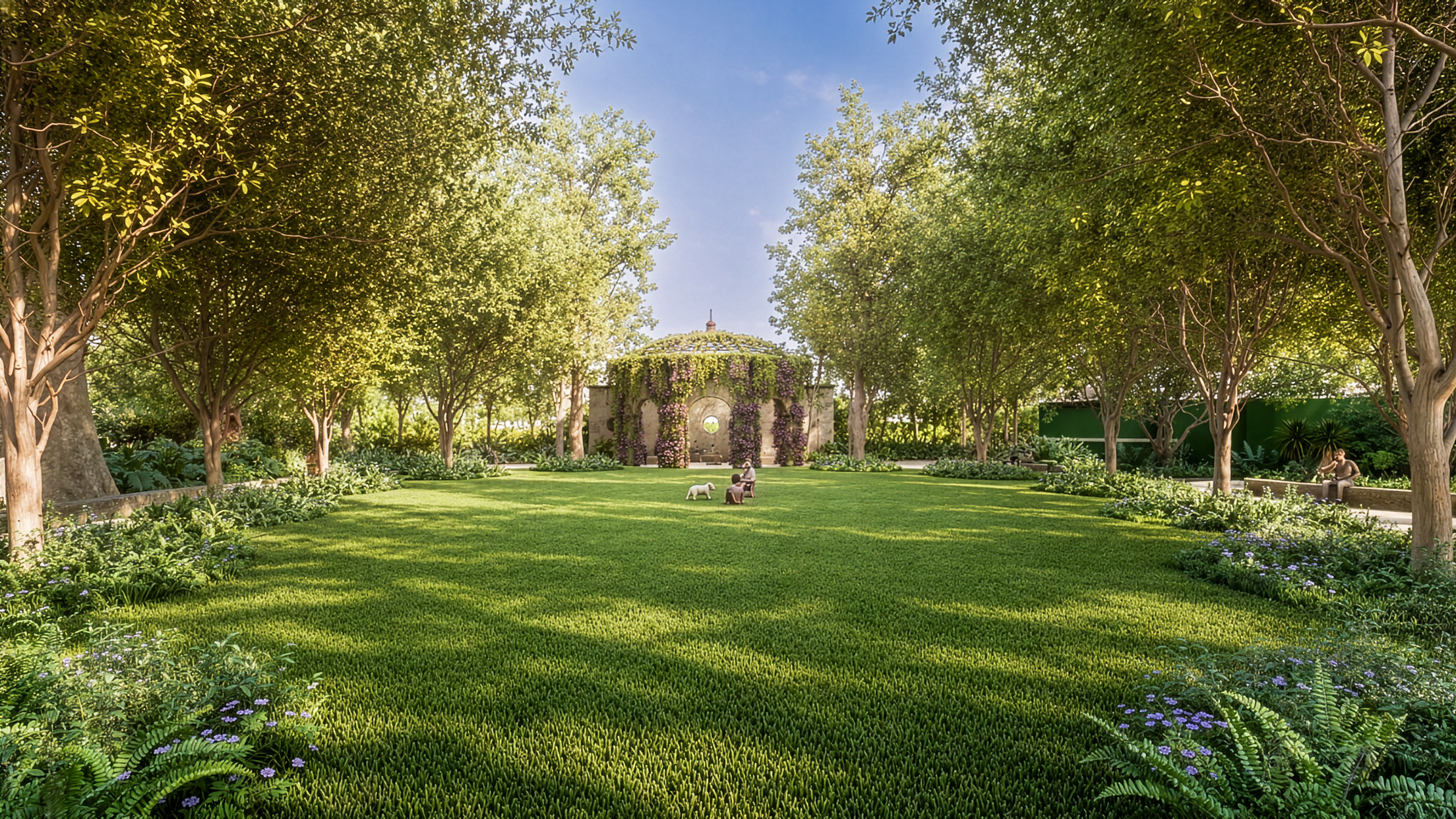
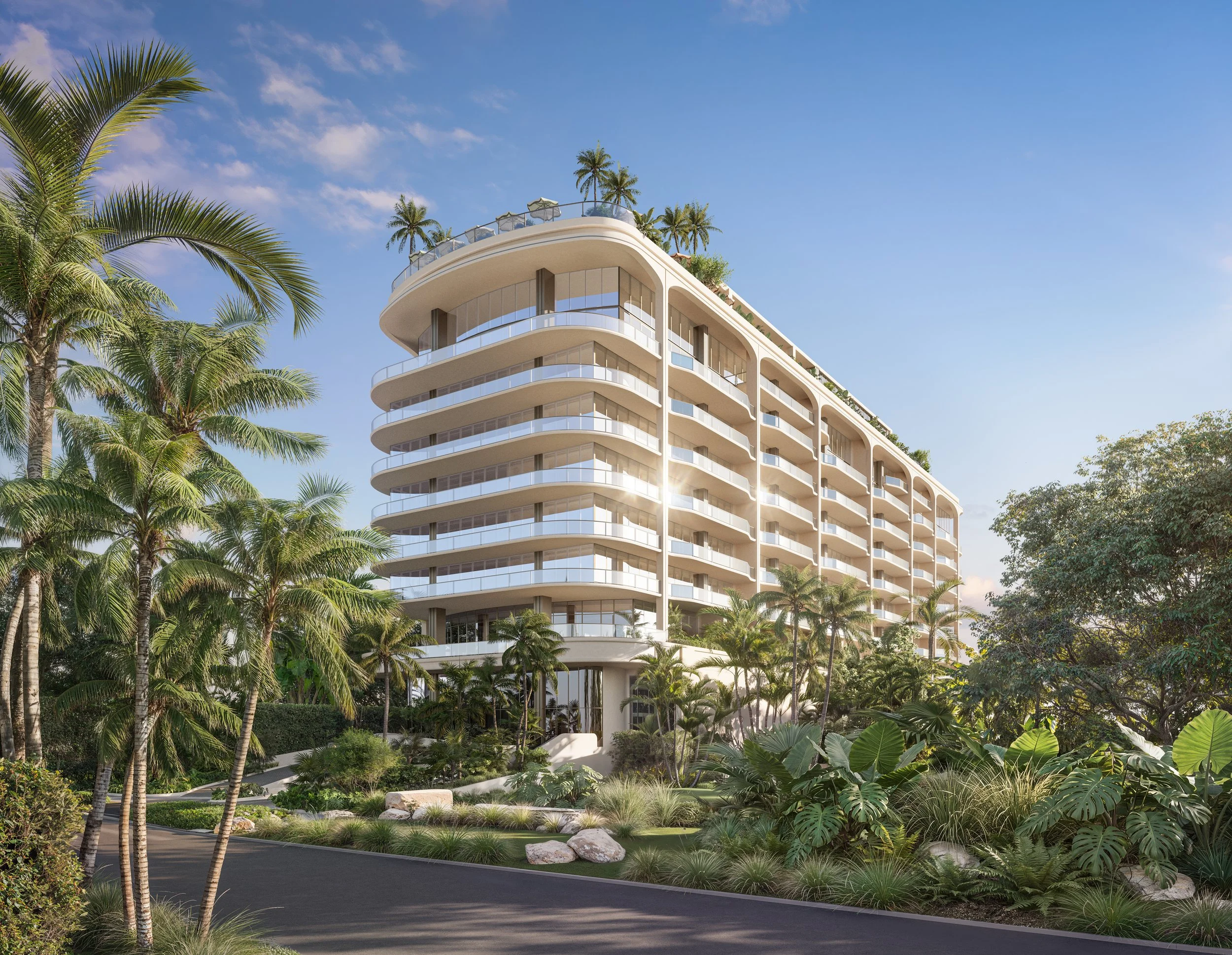
Ytech has unveiled 75 Broadway in Brickell: a 52-story collection of 106 homes from $3 million, designed by KPF with ACPV interiors and Enea landscapes. Completion is anticipated in late 2029.