
When Preservation Becomes Paralysis: A Missed Moment for Miami’s Waterfront, Impact of The Legal Saga at EDITION Residences, Miami Edgewater
Miami’s growth has never been accidental. It has been shaped by cycles of reinvestment, redevelopment, and adaptation to new safety standards, housing needs, and economic realities. The recent court ruling requiring the restoration of the aging Biscayne 21 condominium in Edgewater, rather than allowing its redevelopment into the planned EDITION Residences Miami Edgewater.
Miami’s growth has never been accidental. It has been shaped by cycles of reinvestment, redevelopment, and adaptation to new safety standards, housing needs, and economic realities. The recent court ruling requiring the restoration of the aging Biscayne 21 condominium in Edgewater, rather than allowing its redevelopment into the planned EDITION Residences Miami Edgewater, represents a rare moment where that forward momentum has been halted — not by market forces or public opposition, but by a legal technicality benefiting a very small minority of owners.
At the center of the dispute are eight remaining unit owners who successfully argued that the condominium declaration required unanimous consent to terminate the building. While the ruling may be legally correct under the original bylaws, it raises broader questions about how cities balance individual property rights against collective urban outcomes. The Biscayne 21 building, constructed in 1964, no longer reflects modern expectations for safety, resilience, or housing quality — concerns that carry additional weight in a post-Surfside environment where the risks of aging coastal structures are no longer theoretical.
The economic implications of the decision extend well beyond the property itself. The proposed EDITION Residences, Miami Edgewater would have generated substantial new tax revenue for the City of Miami through significantly higher assessed values, directly benefiting public services, infrastructure, and long-term capital planning. In addition, the development would have activated a multi-year construction cycle, supporting hundreds of jobs across construction trades, engineering, architecture, and professional services — many of which are local and unionized.
Instead, the city is left with a deteriorating waterfront asset that produces comparatively minimal tax income while requiring extensive ongoing maintenance and oversight. The opportunity cost is material: forgone permit fees, impact fees, property tax growth, sales taxes tied to construction and furnishing, and long-term recurring revenue from higher-value ownership. These are not abstract losses — they directly affect the city’s ability to fund resilience projects, transit improvements, public safety, and housing initiatives that benefit residents across income levels.
There is also a broader signal sent to the market. When large-scale redevelopment can be indefinitely stalled by a small number of holdouts, it introduces uncertainty for lenders, institutional investors, and development partners evaluating future projects in Miami. That uncertainty carries consequences: higher financing costs, more conservative underwriting, and reduced willingness to pursue transformative projects within the city limits. Over time, these conditions can slow reinvestment, suppress job creation, and push capital toward competing markets with clearer redevelopment pathways.
There is also a practical reality that remains largely unaddressed. With the majority of units already controlled by the developer, the building’s future as a functional residential community is uncertain at best. Even if restored to a technically habitable condition, it is unlikely to return to anything resembling its former vitality. What remains may be less a home than a hollowed structure — preserved in form, but stripped of economic and social purpose.
This outcome does not suggest that redevelopment efforts were flawless. The attempted amendment of the condominium bylaws without securing full consensus created the legal vulnerability that led to this result. However, the ruling also highlights a structural issue in Florida condominium law: a framework that can allow a small number of owners to indefinitely prevent reinvestment, even when the overwhelming majority — and the city itself — stand to benefit.
Miami is a city defined by evolution. When legal rigidity prevents that evolution, the cost is not borne by developers alone, but by residents, workers, and the municipal economy as a whole. The Biscayne 21 decision may preserve a building, but it does so at the expense of progress — limiting housing modernization, suppressing tax growth, and constraining the city’s ability to reinvest in itself. It invites a larger conversation about whether existing rules truly serve the long-term interests of Miami and its residents, or whether they unintentionally reward stagnation over responsible urban renewal.
Past PROFILE Articles about EDITION Residences, Miami Edgewater
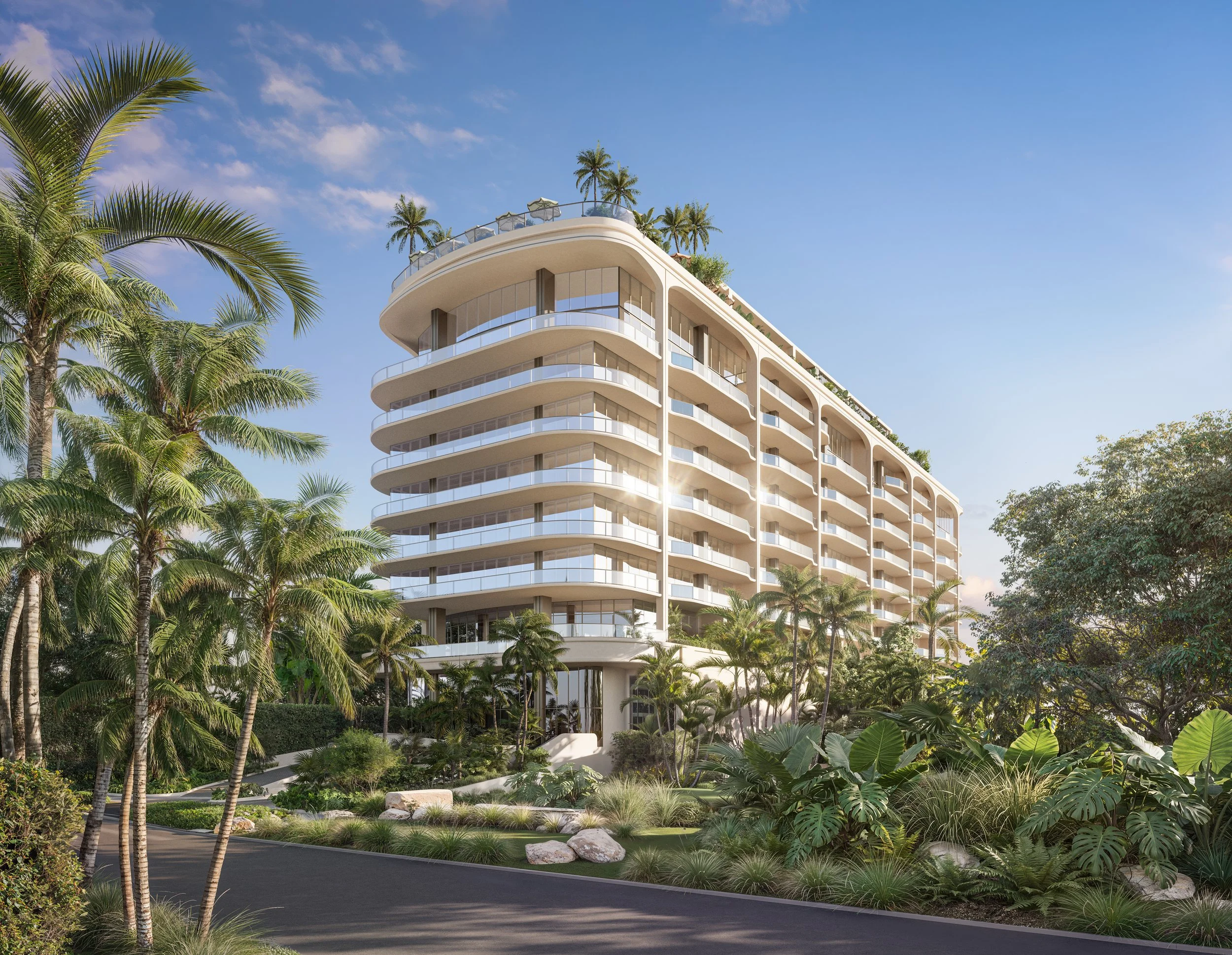
Rendering via EDITION Residences, Miami Edgewater
Bilzin Sumberg Renews 85K SF Office Lease At 1450 Brickell In Miami's Financial District
Nearly 25 years since launching in the heart of Downtown Miami, preeminent law Firm Bilzin Sumberg is doubling down on its Florida growth strategy with a major office lease that will preserve the firm’s position as one of the major tenants at the 1450 Brickell office tower. The Firm has renewed its lease for nearly 84,000 square feet of space at the Class A building, representing one of the largest law firm footprints in Miami’s urban core.
Nearly 25 years since launching in the heart of Downtown Miami, preeminent law Firm Bilzin Sumberg is doubling down on its Florida growth strategy with a major office lease that will preserve the firm’s position as one of the major tenants at the 1450 Brickell office tower. The Firm has renewed its lease for nearly 84,000 square feet of space at the Class A building, representing one of the largest law firm footprints in Miami’s urban core. Bilzin Sumberg’s renewal of its lease coincides with an influx of residents, companies, and investment into South Florida, with the Firm pursuing a strategy of steady growth that has solidified its role as a catalyst for business and wealth migration.
Bilzin Sumberg became the first office tenant to sign a lease at 1450 Brickell when the tower was nearing completion in 2009. The development of 1450 Brickell led the transformation of the entrance to Brickell Avenue, elevating the area into a walkable hub for business, dining, hotels, and residential living. Since then, the 625,000 square-foot Class A tower has attracted best-in-class tenants including multinational companies, finance firms, and professional services firms. The unique building features include a curtainwall glass system comprised entirely of large missile impact glass and two major generators that provide tenants with over 4,000 kw of power during electrical outages, making 1450 Brickell the country’s most storm-hardened office tower.
“For more than two decades, Bilzin Sumberg has presided over the evolution of Downtown Miami and the Brickell Financial District, from a 9-to-5 business center, into a vibrant 24-7 city,” explains Managing Partner Al Dotson. “Our office at 1450 Brickell has put our attorneys at the center of one of the most dynamic business, residential and lifestyle districts in the United States. Along the way, Bilzin Sumberg has been a key figure in transformative projects that have taken shape in our backyard, while also serving a national and international clientele from our homebase at 1450 Brickell.”
Bilzin Sumberg was represented by the JLL brokerage team led by Barbara Liberatore Black, Matthew Goodman and Jeff Gordon. “After spending over a year reviewing all options in Miami’s office market, Bilzin Sumberg decided to renew its lease and remain as one of the major tenants at 1450 Brickell for all of the same reasons they initially chose the building over 10 years ago,” said JLL’s Barbara Liberatore Black. “With the business growth Miami’s Brickell Financial District continues to experience and the 1450 Brickell office tower’s strategic location at the entrance to Brickell, it made all the sense for the law firm to maintain a presence in the center of the city’s premier live-work-play district.”
Tere Blanca and Danet Linares of Blanca Commercial Real Estate represented building owner 1450 Brickell, LLC.
“From the time of its development through today, 1450 Brickell has attracted prestigious domestic and international tenants,” added Tere Blanca, whose firm has exclusively leased 1450 Brickell since its conception. “While there were two other office towers under construction at the time it was being built, 1450 Brickell’s location and unique features helped drive strong pre-leasing with top quality tenants. Bilzin Sumberg, with deep roots in South Florida and an international clientele, first saw the value of locating in 1450 Brickell, a LEED Gold certified trophy tower designed to stand the test of time. The Firm’s tenancy set the wheels in motion for what would become one of the most successful pre-leasing campaigns in Miami history.”
Bilzin Sumberg counsels clients whose business and legal opportunities and challenges span the United States and cross borders to Europe, Latin America, Canada, the Middle East, and Asia. The firm's growth has paralleled that of its Miami home base, a region known for its rich cultural, social, and professional diversity. Bilzin Sumberg lawyers concentrate on services at the heart of both regional and international commerce, including real estate, land development and government relations, environmental, corporate law, joint ventures, domestic and international tax and estate planning, business litigation, finance, and public-private partnerships.
Real Estate Attorney, Adam J. Weiss, Elevated to Named Partner; Firm Changes Name to Solomon, Cooperman, Recondo & Weiss, LLP and Welcomes Three New Attorneys
Florida-based law firm Solomon, Cooperman & Recondo, LLP is pleased to announce the elevation of Adam J. Weiss to named partner of the Firm, officially changing its name to Solomon, Cooperman, Recondo & Weiss, LLP. The Firm is also pleased to welcome Lucilo Ramos as Of Counsel to the Firm, as well as Bryan Granda and Jeremy Zisholtz as Associate attorneys.
Florida-based law firm Solomon, Cooperman & Recondo, LLP is pleased to announce the elevation of Adam J. Weiss to named partner of the Firm, officially changing its name to Solomon, Cooperman, Recondo & Weiss, LLP. The Firm is also pleased to welcome Lucilo Ramos as Of Counsel to the Firm, as well as Bryan Granda and Jeremy Zisholtz as Associate attorneys.
"Adam has successfully and rapidly built an impressive list of prestigious clients, which speaks volumes to his talent, work ethic and commitment to his practice. The Firm's name change is in recognition of Adam's significant contributions to the Firm and his dedication to his clients," said Ben Solomon, Managing Partner of the Firm.
Weiss said, "It is an absolute honor to join the Firm's leadership and I look forward to the continued growth of our Firm."
As a partner in the Firm's real estate practice group since 2021, Adam represents national developers, private equity funds, institutional and private lenders, retailers, owners, and investors. Among other major deals, Weiss represented a private equity fund in a $101,000,000 acquisition of an institutional grade multifamily project in Texas as well as represented a developer in connection with a $66,000,000 construction loan to develop a mixed-use project in the Midwest.
Solomon, Cooperman, Recondo & Weiss, LLP is a boutique law firm dedicated to the representation of clients throughout Florida including developers, REITs, banks, and other real estate investors and corporate clients. The Firm handles transactions, litigation, corporate matters, and serves as general counsel to many of its clients. Since the Firm was founded in 2005, the transaction practice group has successfully handled over $6 billion in deal volume, advising clients on a wide range of high-profile and complex real estate transactions, including acquisitions, dispositions, development, leasing, and financing. The Firm has offices in Miami, Aventura, Fort Lauderdale, and Boca Raton.
WeWork Leaves Lincoln Road Location As Landlord Seeks $19.5 Million In Unpaid Rent
WeWork’s trouble’s due to COVID-19 continue as the landlord of their 350 Lincoln Road location has sued the co-working giant in Miami-Dade Circuit Court. SML 350 Lincoln Inc., an entity controlled by Shaul Levy and Meir Levy, alleges that WeWork breached their lease by failure to pay rent in April, May and June.
WeWork’s trouble’s due to COVID-19 continue as the landlord of their 350 Lincoln Road location has sued the co-working giant in Miami-Dade Circuit Court. SML 350 Lincoln Inc., an entity controlled by Shaul Levy and Meir Levy, alleges that WeWork breached their lease by failure to pay rent in April, May and June while occupying the 40,000 square foot space and now owes in-excess of $19.5 million in back-rent and legal fees. WeWork said in a statement that the lawsuit is without merit and will continue to work with the landlord to resolve the situation in a mutually beneficial fashion. WeWork’s 16-year lease at 350 Lincoln Road began in November 2014 and runs through October 2030.
WeWork will close the Lincoln Road location on August 14 and has also moved to consolidate its Miami Beach members to 429 Lenox Avenue. Last month we reported that Goddard Investment Group has moved to evict WeWork from the Lenox Avenue location, but the two parties were reportedly able to resolve their differences.
WeWork, which is now led by CEO Sandeep Mathrani, still has locations in Downtown Miami, Brickell and Coral Gables. Times have not been good to WeWork following its failed IPO in 2019. The coworking giant recently announced that it will being closing its first location to ever open in New York City and saw its valuation slashed from over $47 billion to $2.9 billion.
In May 2020, a group of WeWork’s members moved toward suing the co-working giant demanding that WeWork cease collecting rental fees. Many tenants had already requested rent relief, cancelled their leases or stopped paying, which put over $5.5 billion of CMBS loans backed by WeWork occupied properties at risk. Some of the CMBS loans back WeWork flagship locations in New York and San Francisco. WeWork has retained Newmark Knight Frank and JLL to try to renegotiate leases and negotiate concessions from landlords at some of their properties as the firm try to stave off a potential bankruptcy.
WeWork’s problems do not end there. Former CEO and co-founder Adam Neumann is reportedly under investigation for self-dealing by the New York State Attorney General. In addition, the Tokyo-based SoftBank led by Masayoshi Son and a special committee of WeWork board members have been locked in a legal battle after Softbank walked away from a $3 billion tender offer in April 2020 which was part of the $9.5 billion bailout package SoftBank signed with WeWork following WeWork’s failed IPO.
Neiman Marcus To Close Worth Avenue Location After Filing Chapter 11 Bankruptcy
COVID-19 continues to shake the commercial real estate industry, especially when it comes to retail. The Dallas-based Neiman Marcus Group has announced that they will be will be closing their Worth Avenue location in Palm Beach amid the luxury retailer’s Chapter 11 Bankruptcy Protection Proceedings.
COVID-19 continues to shake the commercial real estate industry, especially when it comes to retail. The Dallas-based Neiman Marcus Group has announced that they will be will be closing their Worth Avenue location in Palm Beach amid the luxury retailer’s Chapter 11 Bankruptcy Protection Proceedings. Neiman Marcus is actively working with A&G Real Estate to find someone to take over their 48,661 SF lease at 151 Worth Avenue which runs through May 31, 2026 and has options available to the tenant through 2051. 151 Worth Avenue is owned by the New York-based O’Connor Real Estate Advisors who acquired the property in January 2014 for $40 million.
"Real estate is a long-term play. These leases represent an incredible opportunity for retailers and investors to gain a foothold in markets that, under normal conditions, are renowned for their traffic and sales – as well as for their high barriers to entry," said A&G Real Estate Co-President Emilio Amendola. "Additionally, some of these locations are particularly promising for conversion to hotel, office or residential use."
The Worth Avenue, Palm Beach store currently remains open for curbside pickup and appointments only. Neiman Marcus first filed for Chapter 11 Bankruptcy in May 7, 2020, amid the fallout from the COVID-19 pandemic in the U.S. Bankruptcy Court for the Southern District of Texas, Houston Division.
Goddard Investment Group Moves To Evict WeWork From South of Fifth Location
WeWork’s landlord at 429 Lenox Avenue, Goddard Investment Group, has moved to evict WeWork from their South of Fifth location at 429 Lenox Avenue in South Beach. The 43,500 SF building is fully leased by WeWork who skipped out on rent payments for April, May and June.
WeWork’s landlord at 429 Lenox Avenue, Goddard Investment Group, has moved to evict WeWork from their South of Fifth location at 429 Lenox Avenue in South Beach. The 43,500 SF building is fully leased by WeWork who skipped out on rent payments for April, May and June. An eviction notice reportedly alleges WeWork behind in excess of $650,000 in unpaid rent which must be paid by today or WeWork must vacate the property (July 7, 2020). WeWork first opened the South of Fifth location in early 2016 and is committed to the NNN lease until 2031. Goddard Investment Group financed 429 Lenox Ave. with a $23 million floating-rate loan issued by Granite Point Mortgage Trust, Inc. In Miami WeWork has other locations at 350 Lincoln Road, Brickell, Downtown Miami and Coral Gables.
Times have not been good to WeWork following its failed IPO in 2019. The coworking giant recently announced that it will being closing its first location to ever open in New York City and saw its valuation slashed from over $47 billion to $2.9 billion.
In May 2020, a group of WeWork’s members moved toward suing the co-working giant demanding that WeWork cease collecting rental fees. Many tenants had already requested rent relief, cancelled their leases or stopped paying, which put over $5.5 billion of CMBS loans backed by WeWork occupied properties at risk. Some of the CMBS loans back WeWork flagship locations in New York and San Francisco. WeWork has retained Newmark Knight Frank and JLL to try to renegotiate leases and negotiate concessions from landlords at some of their properties as the firm try to stave off a potential bankruptcy.
WeWork’s problems do not end there. Former CEO and co-founder Adam Neumann is reportedly under investigation for self-dealing by the New York State Attorney General. In addition, the Tokyo-based SoftBank led by Masayoshi Son and a special committee of WeWork board members have been locked in a legal battle after Softbank walked away from a $3 billion tender offer in April 2020 which was part of the $9.5 billion bailout package SoftBank signed with WeWork following WeWork’s failed IPO.
WeWork Lawsuit-Threat By Tenants Requesting Rent Relief Sends Shudders Through $5.5 Billion Of CMBS Debt
A group of WeWork’s members have moved toward suing the co-working giant in a letter sent by Walden Macht & Haran demanding that WeWork cease collecting rental fees. Many tenants have already requested rent relief, cancellation of their leases or stopped paying, which has put over $5.5 billion of CMBS loans backed by WeWork occupied properties at risk,
A group of WeWork’s members have moved toward suing the co-working giant in a letter sent by Walden Macht & Haran demanding that WeWork cease collecting rental fees. Many tenants have already requested rent relief, cancellation of their leases or stopped paying, which has put over $5.5 billion of CMBS loans backed by WeWork occupied properties at risk. Some of the CMBS loans back WeWork flagship locations in New York and San Francisco. WeWork, who was previously valued at $47 billion before dropping to a pre-covid valuation of $8 billion, has been working to renegotiate leases and has even skipped out to rent at some of their properties. This has in turn caused the price of bonds backed by payments from WeWork to fall drastically.
WeWork has made an effort to keep their locations open during the COVID-19 pandemic, but many of their tenants have expressed that they think WeWork should have shut their locations. Should WeWork not, Jim Walden of Walden Macht & Haran, threatened to start an arbitration process for WeWork members if the company continues to collect the fees in his letter to the company.
“State and local authorities around the country have directed businesses to cease operation and have prohibited workers, including our clients, from using their workplaces,” said Jim Walden. “As long as this pandemic prohibits our clients from using their WeWork office spaces, the purpose of their membership agreements is frustrated, thus excusing their obligation to pay membership fees.”
Tenants have accused WeWork of turning their backs on small business by continuing to collect fees. Due to WeWork’s short term lease model, the co-working giant is more at risk than the standard office landlord as many of WeWork’s tenants have elected not to renew and can be more flexible about actually going to an office as opposed to working from home. Many of WeWork’s tenants do not want to take the risk of going to their WeWork office location during the middle of the COVID-19 pandemic with 1.37 million confirmed cases in the US. Walden claims that the way the leases are structured are closer to that of gym memberships as opposed to true office leases, meaning that under New York law members are not liable for payments if they cannot physically access the space.
“Our clients have no legal obligation to pay their membership fees while the purpose of their membership agreements remains frustrated by the COVD-19 pandemic,” Walden wrote. “Ignoring this fact, WeWork continues charging these members full monthly fees and refuses to offer concessions or compromise.”
WeWork’s problems do not end there. Former CEO and co-founder Adam Neumann is reportedly under investigation for self-dealing by the New York State Attorney General. Additionally, one of WeWork’s major financial backers, the Tokyo-based SoftBank led by Masayoshi Son, walked away from a $3 billion tender offer in April 2020 which was part of the $9.5 billion bailout package SoftBank signed with WeWork in October 2019 following WeWork’s failed IPO. In May 2020 a special committee of WeWork board members filed a motion in Delaware to prevent SoftBank from disbanding the company as they purse legal action against the majority owner SoftBank Group Corp. WeWork’s special committee also represents minority shareholders including co-founder Adam Neumann. SoftBank and the SoftBank Vision Fund, which is a tech-focused venture capital fund with includes capital from the Saudi Arabian and Abu Dhabi sovereign wealth funds, Apple, Qualcomm, Foxconn and Sharp, have invested $14.25 billion into WeWork.
Australia’s Plenary Group Submits Plans For Miami-Dade CivilCourthouse in Downtown Miami
Plenary Group, a Melbourne, Australian real estate development firm who was awarded the contract to build the new Miami-Dade Civil Courthouse in Downtown Miami, has submitted plans to the FAA for review. The proposal calls for a 435’ tower rising 23-stories and the developer plans to break ground by this May, 2020.
Plenary Group, a Melbourne, Australian real estate development firm who was awarded the contract to build the new Miami-Dade Civil Courthouse in Downtown Miami, has submitted plans to the FAA for review. The proposal calls for a 435’ tower rising 23-stories and the developer plans to break ground by this May, 2020. In 2019 The Plenary Group was awarded a $267 million contract to design, build and operate Miami-Dade’s Civil Courthouse at 73 West Flagler Street on county owned land, replacing the 1928-era courthouse that was also the location of the infamous Al Capone trial. The courthouse will feature 46 courtrooms and 59 parking spaces.
Miami-Dade County has called the partnership between Miami-Dade County and the Plenary Group to be the first public-private partnership by the County. Plenary Group will use private funds and will both built and operate the facility with a 30-year contract which could be valued at nearly $27 million per year. The annual payments are performance based and Plenary Group must hit hurdles for operational and maintenance standards. Plenary Group will not start receiving payments until the courthouse is open and operational. HOK is the architect for the project and Tutor Perini is the contractor. Completion is expected in 2024.
Drama Heating Up As Lawsuits Cloud Apeiron at the Jockey Club
Drama is heating up as lawsuits are clouding the luxury development Apeiron at the Jockey Club five years after it was announced. Lawsuits filed with the Miami-Dade Circuit Court are alleging a loan-to-own scheme at the proposed, ultra-modern 120-unit condo project.
Drama is heating up as lawsuits are clouding the luxury development Apeiron at the Jockey Club five years after it was announced. Lawsuits filed with the Miami-Dade Circuit Court are alleging a loan-to-own scheme at the proposed, ultra-modern 120-unit condo project.
Apeiron Holdings Miami and Apeiron Miami, shell corporations controlled by developers Muyad “Mo” Abbas and Michael Bedner, have sued their partners, Jockey Segal Upland led by Asaf Horesh and Zeev Segal along with Pledger Trust Series 28 LLC, led by Doron Arad. Apeiron at the Jockey Club would be a 4th building addition to The Jockey Club, where it would be built on 13 acres of common grounds. The lawsuit is in reference to 3 properties which the Apeiron developers sold for $20 million to Elite Marinas Group, which was going to build and operate the marina for the Apeiron at Jockey Club development. Abbas and Bender obtained a $21 million mortgage by Romspen Mortgage Limited Partnership which they paid down over $11 million and repaid nearly half of the loan during the time in which they proposed plans for the project and received full entitlements and permits. Despite this success, the developers were sued by the 3 Jockey Club condo associations to stop the project.
The initial lawsuits threw the project into a frenzy although the developers won 2 of the 3 lawsuits. Problems would get worse when Arad would acquire the remaining $10 million in debt from Romspen. Arad, Segal and Horesh would then allegedly block the sale of the 3 properties to Elite Marinas Group and attempt to foreclose on Abbas and Bedner’s debt. On December 5th Jockey Segal notified Abbas and Bedner that they were in default and requested full payoff of the remaining $10 million loan.
American Da Tang Files New Lawsuit Over Vacant CCCC Towers Site In Brickell
American Da Tang and Shanjie Li have filed a new lawsuit over breach of contract at the site of the formerly-proposed CCCC Towers in Brickell. The joint venture was under contract to manage the development in exchange for a 5% equity stake in the project.
American Da Tang and Shanjie Li have filed a new lawsuit over breach of contract at the site of the formerly-proposed CCCC Towers in Brickell. The joint venture was under contract to manage the development in exchange for a 5% equity stake in the project. The site is also tied up in a lawsuit in Hong Kong over control of the site after Asia Allied Infrastructure Holdings Limited (formerly Chun Wo), who owns a 45% stake in the project, filed suit against China City Construction Group due to lack of progress at the site. Miami’s Unsafe Structure Panel issued an emergency order in March 2019 requiring the developers to fill in the 2-story excavation of the site which has sat vacant for over 10 years. The Arquitectonica twin tower design that was proposed would rise 1,069’ and would feature condos, hotel, office and retail space with a total development value of $875 million.
Two Roads Development, a South Florida-based real estate development firm, has reached and fully funded a settlement resolving the remaining litigation related to the Biscayne 21 condominium property at 2121 North Bayshore Drive. The agreement with the remaining owners concludes multi-year legal proceedings, demonstrating the firm's commitment, financial strength and capacity to overcome complex challenges to protect its assets.