
Malls Across Miami Are Reopening Today As Miami Enters Phase 1 Of Reopening From The COVID-19 Shutdown
“Although we live in a city without seasons, this feels like Spring,” said Miami Design District visionary Craig Robins as Miami enters Phase 1 of its reopening plan. As per approval by Governor Ron DeSantis, Miami-Dade and Broward County can begin to reopen as of today, May 18, 2020, following the COVID-19 lockdown that has marred the United States since early March.
“Although we live in a city without seasons, this feels like Spring,” said Miami Design District visionary Craig Robins as Miami enters Phase 1 of its reopening plan. As per approval by Governor Ron DeSantis, Miami-Dade and Broward County can begin to reopen as of today, May 18, 2020, following the COVID-19 lockdown that has marred the United States since early March. Golf courses and marinas opened several weeks ago with restrictions, and now retail, restaurants, barbershops and salons may open - with restrictions. Bars, nightclubs, movie theaters and beaches are not part of the Phase 1 reopening plan and have no set reopen date.
Following the opening of Palm Beach County over the past several weeks, malls in Miami are welcoming back patrons in Miami Design District, Brickell City Centre, Bal Harbour Shops and Aventura Mall, in addition to Broward County’s Sawgrass Mills mall leading the charge. While the malls may be open, individual businesses within them are making their own decisions as to which day and how they will relaunch operations. Robins indicated that Miami Design District will see most of their tenants open by Wednesday, May 20 along with parking, public art and centralized services. Shoppers will also be able to pick up a mask at any MDD information desk. Bal Harbour Shops and Brickell City Centre opened May 18.
Restaurant openings have been a hot topic of discussion as they begin opening their dine-in services back up at 50% capacity and with six foot social distancing between parties. Bar counters are closed to seating and a maximum of four people can be seated at a table unless they are members of the same household, which are capped at six. Patrons must wear face masks when they are not at their table and employees must wear masks at all times. All menus must be single use and restrooms must limit their capacity to one person at a time. Retail has similar restrictions limiting capacity to 50% and requiring all customers and employees to wear a mask at all times.
Authorities will monitor and assess how Phase 1 of reopening progresses over the next several weeks before approving a move to Phase 2 or instituting new restrictions to help stop the spread of the COVID-19 pandemic.
Why Rent Strikes Are Bad for Everyone and What’s Going to be Done about Unemployment?
Since thousands of businesses were deemed non-essential and forced to shut their doors, reemployment assistance claims over the last six weeks have surpassed two million in South Florida. With a tourism-dependent economy plus an older population, Florida is more vulnerable to economic shock, which is why it is one of the top five states with the highest number of claims.
Since thousands of businesses were deemed non-essential and forced to shut their doors, reemployment assistance claims over the last six weeks have surpassed two million in South Florida. With a tourism-dependent economy plus an older population, Florida is more vulnerable to economic shock, which is why it is one of the top five states with the highest number of claims. The longer the standstill goes on, the worse the economic fallout will be.
As May rents come due and unemployment rates continue to jump, providing assistance to households should be a top priority for policymakers. The prospect of a rent strike has been trending in the news and on social media, but a voluntary movement to skip rent payments could destabilize not only the housing market, but the American economy as well. How many months of working capital do small businesses have to stay afloat, in order for those furloughed and laid off employees to have jobs to return to after nationwide and state stay-at-home orders are eased and how will South Florida’s real estate market fare in the coming months?
May Day: May 1st Is Here
Multifamily landlords were pleasantly surprised with April collections. In an exclusive webinar interview hosted by PROFILE last week, President of Tate Capital, James Tate, who has over $1B assets under management, told us “We’re 90% collected,” talking about his 10,000+ door multifamily portfolio. Now it’s May 1st and everyone is wondering what May rent collections will be. “May 1st will be a good deciding point to see how many people default,” added Allen Morris, Chairman and CEO of the Allen Morris Companies.
Morris said his April multifamily rent collections were at 95%. He’s opening two new apartment buildings in Orlando this summer and is taking a proactive leasing approach. “People are signing leases, assuming the University of Central Florida is holding its fall semester. We’re giving tenants a guarantee in their lease. If they delay opening the university, we will delay rent until school opens.” Offering tenants flexibility gives them the security to sign leases now and is helping to forge a positive landlord-tenant relationship that will be dependent on open communication, should issues with payment arise in the future.
Trending: Socialist Whispers
With talks of rent strikes sweeping the country, landlords have been portrayed as vultures preying on the pockets of financially insecure tenants, when they remain responsible for property taxes and other carrying costs that help pay for public improvements, education and other municipality benefits. Diligent landlords are communicating with their tenants and weeding out those who are taking advantage of the public health crisis, says Shahab Karmely, CEO of KAR Properties. Those who can, should pay rent to support the services their communities need. Those directing their frustrations toward landlords may have valid concerns: with the economy shut down by government-mandated order, how are people supposed to pay bills and keep businesses running?
In New York, politicians pushing socialist rhetoric and big government reach such as Alexandria Ocasio Cortez have called for rent strikes and rent cancellations. Movements in New York City even claim to have “identified” landlords who can take a “shave”. Lack of payment means that owners will not be able to stay in business and manage the building to the tenant’s expectations, including paying for things like common area maintenance (think: how much does it cost for a cleaning crew to wipe down all public surfaces in a building multiple times a day). Landlords also pay property tax, insurance, debt service, management fees and capital expenditures for improvements.
Most commercial real estate investments are made by an owner contributing an equity portion to a project, but a majority of the total costs are funded through debt that is usually collateralized by the asset (if it’s senior debt). Typical sources of debt include pension and life insurance funds, which could be the life savings of either a tenant or a landlord. When landlords are unable to meet their debt obligations, the cascading effects don’t stop at their coffers, but trickle down to all Americans. Not making rent payments could derail future opportunities for many, including someone’s retirement age.
Karmely added “The real pandemic to hit New York City multifamily was the legislature that strangled the landlords in this business,” which will continue to make Florida’s real estate investment climate more attractive. Multifamily product in New York City has been trading between 3-5% cap rate, depending on the neighborhood. The low trading cap rates for core product has made some investors nervous about paying such a premium for an asset that the New York government has so much control over.
Another risk for New York investors is that South Florida’s pricing for comparative rental and condo inventory is cheaper than it’s NYC counterpart, while providing higher quality-of-life with more space and building amenities. From an investment perspective, it is also easier to manage assets in Florida where there is no government-enforced rent control, rent stabilization, or near-impossible eviction procedures for delinquent tenants.
Opportunities on the Horizon
The cure to the virus is causing an economic calamity that is hitting everybody and everything, which means opportunities will be on the horizon three to four months from now when property owners' cash reserves run dry, especially for retail and restaurant real estate assets.
Many have posited, is the cure worse than the virus? How long can residential and commercial tenants pay their rent amid an economic shutdown? Will we be able to produce our way out of a recession with unemployment in the double digits? Likely not - Uncle Sam will be waiting in the shadows with hand outstretched to collect his dues. As we all sit on the sidelines, awaiting our fates, the solution appears to be a function of time.
“My biggest concern is that we were hit with an 11 magnitude earthquake, and we all got knocked down. Unfortunately, after a major earthquake in coastal areas there is a tsunami. My concern is how are these small businesses supposed to remain open and sustain themselves for the next six to eight months unless something material is done by the federal government? Who’s going to hire those 30 million unemployed people back? If you ask me why I can’t sleep at night, that’s what I’m really concerned about,” opined Tate to cheers of “Jimmy Tate for President!”
-- Special reporting by the PROFILEmiami Team. Isabella Zimmermann, Katya Demina and Demetri Demascus contributed to this article.

Rewind: W. Allen Morris, Shahab Karmely And Jimmy Tate On Emerging From the COVID-19 Crisis
On April 30, 2020 PROFILEmiami hosted an interactive webinar discussion focusing on emerging from the COVID-19 pandemic and the resulting economic fallout’s impact on the South Florida real estate market. The panel featured South Florida real estate titans W. Allen Morris, Shahab Karmely and Jimmy Tate.
On April 30, 2020 PROFILEmiami hosted an interactive webinar discussion focusing on emerging from the COVID-19 pandemic and the resulting economic fallout’s impact on the South Florida real estate market. The panel featured South Florida real estate titans W. Allen Morris, Shahab Karmely and Jimmy Tate who explored topics such as: what effects will we see on South Florida’s real estate markets, how are South Florida’s leading real estate professionals reacting to the crisis, how do you think the workspace landscape will look after we “get back to normal,” where will the smart investments be made and how are they preparing for future opportunities.
Speakers:
W. Allen Morris - Chairman, President & CEO, The Allen Morris Company
Shahab Karmely - CEO, KAR Properties
James D. Tate - President, Tate Capital
Moderator: Demetri Demascus - CEO & Co-Founder, PROFILEmiami
Watch:
Topics:
What is your personal outlook on how this will ultimately affect the South Florida real estate markets? Will there be permanent changes to the market or the industry?
How are you handling projects currently under construction? What lessons did you learn from past recessions and how did they shape how you’re handling today’s crisis? Have you learned any lessons from the COVID-19 crisis?
If you have capital to deploy, what are principals telling their acquisitions teams right now?
Where do you think we will see opportunity open up? Who is overleveraged? When will we begin to see properties fall into distress?
Does a property need to fall into distress for COVID-19’s impact to create an opportunity? What non-distressed opportunities will we see?
Will opportunity open up for different ways to add value to existing properties or will it change the way you think about developing new properties?
Where and how will the smart investments be made?
Who is willing to give you term sheets right now and what type of lenders pulled their term sheets?
How are you preparing to get your offices back to work and how will the work landscape have changed when we get back to the “new normal.”
Partners:
WEBINAR SPONSORSHIP
Interested in sponsoring PROFILEmiami events? Generate exposure for your brand and connect directly with some of South Florida’s top real estate professionals. Contact us today to inquire about Sponsorship Opportunities.
PLEASE COMPLETE THE FORM BELOW
Residents at Icon Brickell Host Parties As David Guetta Plays "United At Home" Set On Pool Deck Despite COVID-19 Social Gathering LIMits
In what was supposed to be an evening of fundraising and hope, a backlash has now swept through the Miami community. On April 18 David Guetta teamed up with the Miami Downtown Development Authority to host a 2 hour “United at Home” fundraising concert on the pool deck of Icon Brickell.
In what was supposed to be an evening of fundraising and hope, a backlash has now swept through the Miami community. On April 18 David Guetta teamed up with the Miami Downtown Development Authority to host a 2 hour “United at Home” fundraising concert on the pool deck of Icon Brickell. The event raised over $6 million with over 30,000 listeners on instagram and in many ways was a huge success. Unfortunately many residents hosted parties in violation of Miami-Dade’s 10 person social gathering limit, issued by County Mayor Carlos Gimenez to help stop the spread of COVID-19, the effects of which have wreaked havoc on Florida’s economy. In one example videos have emerged with the help of the popular instagram account @OnlyInDade of a Miami entrepreneur hosting a large party on his balcony with guests not practicing social distancing and most wearing no masks and no gloves. The backlash in the comments on the instagram post has continued to grow as Brickell and Downtown Miami residents are enraged that they are now exposed to the dangers of the virus continuing to spread in their community. In March, hotels, restaurants, bars and nightclubs were ordered shut down in an effort to stop Florida from growing into a hotbed of infection. Parties have been identified as one of the major ways that COVID-19 has spread rapidly across the United States, at least 2 deaths have been reported from attendees who contracted the virus at the Winter Party Festival in Miami Beach in March.
The State of Florida is working hard to open up the states economy and get residents back to work. On Friday April 17 governor Ron Desantis gave the green light for some beaches and parks to reopen including in Jacksonville, but not Miami-Dade, which is one of the most populated regions in the state. The beaches which have opened allow walking, biking, hiking, fishing, running, swimming and surfing. They are only open from 6 AM to 11 AM and 5 PM to 8 PM. with gatherings of 50 people still prohibited state wide and proper social distancing practiced. Florida has over 23,300+ diagnosed cases of COVID-19 including 7,459+ in Miami-Dade, 3,177+ in Broward County and 1,704+ in Palm Beach County.

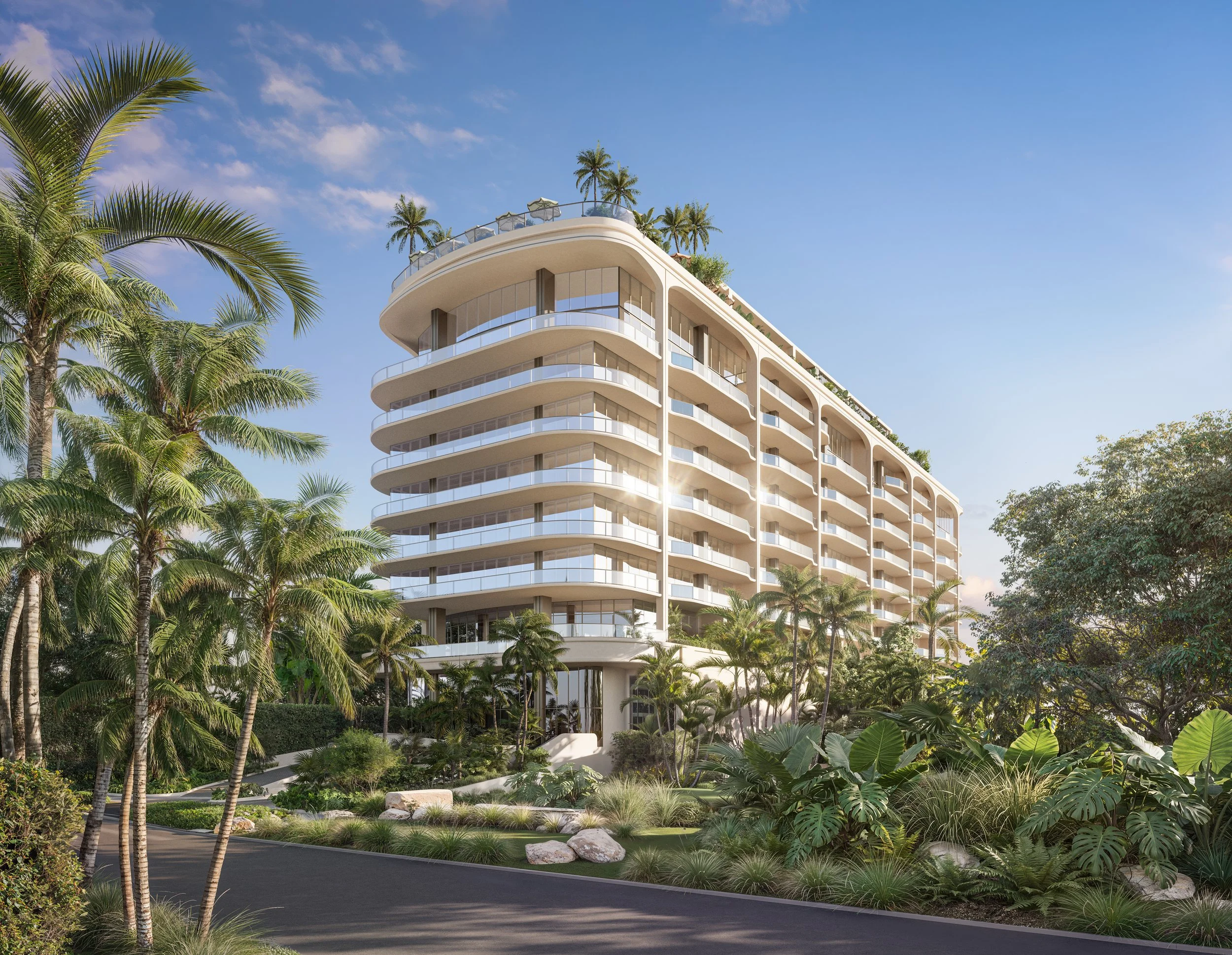
Ytech has unveiled 75 Broadway in Brickell: a 52-story collection of 106 homes from $3 million, designed by KPF with ACPV interiors and Enea landscapes. Completion is anticipated in late 2029.