
Magic City Tech Boom? Microsoft In Negotiations At 830 Brickell And Elon Musk Wants To Build Tunnels Under Miami
Miami, the magic city, is on track to become the next Silicon Valley as the fallout from the COVID-19 pandemic has brought people flocking to South Florida. Florida saw the second highest population growth over any other state in 2020, following Texas, adding over 240,000 new residents in a single year.
Miami, the magic city, is on track to become the next Silicon Valley as the fallout from the COVID-19 pandemic has brought people flocking to South Florida. Florida saw the second highest population growth over any other state in 2020, following Texas, adding over 240,000 new residents in a single year. The influx of new residents is being driven by those looking to take advantage of remote-working opportunities or seek a state that has let business remain open and has pro-business tax structure. This has led to Miami and Palm Beach real estate pricing and absorption reaching near record highs.
Not only are the new residents flocking from the high-tax New York, at the same time as South Florida’s population boom, the San Francisco Bay Area has seen an exodus of venture capitalists and tech entrepreneurs. Mayor Francis Suarez has opened up the city to tech entrepreneurs and has expressed interest in bringing innovative companies to the magic city and making Miami a global tech hub. Mayor Suarez recently announced he will be appointing a Chief Technology Officer for the city.
Miami’s office market is being a surge in demand and setting record high pricing. Microsoft (NASDAQ: MSFT) is one of the major tech firms looking to move to Miami, the multinational software provider is actively in negotiations to lease 30,000 square feet of space at OKO Group’s 830 Brickell, a 56-story office tower adjacent to Brickell City Centre which is currently under construction. Pricing is still relatively cheap compared to other major markets, asking rates at 830 Brickell are reportedly in the $70’s PSF range. Ken Griffin’s Citadel Securities hedge fund is also reportedly looking at office space in 830 Brickell as is the Chicago-based law firm Baker McKenzie.
The biggest news came when Tesla and SpaceX founder Elon Musk tweeted that he had talked with Florida Governor Ron DeSantis about building a tunnel system underneath Miami to eliminate traffic and pollution. Mayor Suarez tweed that “we will do it,” and invited Musk to visit him at City Hall. In the past Miami has had success building tunnels at a comparatively low cost. The initiative would be led by Elon Musk’s Boring Company, who is getting ready to reveal the Vegas Loop to the public, a 4,475’ tunnel loop under the Las Vegas Convention Center. In the Las Vegas Loop passengers will reach speeds up to 155 mph and will ride in Tesla Model X’s, Model 3’s, and a 16-passenger modified Model 3. Las Vegas in now working with the Boring Company to build a citywide network of tunnels.
For more information about 830 Brickell, Brickell office space, private showings or purchasing/ leasing information please fill out the form below:
Miami, Palm Beach County and Fort Lauderdale recover about 28,000 jobs since the start of the COVID-19 pandemic
Almost 28,000 jobs have been recovered since the beginning of the COVID-19 pandemic in Miami, Palm Beach County and Fort Lauderdale. Majority of these jobs fall into the government, hospitality and retail sectors. The Bureau of Labor Statistics released data showing the Miami market has gained over 16,000 jobs in August, Palm Beach has gained about 7,000 and Fort Lauderdale has gained over 5,000.
Almost 28,000 jobs have been recovered since the beginning of the COVID-19 pandemic in Miami, Palm Beach County and Fort Lauderdale. Majority of these jobs fall into the government, hospitality and retail sectors. The Bureau of Labor Statistics released data showing the Miami market has gained over 16,000 jobs in August, Palm Beach has gained about 7,000 and Fort Lauderdale has gained over 5,000. The largest growth in the job market over the last few months is coming from the government sector. The majority of these jobs are temporary positions tied to the 2020 Census, but has helped the unemployment rate fall to single digits for the first time since COVID-19 hit.
Hospitality and retail are industries that have suffered considerably from the COVID-19 pandemic across the Country. Miami has lost about 70,000 jobs in hospitality and about 22,000 jobs in retail since March and April. As stores and restaurants continue to open up operating at limited capacity, both industries combined have recovered an average of 55% of the jobs lost. This has significantly boosted Miami’s total COVID-19 job recovery rate to about 45%.
Palm Beach County’s hospitality and retail industries are slowly making a comeback but not at the same rapid pace as Miami. At the beginning of the pandemic hospitality in Palm Beach County lost about 48,000 jobs and retail lost almost 10,000. Since April, hospitality has recovered about 30% of jobs lost and retail has recovered about 45%. Palm Beach County has regained about 35% of the 100,000 total jobs lost from the pandemic.
Fort Lauderdale’s hospitality industry lost over 3,000 jobs and retail lost about 14,000 since March and April. Hospitality has recovered about 44% of the jobs lost and retail has recovered about 60%. Fort Lauderdale has a total recovery rate of about 36% of the 130,000 jobs lost from the pandemic. Overall even though job loss from COVID-19 remains down, it is hopeful to see industries slowly coming back as customers begin to leave their houses and support local communities.
WeWork Leaves Lincoln Road Location As Landlord Seeks $19.5 Million In Unpaid Rent
WeWork’s trouble’s due to COVID-19 continue as the landlord of their 350 Lincoln Road location has sued the co-working giant in Miami-Dade Circuit Court. SML 350 Lincoln Inc., an entity controlled by Shaul Levy and Meir Levy, alleges that WeWork breached their lease by failure to pay rent in April, May and June.
WeWork’s trouble’s due to COVID-19 continue as the landlord of their 350 Lincoln Road location has sued the co-working giant in Miami-Dade Circuit Court. SML 350 Lincoln Inc., an entity controlled by Shaul Levy and Meir Levy, alleges that WeWork breached their lease by failure to pay rent in April, May and June while occupying the 40,000 square foot space and now owes in-excess of $19.5 million in back-rent and legal fees. WeWork said in a statement that the lawsuit is without merit and will continue to work with the landlord to resolve the situation in a mutually beneficial fashion. WeWork’s 16-year lease at 350 Lincoln Road began in November 2014 and runs through October 2030.
WeWork will close the Lincoln Road location on August 14 and has also moved to consolidate its Miami Beach members to 429 Lenox Avenue. Last month we reported that Goddard Investment Group has moved to evict WeWork from the Lenox Avenue location, but the two parties were reportedly able to resolve their differences.
WeWork, which is now led by CEO Sandeep Mathrani, still has locations in Downtown Miami, Brickell and Coral Gables. Times have not been good to WeWork following its failed IPO in 2019. The coworking giant recently announced that it will being closing its first location to ever open in New York City and saw its valuation slashed from over $47 billion to $2.9 billion.
In May 2020, a group of WeWork’s members moved toward suing the co-working giant demanding that WeWork cease collecting rental fees. Many tenants had already requested rent relief, cancelled their leases or stopped paying, which put over $5.5 billion of CMBS loans backed by WeWork occupied properties at risk. Some of the CMBS loans back WeWork flagship locations in New York and San Francisco. WeWork has retained Newmark Knight Frank and JLL to try to renegotiate leases and negotiate concessions from landlords at some of their properties as the firm try to stave off a potential bankruptcy.
WeWork’s problems do not end there. Former CEO and co-founder Adam Neumann is reportedly under investigation for self-dealing by the New York State Attorney General. In addition, the Tokyo-based SoftBank led by Masayoshi Son and a special committee of WeWork board members have been locked in a legal battle after Softbank walked away from a $3 billion tender offer in April 2020 which was part of the $9.5 billion bailout package SoftBank signed with WeWork following WeWork’s failed IPO.
Neiman Marcus To Close Worth Avenue Location After Filing Chapter 11 Bankruptcy
COVID-19 continues to shake the commercial real estate industry, especially when it comes to retail. The Dallas-based Neiman Marcus Group has announced that they will be will be closing their Worth Avenue location in Palm Beach amid the luxury retailer’s Chapter 11 Bankruptcy Protection Proceedings.
COVID-19 continues to shake the commercial real estate industry, especially when it comes to retail. The Dallas-based Neiman Marcus Group has announced that they will be will be closing their Worth Avenue location in Palm Beach amid the luxury retailer’s Chapter 11 Bankruptcy Protection Proceedings. Neiman Marcus is actively working with A&G Real Estate to find someone to take over their 48,661 SF lease at 151 Worth Avenue which runs through May 31, 2026 and has options available to the tenant through 2051. 151 Worth Avenue is owned by the New York-based O’Connor Real Estate Advisors who acquired the property in January 2014 for $40 million.
"Real estate is a long-term play. These leases represent an incredible opportunity for retailers and investors to gain a foothold in markets that, under normal conditions, are renowned for their traffic and sales – as well as for their high barriers to entry," said A&G Real Estate Co-President Emilio Amendola. "Additionally, some of these locations are particularly promising for conversion to hotel, office or residential use."
The Worth Avenue, Palm Beach store currently remains open for curbside pickup and appointments only. Neiman Marcus first filed for Chapter 11 Bankruptcy in May 7, 2020, amid the fallout from the COVID-19 pandemic in the U.S. Bankruptcy Court for the Southern District of Texas, Houston Division.
Goddard Investment Group Moves To Evict WeWork From South of Fifth Location
WeWork’s landlord at 429 Lenox Avenue, Goddard Investment Group, has moved to evict WeWork from their South of Fifth location at 429 Lenox Avenue in South Beach. The 43,500 SF building is fully leased by WeWork who skipped out on rent payments for April, May and June.
WeWork’s landlord at 429 Lenox Avenue, Goddard Investment Group, has moved to evict WeWork from their South of Fifth location at 429 Lenox Avenue in South Beach. The 43,500 SF building is fully leased by WeWork who skipped out on rent payments for April, May and June. An eviction notice reportedly alleges WeWork behind in excess of $650,000 in unpaid rent which must be paid by today or WeWork must vacate the property (July 7, 2020). WeWork first opened the South of Fifth location in early 2016 and is committed to the NNN lease until 2031. Goddard Investment Group financed 429 Lenox Ave. with a $23 million floating-rate loan issued by Granite Point Mortgage Trust, Inc. In Miami WeWork has other locations at 350 Lincoln Road, Brickell, Downtown Miami and Coral Gables.
Times have not been good to WeWork following its failed IPO in 2019. The coworking giant recently announced that it will being closing its first location to ever open in New York City and saw its valuation slashed from over $47 billion to $2.9 billion.
In May 2020, a group of WeWork’s members moved toward suing the co-working giant demanding that WeWork cease collecting rental fees. Many tenants had already requested rent relief, cancelled their leases or stopped paying, which put over $5.5 billion of CMBS loans backed by WeWork occupied properties at risk. Some of the CMBS loans back WeWork flagship locations in New York and San Francisco. WeWork has retained Newmark Knight Frank and JLL to try to renegotiate leases and negotiate concessions from landlords at some of their properties as the firm try to stave off a potential bankruptcy.
WeWork’s problems do not end there. Former CEO and co-founder Adam Neumann is reportedly under investigation for self-dealing by the New York State Attorney General. In addition, the Tokyo-based SoftBank led by Masayoshi Son and a special committee of WeWork board members have been locked in a legal battle after Softbank walked away from a $3 billion tender offer in April 2020 which was part of the $9.5 billion bailout package SoftBank signed with WeWork following WeWork’s failed IPO.
Governor Ron DeSantis Announces $250 Million In CARES Act Funding Allocated For Rental And Mortgage Assistance
Florida Governor Ron DeSantis has announced that the state will allocate $250 million in CARES Act funding to rental and mortgage assistance due to the COVID-19 pandemic shutdown. $120 million of the funds will be allocated to Florida Housing Finance Corp. which will provide rental assistance to households who live in affordable housing rentals within the Florida Housing Finance Corp. portfolio.
Florida Governor Ron DeSantis has announced that the state will allocate $250 million in CARES Act funding to rental and mortgage assistance due to the COVID-19 pandemic shutdown. $120 million of the funds will be allocated to Florida Housing Finance Corp. which will provide rental assistance to households who live in affordable housing rentals within the Florida Housing Finance Corp. portfolio and have been impacted by COVID-19. Qualified renters will be able to use the funds from July 2020 through December 2020. The announcement comes just days before Florida’s moratorium on evictions and foreclosures expires and a rush of evictions and foreclosures are expected in July.
An additional $120 million will be allocated for rental and homeowner assistance programs for those impacted by COVID-19 providing aid for rent assistance, mortgage payment assistance, downpayment and closing assistance, mortgage buy-downs, new construction, rehabs, emergency repairs and homeownership counseling. The final $10 million will be used for operating costs of the programs and technical assistance.
$800 Million Sale of Second Largest Hotel in South Florida Falls Through
A roughly $800 million deal between Jeffrey Soffer’s Fontainebleau Development to acquire Brookfield Property Partner’s Diplomat Beach Resort Hollywood was called off on May 8 as the effects of COVID-19 on South Florida’s hotel and tourism industries continues to cause havoc.
An $800 million deal between Jeffrey Soffer’s Fontainebleau Development and Brookfield Property Partner’s Diplomat Beach Resort Hollywood was called off on May 8 as the effects of COVID-19 on South Florida’s hotel and tourism industries continues to cause havoc. The 1,000 room Diplomat Beach Resort Hollywood, located at 3555 South Ocean Drive in Hollywood, FL, is the second largest hotel in South Florida following Soffer’s 1,600 room Fontainebleau Miami Beach, whose $975 million CMBS loan entered special servicing in March 2020. Fontainebleau Development is reportedly still in discussions with Brookfield Property Partners and may revisit the acquisition in the future.
The Diplomat Beach Resort Hollywood was first marketed for sale in January 2019 asking $1 billion, $1 million per room. Brookfield Property Partners, which is the real estate division of the Toronto-based Brookfield Asset Management, acquired the hotel for $460 million in 2014 and rebranded the flag from a Westin hotel to a Curio Collection by Hilton. In 2017 Brookfield completed a $100 million renovation and in September 2019 led a $168 million refinancing of the hotel with the funding provided by Morgan Stanley, J.P. Morgan and Wells Fargo.
Malls Across Miami Are Reopening Today As Miami Enters Phase 1 Of Reopening From The COVID-19 Shutdown
“Although we live in a city without seasons, this feels like Spring,” said Miami Design District visionary Craig Robins as Miami enters Phase 1 of its reopening plan. As per approval by Governor Ron DeSantis, Miami-Dade and Broward County can begin to reopen as of today, May 18, 2020, following the COVID-19 lockdown that has marred the United States since early March.
“Although we live in a city without seasons, this feels like Spring,” said Miami Design District visionary Craig Robins as Miami enters Phase 1 of its reopening plan. As per approval by Governor Ron DeSantis, Miami-Dade and Broward County can begin to reopen as of today, May 18, 2020, following the COVID-19 lockdown that has marred the United States since early March. Golf courses and marinas opened several weeks ago with restrictions, and now retail, restaurants, barbershops and salons may open - with restrictions. Bars, nightclubs, movie theaters and beaches are not part of the Phase 1 reopening plan and have no set reopen date.
Following the opening of Palm Beach County over the past several weeks, malls in Miami are welcoming back patrons in Miami Design District, Brickell City Centre, Bal Harbour Shops and Aventura Mall, in addition to Broward County’s Sawgrass Mills mall leading the charge. While the malls may be open, individual businesses within them are making their own decisions as to which day and how they will relaunch operations. Robins indicated that Miami Design District will see most of their tenants open by Wednesday, May 20 along with parking, public art and centralized services. Shoppers will also be able to pick up a mask at any MDD information desk. Bal Harbour Shops and Brickell City Centre opened May 18.
Restaurant openings have been a hot topic of discussion as they begin opening their dine-in services back up at 50% capacity and with six foot social distancing between parties. Bar counters are closed to seating and a maximum of four people can be seated at a table unless they are members of the same household, which are capped at six. Patrons must wear face masks when they are not at their table and employees must wear masks at all times. All menus must be single use and restrooms must limit their capacity to one person at a time. Retail has similar restrictions limiting capacity to 50% and requiring all customers and employees to wear a mask at all times.
Authorities will monitor and assess how Phase 1 of reopening progresses over the next several weeks before approving a move to Phase 2 or instituting new restrictions to help stop the spread of the COVID-19 pandemic.
WeWork Lawsuit-Threat By Tenants Requesting Rent Relief Sends Shudders Through $5.5 Billion Of CMBS Debt
A group of WeWork’s members have moved toward suing the co-working giant in a letter sent by Walden Macht & Haran demanding that WeWork cease collecting rental fees. Many tenants have already requested rent relief, cancellation of their leases or stopped paying, which has put over $5.5 billion of CMBS loans backed by WeWork occupied properties at risk,
A group of WeWork’s members have moved toward suing the co-working giant in a letter sent by Walden Macht & Haran demanding that WeWork cease collecting rental fees. Many tenants have already requested rent relief, cancellation of their leases or stopped paying, which has put over $5.5 billion of CMBS loans backed by WeWork occupied properties at risk. Some of the CMBS loans back WeWork flagship locations in New York and San Francisco. WeWork, who was previously valued at $47 billion before dropping to a pre-covid valuation of $8 billion, has been working to renegotiate leases and has even skipped out to rent at some of their properties. This has in turn caused the price of bonds backed by payments from WeWork to fall drastically.
WeWork has made an effort to keep their locations open during the COVID-19 pandemic, but many of their tenants have expressed that they think WeWork should have shut their locations. Should WeWork not, Jim Walden of Walden Macht & Haran, threatened to start an arbitration process for WeWork members if the company continues to collect the fees in his letter to the company.
“State and local authorities around the country have directed businesses to cease operation and have prohibited workers, including our clients, from using their workplaces,” said Jim Walden. “As long as this pandemic prohibits our clients from using their WeWork office spaces, the purpose of their membership agreements is frustrated, thus excusing their obligation to pay membership fees.”
Tenants have accused WeWork of turning their backs on small business by continuing to collect fees. Due to WeWork’s short term lease model, the co-working giant is more at risk than the standard office landlord as many of WeWork’s tenants have elected not to renew and can be more flexible about actually going to an office as opposed to working from home. Many of WeWork’s tenants do not want to take the risk of going to their WeWork office location during the middle of the COVID-19 pandemic with 1.37 million confirmed cases in the US. Walden claims that the way the leases are structured are closer to that of gym memberships as opposed to true office leases, meaning that under New York law members are not liable for payments if they cannot physically access the space.
“Our clients have no legal obligation to pay their membership fees while the purpose of their membership agreements remains frustrated by the COVD-19 pandemic,” Walden wrote. “Ignoring this fact, WeWork continues charging these members full monthly fees and refuses to offer concessions or compromise.”
WeWork’s problems do not end there. Former CEO and co-founder Adam Neumann is reportedly under investigation for self-dealing by the New York State Attorney General. Additionally, one of WeWork’s major financial backers, the Tokyo-based SoftBank led by Masayoshi Son, walked away from a $3 billion tender offer in April 2020 which was part of the $9.5 billion bailout package SoftBank signed with WeWork in October 2019 following WeWork’s failed IPO. In May 2020 a special committee of WeWork board members filed a motion in Delaware to prevent SoftBank from disbanding the company as they purse legal action against the majority owner SoftBank Group Corp. WeWork’s special committee also represents minority shareholders including co-founder Adam Neumann. SoftBank and the SoftBank Vision Fund, which is a tech-focused venture capital fund with includes capital from the Saudi Arabian and Abu Dhabi sovereign wealth funds, Apple, Qualcomm, Foxconn and Sharp, have invested $14.25 billion into WeWork.
Why Rent Strikes Are Bad for Everyone and What’s Going to be Done about Unemployment?
Since thousands of businesses were deemed non-essential and forced to shut their doors, reemployment assistance claims over the last six weeks have surpassed two million in South Florida. With a tourism-dependent economy plus an older population, Florida is more vulnerable to economic shock, which is why it is one of the top five states with the highest number of claims.
Since thousands of businesses were deemed non-essential and forced to shut their doors, reemployment assistance claims over the last six weeks have surpassed two million in South Florida. With a tourism-dependent economy plus an older population, Florida is more vulnerable to economic shock, which is why it is one of the top five states with the highest number of claims. The longer the standstill goes on, the worse the economic fallout will be.
As May rents come due and unemployment rates continue to jump, providing assistance to households should be a top priority for policymakers. The prospect of a rent strike has been trending in the news and on social media, but a voluntary movement to skip rent payments could destabilize not only the housing market, but the American economy as well. How many months of working capital do small businesses have to stay afloat, in order for those furloughed and laid off employees to have jobs to return to after nationwide and state stay-at-home orders are eased and how will South Florida’s real estate market fare in the coming months?
May Day: May 1st Is Here
Multifamily landlords were pleasantly surprised with April collections. In an exclusive webinar interview hosted by PROFILE last week, President of Tate Capital, James Tate, who has over $1B assets under management, told us “We’re 90% collected,” talking about his 10,000+ door multifamily portfolio. Now it’s May 1st and everyone is wondering what May rent collections will be. “May 1st will be a good deciding point to see how many people default,” added Allen Morris, Chairman and CEO of the Allen Morris Companies.
Morris said his April multifamily rent collections were at 95%. He’s opening two new apartment buildings in Orlando this summer and is taking a proactive leasing approach. “People are signing leases, assuming the University of Central Florida is holding its fall semester. We’re giving tenants a guarantee in their lease. If they delay opening the university, we will delay rent until school opens.” Offering tenants flexibility gives them the security to sign leases now and is helping to forge a positive landlord-tenant relationship that will be dependent on open communication, should issues with payment arise in the future.
Trending: Socialist Whispers
With talks of rent strikes sweeping the country, landlords have been portrayed as vultures preying on the pockets of financially insecure tenants, when they remain responsible for property taxes and other carrying costs that help pay for public improvements, education and other municipality benefits. Diligent landlords are communicating with their tenants and weeding out those who are taking advantage of the public health crisis, says Shahab Karmely, CEO of KAR Properties. Those who can, should pay rent to support the services their communities need. Those directing their frustrations toward landlords may have valid concerns: with the economy shut down by government-mandated order, how are people supposed to pay bills and keep businesses running?
In New York, politicians pushing socialist rhetoric and big government reach such as Alexandria Ocasio Cortez have called for rent strikes and rent cancellations. Movements in New York City even claim to have “identified” landlords who can take a “shave”. Lack of payment means that owners will not be able to stay in business and manage the building to the tenant’s expectations, including paying for things like common area maintenance (think: how much does it cost for a cleaning crew to wipe down all public surfaces in a building multiple times a day). Landlords also pay property tax, insurance, debt service, management fees and capital expenditures for improvements.
Most commercial real estate investments are made by an owner contributing an equity portion to a project, but a majority of the total costs are funded through debt that is usually collateralized by the asset (if it’s senior debt). Typical sources of debt include pension and life insurance funds, which could be the life savings of either a tenant or a landlord. When landlords are unable to meet their debt obligations, the cascading effects don’t stop at their coffers, but trickle down to all Americans. Not making rent payments could derail future opportunities for many, including someone’s retirement age.
Karmely added “The real pandemic to hit New York City multifamily was the legislature that strangled the landlords in this business,” which will continue to make Florida’s real estate investment climate more attractive. Multifamily product in New York City has been trading between 3-5% cap rate, depending on the neighborhood. The low trading cap rates for core product has made some investors nervous about paying such a premium for an asset that the New York government has so much control over.
Another risk for New York investors is that South Florida’s pricing for comparative rental and condo inventory is cheaper than it’s NYC counterpart, while providing higher quality-of-life with more space and building amenities. From an investment perspective, it is also easier to manage assets in Florida where there is no government-enforced rent control, rent stabilization, or near-impossible eviction procedures for delinquent tenants.
Opportunities on the Horizon
The cure to the virus is causing an economic calamity that is hitting everybody and everything, which means opportunities will be on the horizon three to four months from now when property owners' cash reserves run dry, especially for retail and restaurant real estate assets.
Many have posited, is the cure worse than the virus? How long can residential and commercial tenants pay their rent amid an economic shutdown? Will we be able to produce our way out of a recession with unemployment in the double digits? Likely not - Uncle Sam will be waiting in the shadows with hand outstretched to collect his dues. As we all sit on the sidelines, awaiting our fates, the solution appears to be a function of time.
“My biggest concern is that we were hit with an 11 magnitude earthquake, and we all got knocked down. Unfortunately, after a major earthquake in coastal areas there is a tsunami. My concern is how are these small businesses supposed to remain open and sustain themselves for the next six to eight months unless something material is done by the federal government? Who’s going to hire those 30 million unemployed people back? If you ask me why I can’t sleep at night, that’s what I’m really concerned about,” opined Tate to cheers of “Jimmy Tate for President!”
-- Special reporting by the PROFILEmiami Team. Isabella Zimmermann, Katya Demina and Demetri Demascus contributed to this article.

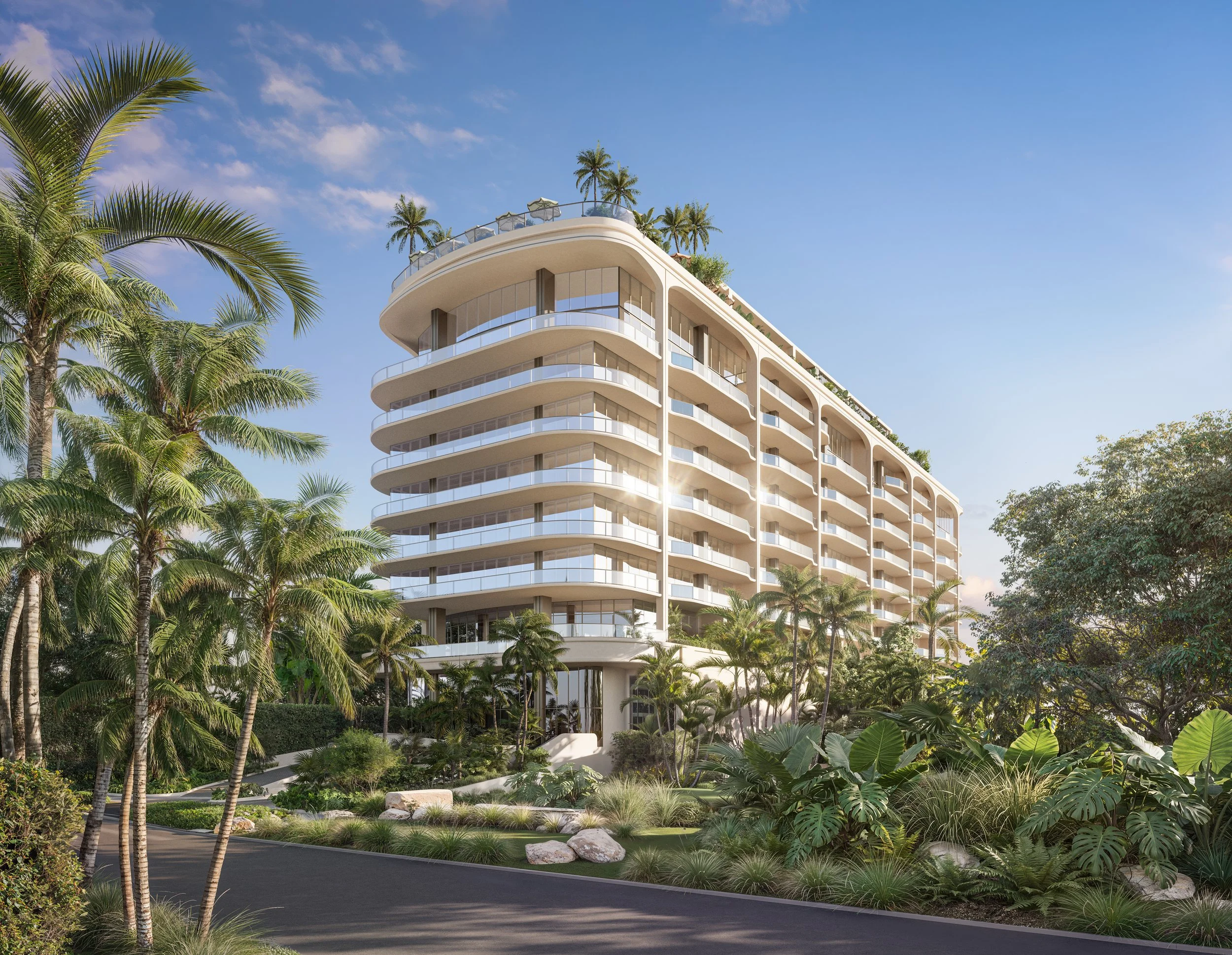
Ytech has unveiled 75 Broadway in Brickell: a 52-story collection of 106 homes from $3 million, designed by KPF with ACPV interiors and Enea landscapes. Completion is anticipated in late 2029.