

Hermès Designer Unveils 40,000 SF of Amenities for Fouquet’s Hotel & Residences, Miami Design District
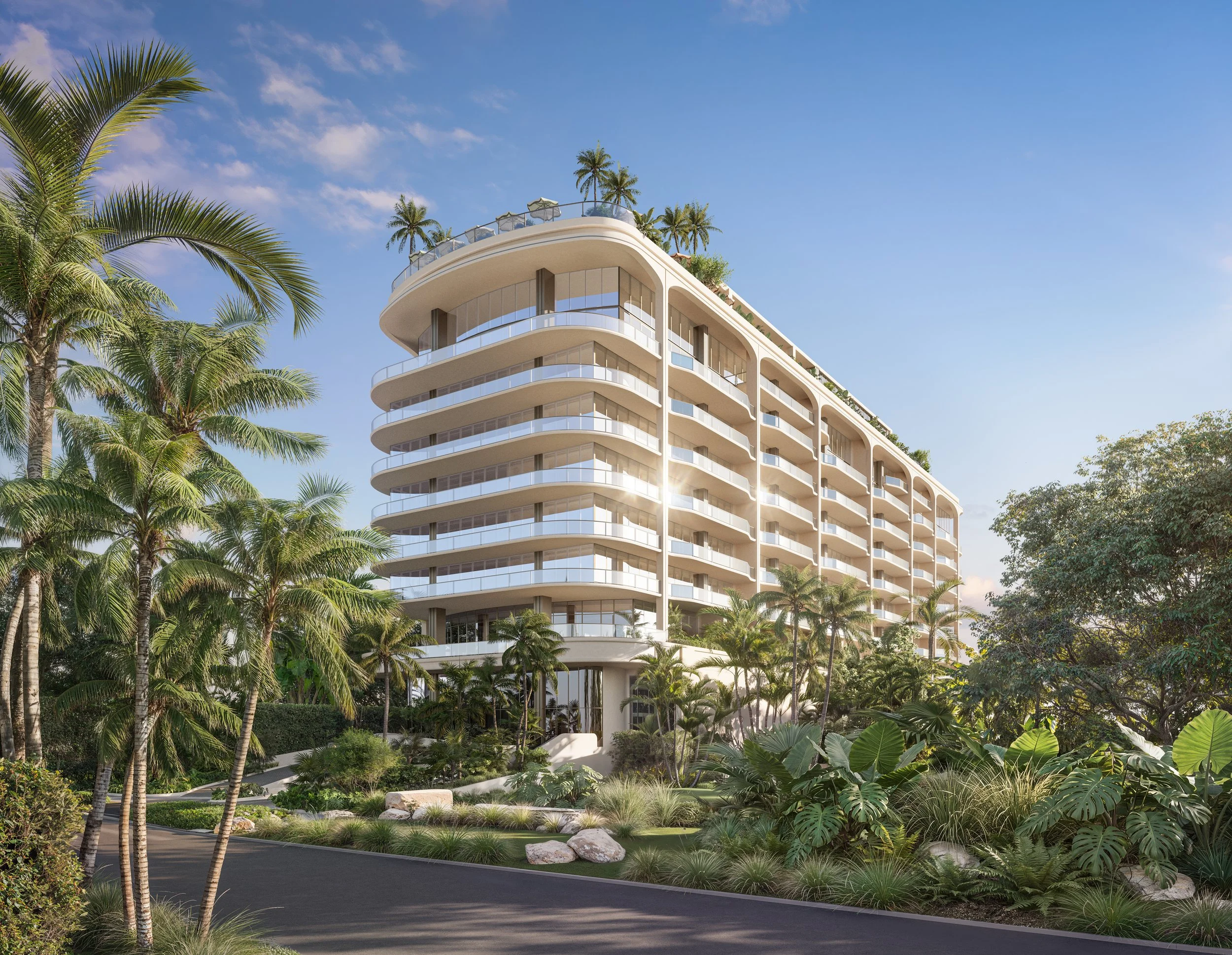
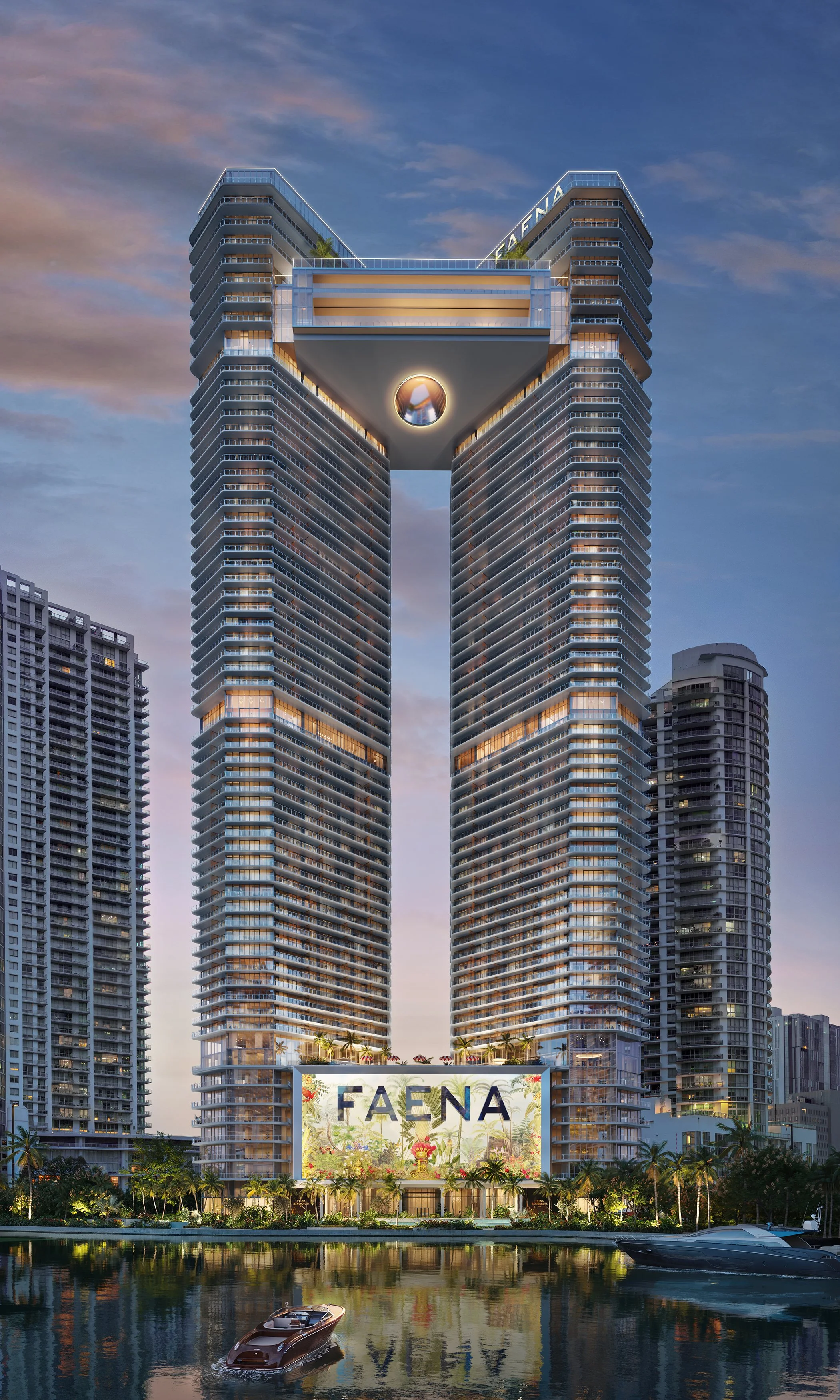
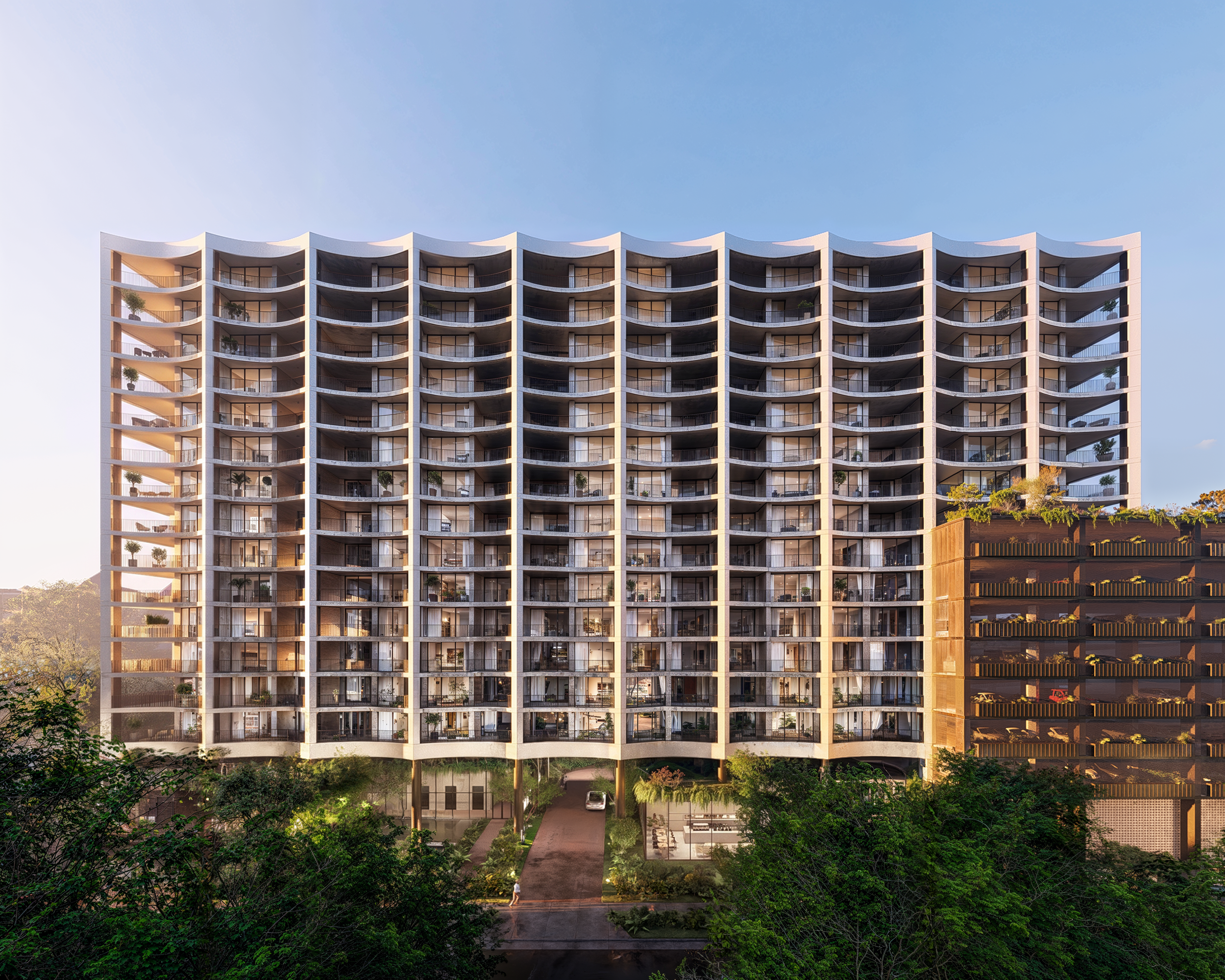
Fouquet’s Hotel & Residences, Miami Design District has unveiled more than 40,000 square feet of amenities designed by RDAI, the Paris-based studio behind Hermès stores worldwide. The 143-residence development pairs rooftop leisure and wellness spaces with direct access to an 85-key Fouquet’s hotel.

Fouquet’s Hotel & Residences, Miami Design District has unveiled a first look at more than 40,000 square feet of amenities designed by RDAI, the Paris-based team behind Hermès stores worldwide. The interiors bring a Parisian sensibility to the Miami Design District through warm woods, soft green tiles, sculptural furnishings and lush landscaping.
The amenities include a rooftop pool with bar, rooftop lounge, spa with hammam and cold plunge, Serenity Lounge with juice bar, salon for on-demand services, fitness center with private training studio, golf simulator, entertaining suite, executive lounge and playroom.
The residences connect directly to a new 85-key Fouquet’s hotel, giving owners access to five dining concepts and on-demand hotel services ranging from housekeeping and pantry stocking to event planning, chauffeur service and 24-hour concierge. The project will include 143 residences starting at $1.8 million.

Developed by Miami Design District Associates (MDDA) in partnership with Raycliff Capital, Fort Partners and Constellation Hotels Holding Ltd., the mixed-use project will introduce both the neighborhood’s first luxury private residences and its first luxury hotel. The arrival of Fouquet’s is expected to serve as both a hospitality centerpiece and cultural anchor for the Miami Design District.
Designed by Pritzker Prize-winning architect David Chipperfield of David Chipperfield Architects, the development pairs contemporary European architecture with interiors by RDAI. Together, the architectural and interior design teams aim to create a refined residential environment centered on timeless materials, natural light and understated luxury.
The development will feature a 25-story residential tower connected to an adjacent 12-story hotel. Fouquet’s will operate both the hotel and residential component, bringing its signature hospitality model to homeowners through concierge services, curated programming, personalized experiences and hotel-style management. The hotel will also lead the property’s food and beverage program, introducing five distinct dining concepts inspired by Fouquet’s culinary portfolio.

Founded in 1899 on Paris’s famed Champs-Élysées, Fouquet’s has grown into an internationally recognized hospitality brand with properties in destinations including Paris, New York, Saint-Barth and Courchevel. The Miami Design District development will become the brand’s second hotel in the United States, following the opening of Fouquet’s New York in 2022.
Situated at 39 NE 39th Street, the nearly two-acre property places residents in the heart of the Miami Design District, surrounded by luxury fashion houses, acclaimed restaurants, contemporary art galleries and public art installations. The location also provides convenient access to Wynwood, Brickell, Miami Beach and Miami International Airport.
Corcoran Sunshine Marketing Group is serving as the exclusive sales and marketing firm for Fouquet’s Hotel & Residences, Miami Design District.
Images via RDAI
Past PROFILEmiami articles about Fouquet’s Hotel & Residences, Miami Design District:


For more information about Fouquet’s Hotel & Residences, Miami Design District fill out the form below:
Terra, New Valley, Great Eagle Holdings and Bizzi & Partners Pay Off $155 Million Construction Loan For Eighty Seven Park
The partners behind Eighty Seven Park, Pritzker Prize winning architect Renzo Piano’s first residential development in the United States, have paid off $155 million in construction financing for the newly-completed Miami Beach condominium tower.
The partners behind Eighty Seven Park, Pritzker Prize winning architect Renzo Piano’s first residential development in the United States, have paid off $155 million in construction financing for the newly-completed Miami Beach condominium tower. The loan, which was issued in 2017 by United Overseas Bank, helped fund the development of the 18-story, luxury tower located at 8701 Collins Avenue in the city’s North Beach neighborhood, which was delivered in November 2019. More than 90% of the development’s 66 residences have been sold, with unit sales representing over $400 million in total transaction value. Remaining residences are available from about $2 million to $10 million.
“Our ability to pay off our financing shortly after completion speaks to the strength of Eighty Seven Park’s development and design teams, and to the high-demand we’ve seen for this one-of-a kind iconic building,” said developer David Martin, President of Terra. “Renzo Piano and West 8 had such a powerful vision for this project, and we are thrilled by the response from our owners from across the U.S. and around the world.”
Since launching sales in 2016, Eighty Seven Park has attracted a diverse mix of residents including a significant percentage of domestic buyers. While the tower has enjoyed steady sales activity among global buyers, U.S. buyers have accounted for approximately 50% of all unit sales to date.
Residences at Eighty Seven Park feature floor-to-ceiling windows and wrap-around terraces. Each unit offers breathtaking panoramic views of the ocean and lush greenery. Among the design team was internationally acclaimed Parisian architect, Rena Dumas (RDAI), who created the tower’s interior and exterior living spaces. Luxurious amenities include around-the-clock concierge and butler service, an outdoor juice bar, a full-service salon for residents, and a full-time botanist who assist residents with their private balcony gardens. The residences feature large outdoor living spaces with summer kitchens, accounting for approximately 70% of each unit’s interior space. Additionally, owners and their guests have access to have a two-acre park.
Image by The Boundary
Renzo Piano's Eighty Seven Park Reveals Record-Breaking $68 Million Penthouse
Eighty Seven Park by Renzo Piano Building Workshop has revealed its penthouse in record breaking fashion. Priced at $68 million, the penthouse is unlike any other property on the market and is 2018’s most expensive home in Miami.
Eighty Seven Park by Renzo Piano Building Workshop has revealed its penthouse in record breaking fashion. Priced at $68 million, the penthouse is unlike any other property on the market and is 2018’s most expensive home in Miami. The penthouse floats atop 18 stories and completes the remaining two floors of the boutique condominium, spanning 25,000 SF with 360-degree park, city and ocean views that embrace nature more than anywhere else.
As the realized vision of Pritzker-Prize-winning architect Renzo Piano, Eighty Seven Park’s expertise at “bringing the outdoors in” has captured contracts with high-profile buyers like Novak Djokovic and more. The project is developed by Terra, along with Bizzi & Partners Development, New Valley and Pacific Eagle. A true gem and a modern-day sanctuary, Eighty Seven Park’s penthouse is filled with every luxe amenity anyone could ever imagine to ensure there’s no need to ever want to leave home.
Terra’s President David Martin said he wanted the penthouse to offer its future keyholders a home that “pays unrivaled attention to detail,” and this iconic residence truly leaves no stone left unturned.
The penthouse is designed by RDAI, best-known for their long history with Hermès. It features six bedrooms, eight bathrooms, three powder rooms with 12,410 SF of interior space and 18,247 SF of outdoor terrace. The residence also features unobstructed ocean, park and city views; a personal fitness center, two private elevators, a state-of-the-art home cinema, floor-to-ceiling windows, vertical gardens, a personal Turkish hammam, two 40’ long sunset and sunrise infinity pools, jacuzzi, outdoor theatre, putting green and two summer kitchens.
“We looked to provide a serenely relaxed atmosphere,” said RDAI Design Director Julia Capp about the penthouse. “Its incredible location and views allow the light to gently infuse the interior and maintain contact with the exterior – which was an integral part of the design.”
“We want to engage and bring purposeful living not only to the buyers of Eighty Seven Park, but to the North Beach neighborhood as a whole,” says David Martin, President of Terra. “Along with the attention to detail that was poured into every aspect of Eighty Seven Park, our development also focused on urban planning that contributes to the neighborhood. We have discerning buyers from all around the world who recognize that there is intrinsic value in purchasing long-lasting assets with positive community impact.”
Away from the noise, Eighty Seven Park is nestled in North Beach where exclusivity is high, yet availability is low. At 80% sold, Eighty Seven Park is the one of the only boutique options still available for purchase. Eighty Seven Park is also the only building that has no more than four residences per floor, a residents-only garden, five-star amenities without hotel hassles, and a 35-acre park transformed by West 8 next door.
“Eighty Seven Park is a project that is truly singular for the South Florida market,” said Howard M. Lorber, Chairman of Douglas Elliman Realty. “It’s world-class architecture by Renzo Piano, direct oceanfront location, high-caliber interior design and luxury suite of amenities has proven to be appealing to buyers from across the United States and from around the globe. We look forward to continued sales success now that the super-structure is complete.”
For more information about Eighty Seven Park, private showings or purchasing/ leasing information please fill out the form below:
PROFILE Exclusive: Inside Developing The Renzo Piano & RDAI-Designed Eighty Seven Park With Terra's David Martin
PROFILEmiami had the exclusive opportunity to sit down with David Martin, President and co-founder of Terra, and the mastermind behind some of Miami's most architecturally significant condos of this cycle include Bjarke Ingels-designed Grove at Grand Bay, the Rem Koolhaas-designed Park Grove, and Rene Gonzalez-designed Glass.
PROFILEmiami had the exclusive opportunity to sit down with David Martin, President and co-founder of Terra, and the mastermind behind some of Miami's most architecturally significant condos of this cycle include Bjarke Ingels-designed Grove at Grand Bay, the Rem Koolhaas-designed Park Grove, and Rene Gonzalez-designed Glass. Now, he has set his sights on Miami Beach with an all-star team including Renzo Piano and RDAI to build Eighty Seven Park, a beachfront luxury tower complete with a private residents' park. Get the inside scoop on the exclusive tower, and how David Martin builds, develops, and cultivates neighborhoods on Miami Beach.
PM (KD): What did you hope to accomplish by bringing in Renzo Piano? Did you think he was the right person to marry the indoor/outdoor lifestyle you wanted to provide or did it have more to do with his global presence?
DM: I always was an admirer of his work and when I met him I was really inspired. Part of that process had to do with the fact that I’m making a decision whether we were going to keep the existing building and build next to it, or whether we were just going to build one building and his recommendation was to do one. I think that’s what happens sometimes, you meet people and you connect.
PM (KD): So bringing in a designer/architect name wasn’t something that was at the top of your list?
DM: For me it's more about the design process than the name. It's about what we could create together, rather than what his name is. Because you could have somebody with a great name, but creates something that doesn’t work. I think its always about trying to find the person that can speak to the clientele through their work and that fits in that audience. I think his language of design and architecture fits exactly with what our goals and objectives were.
PM (DD): Did Renzo Piano do the interiors too?
DM: Renzo works on the lobby; he really controls that experience. He created an orangery which is the space where the public park and private park meet. RDAI helped on all the floor plans, all the units, and a lot of the finishes. RDAI is from Paris and they’re really amazing. Locally, they did the Hermès store in Design District.
PM (DD): And the DBOX Rendering?
DM: So those were done by boundary. But the park is a big piece of what makes it so special. Every project we do, we figure out: What are the environmental qualities of that neighborhood? Where are the best schools? Where are the safest places? Right now, the Urban Land Institute has this brief on what a healthy and sustainable neighborhood is and park space is one of the most critical pieces. So that park was a huge differentiator and game changer for what this project meant and it formed a lot of the decisions that were made here.
PM (DD): This is North Beach, not Surfside, right?
DM: Right, so we’re the most northern part of Miami Beach. Miami Beach goes from 1st to 87th Street, and from 87th to 95th is Surfside, and then 95th Street and up is Bal Harbor. What’s interesting is that we get a flavor of Miami Beach, but we also have access to Bal Harbor. It’s different in that North Beach is much less dense, it’s more open. It’s a little more peaceful, a little more residential, and has a lot of space. It is a unique special place that I think is now growing an identity.
PM (DD): So the school district here isn’t the same one as Surfside?
DM: There is good public schools, but also great private schools. You have an interesting residential stock of single families like in Biscayne Point and even Surfside, so it’s an interesting community. The green space and park space give it an environmental quality that is unique to other parts of Miami that are more urban and dense, and create a noise. In a way, this property is kind of very peaceful. We have different types of properties; we have properties in the urban, dense core that have a certain strategy. In this property, being where it is, we accounted into all our decisions. From the selection of the architects, to positioning of the building, to the type of product that we created here, is truly special.
PM (DD): Why do you think that in Surfside, Bal Harbor, and Sunny Isles there is a ton of development, but in Miami Beach there isn’t as much as the other neighborhoods?
DM: Miami Beach has a very restrictive zoning.
PM (KD): What inspired the need for a private residence park in Miami?
DM: At most of the ocean-front developments that you see in South Florida along the coast, people are trying to maximize their development rights and by doing so they use up the entire green space of the building. One of the design decisions here at Eighty Seven Park was to have the building perpendicular to the ocean, rather than parallel. Traditionally, parallel would have been a more selfish approach to the site. From the perspective of quality of life factors, such as sunlight and view and proximity to the water, having the building positioned perpendicular to the ocean was a better thing for the community, but it also then allowed us to create this private park that we developed. So again, the fact that this property is 500 ft on this 35-acre park, that informed us to kind of grab that park and Renzo’s idea was “David, how does this building belong to the park?” He really had all these trees invade the entire property and lobby, and then created this so it goes from a private park to a public park.
PM (KD): So, despite the fact that the park is the defining feature of the building you still adapted to the area and molded the building to better feature what it has to offer. How did you acquire the land?
DM: We paid. It was a competitive process and we won, which sometimes is good and sometimes its not. When you win it means you paid the most, most of the time, but on the flip side we also had a very aggressive timeline. We took a lot of time to think about where we want to buy and what’s the strategy for the neighborhood. We try to strategize and look at opportunities differently.
PM (DD): When did you acquire this land?
DM: This was in 2015 or 2016, a few years ago.
PM (KD): With the new focus on lifestyle in Miami’s condos, how is Eighty Seven Park different from the other buildings? What amenities does it offer that other residences don’t? What sets it apart?
DM: At the end of the day, condos are homes. What we’re doing is we’re creating homes that have access to amenities in a more convenient way. There is a whole convenience factor with these types of buildings and efficiency of time. Technology today is all about innovating and making your life more efficient, so buildings should be able to do that as well. That’s why this interesting psychology where traditionally, South Floridians were buying homes, now you are seeing people buying their homes in buildings. What the buildings then have to offer is the kind of health and wellness situation that we have; RDAI designed our spa and gym, and that’s an important component. This whole food and beverage thing - we created a lounge/bar/outdoor area in the park that is going to serve as that.
PM (KD): Do you see people revolving their daily lives more around where they live?
DM: I think that’s the secret. I think more and more buildings can offer what a hotel offers without allowing for a transient nature of the building and that’s the goal. Whatever experience you can have at a hotel we wanted to make sure you can have as good or a better experience here, but at the same time do it at a place that is more of a private and exclusive sanctuary, like a compound, rather than allowing just any individual to come in and become a guest of the hotel. That was also a big decision for us and is the reason why we didn’t bring in a hotel component to this property.
PM (KD): So what does private investment mean in public spaces for the rest of the community?
DM: We need to look at how we can hack capitalism to solve society’s problems. Any time you have a public deed or an infrastructure project that is going to improve the neighborhood and potentially improve the assessment values and the tax revenues to the city, I think that nexus needs to be created and I think in this project, we made a voluntary contribution of $10.5 million to the park and it made sense. We need to think more creatively how we can solve problems: whether its transit or affordability or infrastructure (flood mitigation). We need to think about what resources are needed and how the private sector can help and contribute.
PM (DD): When it comes to building on the ocean does the strategy in terms of materials used change based on salinity?
DM: Lighting for instance for the sea turtles. You have to have a certain kind of a light system and color. And then on the ocean there is also the dune restoration and beach restoration, so we are shipping in all brand new beautiful sand for the beach. Traditionally, other developments have reused the sand that they dug up from other properties but we move that offsite and brought in all new sand.
PM (KD): Is that also for environmental reasons? And also, aesthetics?
DM: I would say both because the sand I bring is whiter and the sand that comes from here is a little dirtier looking. But also, where you are building on the water line is also important so there is a consistency of how far buildings are positioned from the ocean. And what you can do in your pools and those types of things. This property is only 66 units. The property that used to be here was a 250 room hotel. Now, there will be less traffic and less water/sewer capacity. That hotel was assessed at $20 million and this property will be assessed at $400 million. So that’s 20x more tax revenue with a reduction of traffic and reduction of water/sewer capacity. These types of projects are needed for workforce housing and things like that. So we need to create a mix of housing typologies in order to have a solid economy.
PM (DD): Why do you think right now we have mostly condos here as opposed to co-ops in the luxury market? And do you think over time in Brickell you’ll start to see that de-condo move?
DM: What happens is there’s a commodity product and then there’s a special residential product. So there’s commodity-residential and then there’s kind of unique and special residential. So what you traditionally have seen is a lot of buildings and a lot of developments, even though they are a condo and people own them individually, people rent them out. So at the end of the day there’s always a rental component to a lot of these condo buildings. In Chicago, there may be reasons why they convert them, because for instance in Coconut Grove, there was an office condo that somebody bought all the office condos and then converted it, so there could’ve been situations where people are looking at it as investment opportunities and feel that they could buy up a building, remove the condo component, maybe the real estate tax comes down and improves the ROI and then they have now a cash-flowing asset that they control the whole building. I think also there is limited land, so investments are doing that. I think it’s a form of ownership. I always feel like the buildings we’re doing in the luxury sector are very unique, special and generational. That’s the mood and the types of families that have purchased from us are people that are looking at these residences as generational, and not so much at the current cash flow of the home.
PM (DD): Do you see a large demand of buyers being from high-tax northern states that are trying to shed their residency up there and this project is coming on at the right time to match it?
DM: I think all these trends happen; there’s so many different situations happening all over the country and all over the world that impact where Miami's buyers come from. We have an amazing, diverse group from London to Italy to CT and Manhattan to LA to Brazil.
We have a very interesting mix and it's not so much about where they’re from, but the types of individuals they are: intelligent, not looking for extravagance, but looking for simplicity. Typically, they’re collectors. At the end of the day, that team or collaboration that we create, what we end up doing is informing the public of the DNA of the building which I think attracts certain types of people.
PM (DD) What do you want Eighty Seven Park to mean to this neighborhood?
DM: I think it’s going to be a symbol of hope of what’s to come for the future of Miami Beach. What types of developments are possible that can create the tax revenues needed for the basic needs and services that we need to provide. I think it’s going to be a very smart design that will raise the bar a little bit, even for me, of what to do next and how to do it. Every project I do, I learn more and more so this building has a symbolism to the neighborhood and also to the industry.
About David Martin & Terra:
Terra is an integrated development firm in South Florida focused on creating sustainable, design-oriented communities that enhance neighborhoods and bring people together. Founded in 2001 by father and son, Pedro and David Martin, it has played a significant role in the transformation of South Florida. Terra's portfolio includes luxury high-rises, single family homes, townhouses, retail shopping centers, office space and multifamily apartments, both in urban and suburban areas. Each development is a strategic investment in the region, with the impact on individual communities always carefully considered. Terra has had a recent push in the Coconut Grove, Miami Beach, Doral and Weston neighborhoods. It developed two new luxury condos that helped revitalize Coconut Grove, the Bjarke Ingels-designed Grove at Grand Bay and the Rem Koolhaas-designed Park Grove. Terra also built Glass, a 10-unit condo designed by Rene Gonzalez, in Miami Beach's South-of-Fifth neighborhood.
Interview by Demetri Demascus & Katya Demina | Photos via luxhunters
Sales Update: Renzo Piano's Eighty Seven Park Passes 60% Sold, To Break Ground Next Month
Terra's Eighty Seven Park in Surfside, designed by the legendary Renzo Piano, is reporting that pre-sales at the tower have passed the 60% mark and the developers are aiming to break ground next month (August 2017). Douglas Elliman Development Marketing is overseeing sales where reportedly among notable buyers is Million Dollar Listing New York's Fredrik Eklund. Eighty Seven Park is a joint venture headed up by Terra with Bizzi & Partners Development, New Valley and Pacific Eagles Holdings Corporation.
Eighty Seven Park is located on Collins Avenue in North Beach at 87th St. and Collins, which is the northern-most parcel of land in Miami Beach. Eighty Seven Park will be an 18 story glass tower with expansive, unobstructed views of the Atlantic Ocean, Miami Beach and Biscayne Bay. The building was designed by famed designer and Pritzker Prize-winning architect Renzo Piano Building Workshop in collaboration with RDAI, West 8 designed the landscape architecture and Ruben and Isabel Toledo will handle branding and marketing material. Eighty Seven Park will feature 68 residences that range from 1 to 5 bedroom layout and 1,400 SF to over 7,000 SF. Pricing ranges from $1.6 million to $15.2 million. There will also be a full-time concierge and butler service, smart home and building technology and five-star amenities including a salon, resort style pool with full-service bar, valet, security, library and on-site enoteca complete with on-site wine tasting. Eighty Seven Park is expected to be completed in 2018.
Fouquet’s Hotel & Residences, Miami Design District has unveiled more than 40,000 square feet of amenities designed by RDAI, the Paris-based studio behind Hermès stores worldwide. The 143-residence development pairs rooftop leisure and wellness spaces with direct access to an 85-key Fouquet’s hotel.