
Vision Properties Acquires The Cypress Financial Center In Fort Lauderdale For $44.24 Million
The Tampa-based Vision Properties has acquired the Cypress Financial Center in Fort Lauderdale for $44.24 million. The seller was a joint venture between Steelbridge Capital, Square2 Capital and Apollo Global Management and the sale was overseen by JLL’s Herman Rodriguez, Ike Ojala and Matthew McCormack.
The Tampa-based Vision Properties has acquired the Cypress Financial Center in Fort Lauderdale for $44.24 million. The seller was a joint venture between Steelbridge Capital, Square2 Capital and Apollo Global Management and the sale was overseen by JLL’s Herman Rodriguez, Ike Ojala and Matthew McCormack. BSPRT CMBS Finance LLC provided $27.62 million in mortgage financing.
The Cypress Financial Center was developed in 1988 and is located on 2.8-acres at 5900 N Andrews Ave. The office building offers 201,305 square feet of leasable office space with 785 parking spaces. Cypress Financial Center was under contract to be sold when the COVID-19 pandemic hit in March 2020 for $45.5 million to the Toronto-based Slate Office, who ultimately walked away. The selling joint venture acquired the building in 2014 for $32.55 million.
160 Marina Bay Launches Sales On Fort Lauderdale's Intracoastal Waterway
Gold Krown Investments, LLC has launched 160 Marina Bay, an exclusive five-story condo development on Fort Lauderdale Intracoastal Waterway. 160 Marina Bay is located at 160 Isle of Venice Drive and will offer 16 luxury condominiums with east facing waterfront views.
Gold Krown Investments, LLC has launched 160 Marina Bay, an exclusive five-story condo development on Fort Lauderdale Intracoastal Waterway. 160 Marina Bay is located at 160 Isle of Venice Drive and will offer 16 luxury condominiums with east facing waterfront views. For yachting enthusiasts the development offers for-purchase boat slips allowing residents direct access to the Atlantic Ocean. 160 Marina Bay is designed by FSMY Architects + Planners and RS3 Designs.
“This new venture, 160 Marina Bay, is a perfect destination for an ocean-centric, technology-driven buyer,” said Ronald Krongold, a managing member of Gold Krown Investments, LLC. “The residences are designed in an exclusive setting, with benefits of direct access to the intracoastal and an emphasis on smart-home technology. We have assembled an incredible team to bring this project to life. Demolition of the current site has commenced and we should deliver units in the 1st quarter of 2022.”
Residences at 160 Marina Bay will be delivered move-in ready and are designed with privacy and connectivity in mind. The project will feature four residences per floor with two spacious three bedroom, three bathroom and one half bathroom floor plan options ranging in size from 2,875 square feet to 2,918 square feet of interior living space plus expansive waterfront east-facing terraces with glass railings for entertaining which bring the units to over 3,000 square feet.
Unit features include 10 foot ceilings throughout, energy-efficient and impact-resistant floor-to-ceiling sliding glass doors and windows, direct water views from the living room and master bedroom, and a spacious laundry room with a sink, side-by-side large capacity washer and dryer, and space for additional storage. Chef-inspired kitchens will include Italian cabinetry and high-end appliances by Sub-Zero, Wolf and Miele. Each residence comes with its own private elevator vestibule entry into a foyer, a private storage closet, and two garage parking spaces. All residences are also fit with top-of-the-line smart technology for controlling entry locks, lighting, thermostats and showers, remotely or by voice activation. An in-wall smart home system will unite all smart home devices in one simple-to-use control system with multiple control panels located throughout each unit. Each residence will also be equipped with a digital medical examination kit for facilitating remote examinations with a healthcare professional.
“160 Marina Bay is a very unique project,” said Edgardo DeFortuna, President and CEO of Fortune Development Group. “The privacy of the exclusive building, its state-of-the-art smart home technology, and its location in proximity to Fort Lauderdale beaches, Las Olas and Downtown Fort Lauderdale sets this development apart. With the current surge of new residents in Broward County and the demand for new boutique residences, we believe 160 Marina Bay will be extremely successful and a great addition to Las Olas Isles in Fort Lauderdale.”
Amenities at 160 Marina Bay include a waterfront pool deck overlooking the canal with lounge chairs, cabana and BBQ area for entertaining, private WiFi accessible throughout the property, and electric vehicle charging stations available for purchase. Residents will receive digital notifications of package deliveries to a private, self-service package locker system with refrigeration capability located in the lobby.
Residents will also have the option to purchase one of fourteen private boat slips with deep water access are available for purchase and include electrical and water connections.
Prices start at $2 million with penthouses starting at $2.45 million with sales led by Fortune Development Sales. 160 Marina Bay is expected to be completed in early 2022.
For more information about 160 Marina Bay, private showings or purchasing/ leasing information please fill out the form below:
DRA Advisors Lists Pinnacle Corporate Park Portfolio In Fort Lauderdale
A fund managed by DRA Advisors LLC has entrusted Avison Young’s Florida Capital Markets Group to sell Pinnacle Corporate Park, a two-building, class A office portfolio at 500 and 550 W. Cypress Creek Road in Fort Lauderdale, Florida. The asset totals 259,458 square feet on 14.31 acres in Broward County’s Cypress Creek submarket.
A fund managed by DRA Advisors LLC has entrusted Avison Young’s Florida Capital Markets Group to sell Pinnacle Corporate Park, a two-building, class A office portfolio at 500 and 550 W. Cypress Creek Road in Fort Lauderdale, Florida. Avison Young Principals John K. Crotty, CCIM; David Duckworth; Michael T. Fay, who is also Managing Director of the firm’s Miami operations; Greg Martin, and George Vail will lead the sale. The transaction team also includes Avison Young Vice President Brian C. de la Fé and Associates Berkley Bloodworth and Emily Brais.
The asset totals 259,458 square feet on 14.31 acres in Broward County’s Cypress Creek submarket. Pinnacle Corporate Park is positioned in the heart of Fort Lauderdale’s Uptown Urban Village, a master plan that supports the development of a thriving, transit-supportive, mixed-use neighborhood. Its offices are less than a mile from Interstate 95 and directly accessible from the Cypress Creek Tri-Rail station.
“Pinnacle Corporate Park is the most desirable property in the Cypress Creek submarket due to its strong occupancy, rental rate growth, and immediate potential for lease-up,” said Crotty. “In addition to the existing value, the offering provides the opportunity to maximize land on the site in the coming years through residential development.”
Pinnacle Corporate Park coming to market represents the trend of large funds and institutional owners’ confidence to sell large office assets again, as sales declined immediately following the pandemic. The deal would be similar to the recent $78.42 million Plantation Crossroads three-building portfolio sale.
“We are seeing an uptick in demand for investors looking to deploy capital in well-located South Florida office assets,” said Duckworth. “Pinnacle Corporate Park is ideally situated near major expressways, transit, and amenities, and provides the perfect opportunity.”
The Kobi Karp-Designed Four Seasons Hotel And Private Residences Fort Lauderdale Tops Off Over 70% Sold
Four Seasons Hotel and Private Residences Fort Lauderdale has officially topped off, with the tower reaching its full height of 22 stories. Developed by prominent Miami-based development firm Fort Partners, Four Seasons Fort Lauderdale offers a combination of five-star service, luxurious design and homes with unobstructed waterfront views.
Four Seasons Hotel and Private Residences Fort Lauderdale has officially topped off, with the tower reaching its full height of 22 stories. Developed by prominent Miami-based development firm Fort Partners, Four Seasons Fort Lauderdale offers a combination of five-star service, luxurious design and homes with unobstructed waterfront views. The project is currently more than 70% sold and is slated to open later this year.
“Four Seasons Fort Lauderdale is a significant development for Fort Partners and Fort Lauderdale as it redefines this city as an international luxury destination,” said Ramzi Achi, Principal of Fort Partners. “Watching the building achieve its full height has been incredibly exciting and we look forward to seeing its elegant and contemporary design come to life as we approach completion later this year.”
Construction on Four Seasons Fort Lauderdale is being handled by Coastal Construction, one of the Southeast’s preeminent construction companies, and overseen by premier national construction management company Lehrer Cumming.
“It is a privilege to once again work with Fort Partners and bring to life this transformative tower, which is setting a new benchmark for luxury living in Fort Lauderdale,” said Thomas P. Murphy, Jr., Chairman and CEO of Coastal Construction.
A team of lauded global visionaries is bringing the development to life, including London-based interior designer Tara Bernerd, hospitality designer Martin Brudnizki, Miami-based architect Kobi Karp and Miami based landscape architect Fernando Wong. In a first-of-its-kind collaboration, Fernando Wong is offering complimentary landscaping services for the development’s residences, making his esteemed talents readily available at a time when private outdoor space is the most important home feature for luxury buyers.
Four Seasons Fort Lauderdale will include 148 guest rooms and 83 residences ranging from one- to four-bedrooms, with each residence offering expansive living spaces, large private terraces and unparalleled views of the Atlantic Ocean and Intracoastal Waterway. Amenities and à-la-carte services managed by Four Seasons, include a state-of-the-art fitness center, two pools with luxury cabanas, beach butler service, signature Four Seasons spa, yachting services and special courtesies at Fort Partners’ premier portfolio throughout South Florida and the Caribbean. Pets will have their very own pet concierge and on-call veterinarian.
Pricing for two-to four-bedroom private residences starts at $3,595,000 and occupancy will begin later this year. Douglas Elliman Development Marketing exclusively overseeing sales and marketing for the project.
Photos by Lifestyle Production Group
For more information about Four Seasons Private Residences Fort Lauderdale, private showings or purchasing/ leasing information please fill out the form below:
Cincinnati Bengals Running Back Lists His Fort Lauderdale Waterfront Home For $10.9 Million
Giovani Bernard, Cincinnati Bengals running back, has listed his Fort Lauderdale waterfront home for $10.9 million. Choeff Levy Fischman is the architect who designed the home in the firms original Tropical Modern and minimalist aesthetic. The home is 5,320 sq.ft. with 5-bedrooms and 4.5 bathrooms and features a theater, pool, three-car garage and 220 ft. of deep water dockage.
Giovani Bernard, Cincinnati Bengals running back, has listed his Fort Lauderdale waterfront home for $10.9 million. Choeff Levy Fischman is the architect who designed the home in the firms original Tropical Modern and minimalist aesthetic. The home is 5,320 sq.ft. with 5-bedrooms and 4.5 bathrooms and features a theater, pool, three-car garage and 220 ft. of deep water dockage. The floor-to-ceiling glass doors and windows mixed with a topical interior design promote indoor-outdoor lifestyle living.
“Gio was inspired by the home we designed in Miami for another professional athlete, Alex Rodriguez, which is also a one-story, mid-century modern home with a pod design concept,” said Paul Fischman, principal, Choeff Levy Fischman. “Though monochromatic, Gio’s home is on the water so we blended tropical notes from the outside into the interiors.”
1638 River Lane is in the Harbor Beach neighborhood. The home is listed with Nicole Holtzheuser of Florida Luxurious Properties.

PROFILE Exclusive: Inside The Mind Of Kobi Karp, Designing For The Future By Remembering South Florida's Culturally Rich Past
Kobi Karp’s restoration design techniques have contributed to a renaissance in one of the United States’ most iconic neighborhoods, Miami Beach’s Art Deco District, which is internationally recognized around the world for its culture, lifestyle and architecture. Kobi has designed everything from large-scale, high-rise condominium and hospitality projects to intimate, small-scale low-rise residential and commercial structures.
Kobi Karp’s restoration design techniques have contributed to a renaissance in one of the United States’ most iconic neighborhoods, Miami Beach’s Art Deco District, which is internationally recognized around the world for its culture, lifestyle and architecture. Kobi has designed everything from large-scale, high-rise condominium and hospitality projects to intimate, small-scale low-rise residential and commercial structures. Over the past three decades Kobi has garnered international acclaim and been selected to spearhead numerous resort projects, growing his firm to service projects in the Caribbean, Black Sea region, and the Middle East. His projects in South Florida include Four Seasons Surf Club, One Hotel Miami Beach, Palazzo Del Sol on Fisher Island, The Cadillac Hotel, and 2000 Ocean, amongst many others. Despite his fast-paced, busy schedule and lifestyle we were able to catch-up with Kobi between his work on his current projects including The Raleigh Hotel in Miami Beach and Four Seasons Fort Lauderdale, to get inside the mind of one of Miami’s most prolific and iconic architects:
PROFILEmiami: Can you tell us about your background? Where did you grow up?
Kobi: I was born in 1962 in Israel. When I was 11 years old, my family moved to Minneapolis, MN. That was a bit of a change, but it was good to grow up in the Midwest. It was a different time. The Midwest in the 1970’s was a cool place, and Israel in the 60’s was also a cool place. We were outdoor kids and we grew up in nature. The environment, whether it is in the Middle East, which is more desert, or Minneapolis, is radically different. In Minnesota you go ice fishing, ride the toboggan, play pond hockey, and you become part of the environment. In Minnesota if you don’t play hockey or you don’t ski, there is nothing to talk about. All sports were part of our daily, ongoing life. That is how I grew up.
PROFILEmiami: When and how did you first get involved in architecture?
Kobi: I was also artistic, and I liked history a lot. History and the art came together in a nice way when I started to study buildings, art and statues. I was also good at drawing, which is what I enjoyed. Later that became urban planning, but not knowing at the time that it was architecture. That led to studying architecture and environmental design at the University of Minnesota, which later led to me receiving a degree in environmental design and architecture. It gave me an opportunity to see the world in a different light and the opportunity to see how people lived. I also lived in Alaska, and began thinking about how eskimos live in igloos versus how people live in trailer homes versus tents. That gave me an ability to deal with people on a completely different level.
When I came to Florida in 1988, that was the Miami Vice and Scarface days, a little bit different than it is today. I worked in the Caribbean. I lived and worked in St. Lucia, in Grenada, in Turks & Caicos, and Bahamas, where I worked on all-inclusive resorts, which were luxury, but at the time, did not have good phones and mail compared to today. The environment played a big role in my development. Florida is the only tropical climate we have in the lower 48 states, compared to my previous past living in Alaska, Minnesota, and Israel. The experience gave me a contradiction. For example, the contradiction made me appreciate the coconut which falls and floats in the ocean and you can drink it, or eat it. It gave me the ability to understand the world we live in in a broader, more correct fashion. It gave me the opportunity to understand the world for what it really is.
Architecture for me is a backdrop to the environment. It is a backdrop to the landscaping, to the mountains, to the river, to the beaches. I don't care who you are, you are a part of your environment. That is what I take as inspiration on a daily basis and try to do with my design in the buildings. I use the environment, the buildings that were built before us in our community, the historical buildings and historical environment as a cantilever, the point of thought and discussion.
PROFILEmiami: What are some of the elements of design that you have brought to Miami?
Kobi: When I designed a building called the Caribbean Condominium in Miami, which was on the ocean, we used the historical building to welcome you when you walk in. We did the same thing at the 1Hotel in South Beach—we restored the existing building and welcome you into the property via the original building. We do it in other locations more strongly, for example in The Four Seasons at the Surf Club, where we restored the historic structure, and then we bring you into the new structure.
The argument is in order to understand the new, or appreciate the new, you have to walk through the original space as well. You then understand who was there before us, 100 years, 80 years before us. It is a bit nicer to walk into the old, and then walk into the new. I do that as well in the Marriott Autograph in Miami Beach and the Confidante Hotel. I try to do it anywhere I can in order to make you appreciate where we came from and the community’s history. I think understanding the history of who we are, as a human race, helps us to have a better idea of who we are individually and who we are architecturally going forward.
PROFILEmiami: How has design in South Florida changed since you arrived here over the past 30+ years?
Kobi: Design is continuously changing and modifying and reflecting who we are as society. It is dynamic, not static. At the same time, the architecture basis, the DNA, is essentially the same. Despite this, the materials and the methods that we use to build today are radically different, and I believe that they will be even more radically different in the next two decades and the next generation. The methods of construction are going to be much more sophisticated than they have been. A lot has happened in my generation, and a lot will happen in the next generation. Since the industrial age, civilizations have moved radically forward. We as architects are the tools to help evolve that environment; we are the tools that help people to live and create the spaces that we live in which are continuously changing.
A house is like a tree or a person. The tree you plant is not the tree you have 50 years later. You have to respect that and you have to acknowledge that. Whether it is a house or hotel or office building. We have to recycle it.
PROFILEmiami: Within the design ecosystem who is driving it? Architects or construction firms?
Kobi: I think it is individualistic. The people who push forward are usually visionaries. It is a minority in the population. East, West, North, South. It makes no difference. It is a minority of people. Sometimes it is the architect, but not always. In my case, yes, I push, but I seek the input of developers, bankers, institutions, operators, etc. who have the same thoughts and ideas. I work very well with Barry Sternlicht, Steve Witkoff and Nadim Ashi, people who have that kind of a thought process and vision.
PROFILEmiami: Can you explain how you developed your relationship with Nadim Ashi and the Four Seasons properties he has developed?
Kobi: Nadim was originally not a developer or builder. He brings the canvas and asks, “What can you do?” He purchased one of my buildings in foreclosure, the Capri, before I designed Four Seasons Surf Club for him. I designed Four Seasons Surf Club in a way that helps make the property successful for him, but also really creates value, and most important created value through historical preservation within the town of Surfside. Four Seasons Surf Club is in Surfside, and there was pushback to call it The Surf Club in Miami Beach, or the Surf Club in Bal Harbour—everyone has their visions and desires of what they want to be. People told me that Surfside was going to be a complete failure, it is the armpit of Miami Beach. You drive through it and it is not as nice as Bal Harbour. Even people on Indian Creek.
The Surf Club used to be a beach club for people that lived in Indian Creek. People would go to the beach, then play a little golf or party at the club, then go to Bal Harbour Marina and get in their yacht and sail out through Haulover Inlet and head down to Havana, Cuba. The minute you understand the history and how rich the history was 100 years ago, you realize that you are just a single designer who has to think “What are you trying to make?” or “What are you trying to create?” It really is the anchor of the direction of that community.
PROFILEmiami: How does the buyer differ from someone who wants to be in an urban city center, like Miami WorldCenter, as opposed to someone who wants to be in a more beach lifestyle location such as The Four Seasons at the Surf Club or Four Seasons Fort Lauderdale?
Kobi: That is a sophisticated question that must be analyzed on multiple levels. People who live in Fort Lauderdale may not have a desire to live in Miami, and vice-versa. This gives you an opportunity to really create a unique destination of a residence for people who want to, for example, live in Fort Lauderdale. The minute you understand that, you will understand that people will live in a town like Surfside if you give them the right property. People will actually buy in the building you are building if you give them what they want, even if it was desolate before. It is my duty, my responsibility to provide them with the product that they want.
In Fort Lauderdale I was able to do that. I was able to have a block on the city’s 50-yard line with great views of the Atlantic Ocean, phenomenal views to the West and Southwest looking towards Downtown Fort Lauderdale and the historic part of Las Olas and the river. It is a great location. If we have a brand like Four Seasons—which was also the anchor of The Surf Club—as well as having one of the best locations in the city, when combined it creates one of the best locations in perpetuity.
We designed Four Seasons Fort Lauderdale so that the land, which is the most valuable commodity that we have, belongs to the community. We have lush landscaping and corner parks and linear parks so that the public can come and sit and enjoy their coffee in the morning or dinner at night. Anyone can come to the building and enjoy the urban fabric of it. We have both indoor and outdoor experiences.
PROFILEmiami: What other features did you use that were unique when designing The Four Seasons Fort Lauderdale?
Kobi: We floated the building up in the air and created semi-private spaces for the hotel and its guests. The hotel guests have a separate entry and the residential units also have their own separate entry. We created an environment of privacy that gets more public and semi-public as you go around the building. We were able to do that because we made the building sustainable and resilient by taking the demand for the parking, and instead of floating it up in the air as a louvered parking garage, we buried it underneath. That freed up the land to make the public and semi-public spaces, which also freed up the building to float above the landscaped marble deck that Fernando Wong created. It makes for really nice, three-dimensional urban landscaping with functional gardens and indoor-outdoor spaces. On top of the public spaces, we were then able to create a lanai deck, which is the pool for the hotel and the residences. That also allowed us to have the pool out towards the ocean in a way that mimics the bow of a ship. The geometry of the design adds a nautical feel to the building.
We also made sure to provide panoramic views not only towards the ocean—which at night is just black—but also to the city side, which at night is vibrant and lit up. The building is pretty sculptural so it has a unique feeling. As opposed to being rigid and geometric, it is free flowing and takes inspiration from the nautical sand dunes and the waves of the ocean. It is a more environmentally sustainable and resilient building, especially as the shape allows for the winds and tropical breezes to blow around and surround the building in a gentle fashion so when you are on the terraces it is enjoyable. People want to appreciate the environment and the Florida weather. I think it all comes together to make Four Seasons Fort Lauderdale one of the best buildings to live in, and it will continue to be.
PROFILEmiami: You are now involved in the redevelopment of The Raleigh Hotel in South Beach with Michael Shvo, can you give us some insight into what you are building over there?
Kobi: Michael Shvo hired me a bit over a year ago to look at the Raleigh Hotel, which itself is already a beautiful piece of architecture that Michael already appreciates. We met there and discussed why many of the previous owners and their past projects at The Raleigh had failed. Michael is a great visionary and saw the neighboring Richmond and The South Seas Hotels, which are not the nicest looking buildings architecturally speaking in modern terms. They were gorgeous at one time, and they were designed by a great architect named Dixon. When he built them they were beautiful. Over time they changed them and different designers updated them; thus, the original charm was lost, and with those changes the original value of the buildings were lost.
After discussing, Shvo went ahead and purchased the adjacent Richmond and The South Seas Hotels, which allowed me to create a master plan known as the Raleigh Master Plan. We went to the city and explained to them that bringing back the splendor of the original structures would restore the properties to their original glory. Instead of just encumbering the development rights, which disengages the design and the DNA of the property, we created a new tower closer to the ocean while restoring the original structures. This harkens back to the way I love to design property, in which you enter the original structure and, as you walk through the building, you are greeted by the old and get a feel for the history of the property before walking into the new. In the Raleigh Master Plan, you walk through the original structures, then out to a historical landscaped garden and pool before arriving at the new tower, which is behind the Richmond and South Seas Hotels and becomes part of the environment. The new structure will in essence float over what we call The Raleigh Gardens, which allows you to appreciate the land; again, the land is the most valuable commodity that we have. You create the value of the architecture by understanding the value of the history and the land.
My job as an architect is to create and think back to our forefathers who were unique and special themselves, whether we have discovered that already, or we are yet to discover that. That is my job as a space-maker and a designer. I not only create value for my client, not only for the community, but also for the end user. The person who will spend a good chunk of their quality time at the property.
PROFILEmiami: Any last words? How about thoughts on your legacy?
Kobi: I don’t really think about a legacy myself. I think that we go through this world like sand; if people remember you, then you are blessed. I just really love what I do. As my wife would say, I would do it for free. We joke that she works in the office to make sure I don’t do it for free. My two most important projects that I have, one I have been working on for 24 years and one for 18 years, are my sons. If I can help sculpt who they are, and assist them, and be there for them, that is really my biggest enjoyment. I love what I do and do not have a reason to retire. It’s not like I want to stop so I can go fishing or golfing—if I want to do that, I go do it anyway. I get self-enjoyment by hearing what people want, and being able to give that to them. To make people happy in their homes is what I enjoy. It gives me a sense of fulfillment, and that is really important.
About Kobi Karp:
Kobi Karp is the Founder and Principal of Kobi Karp Architecture and Interior Design, Inc (KKAID). Kobi Karp founded the firm in 1996 and has been the Principal-in-Charge of design since that time. KKAID is a full-service architectural and interior design firm providing a vast array of services, ranging from the design of large-scale, high-rise condominium and hospitality projects to intimate, small-scale low-rise residential and commercial structures. His restoration design techniques have contributed to a renaissance in one of this country’s most cherished areas, Miami Beach’s Art Deco District which is internationally recognized around the world.
Kobi Karp has developed expertise in design over the last 20 years, working with a wide range of project types, sizes, complexities, and budgets. It is through this last quarter century working in warm weather climates that KKAID has garnered international acclaim and been selected to spearhead numerous resort projects. Developers and builders in the Caribbean, Black Sea region, and the Middle East have relied on the firm for their design eye and planning.
Kobi Karp is a recognized member of the American Institute of Architects, honored for his award-winning designs and buildings and he is a licensed Professional Architect in 9 states and in Abu Dhabi (UAE). His firm has been featured in renowned national and local publications based on their major contributions in the preservation of historical areas.
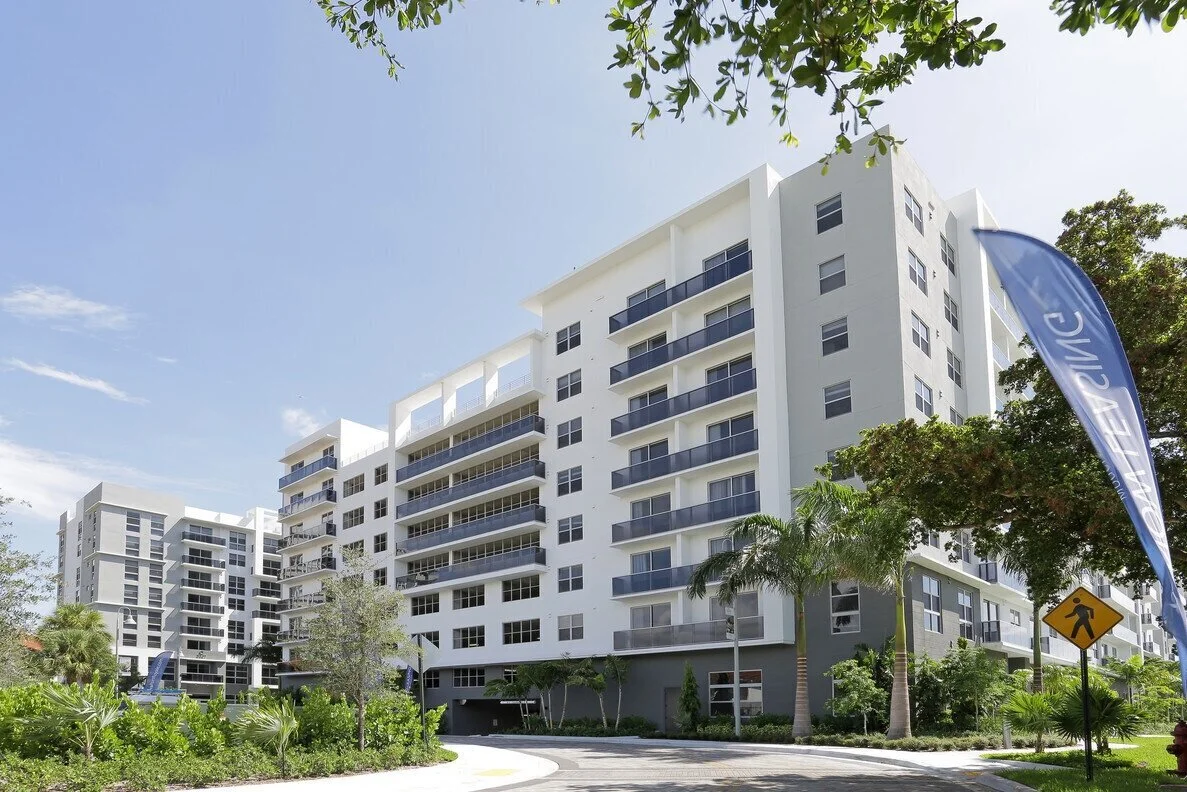
Northwestern Mutual Acquires Modera Port Royale In Fort Lauderdale For $180 Million
Northwestern Mutual has acquired the Modera Port Royale apartment community in Fort Lauderdale for $180 million. Modera Port Royale is located long the Intracoastal Waterway at 3303 Port Royale Drive South as well as 2890-2900 Port Royale Blvd.
Northwestern Mutual has acquired the Modera Port Royale apartment community in Fort Lauderdale for $180 million. Modera Port Royale is located long the Intracoastal Waterway at 3303 Port Royale Drive South as well as 2890-2900 Port Royale Blvd. The seller was Port Royale JV Phase I LLC, a joint venture between Mill Creek Residential and Invesco Real Estate and the buyer was NM-Port Royale LLC, an entity managed by Northwestern Mutual Life Insurance. The pricing breaks down to roughly $324,000 per unit.
Modera Port Royale features 555 rental apartment units spanning 1.03 million square feet spread across five buildings on an 8.2-acre site. Amenities include a waterfront pool, game room, coffee bar, fitness center, roof deck, theater and marina with 55 boat slips. The property was developed in 2017 by Mill Creek Residential who sold Phase 1 for $94 million in 2015.
Check Out This Mediterranean Inspired Estate In Fort Lauderdale Listed For $13.75 Million
2900 NE 37th Street, Fort Lauderdale, is listed by ONE Sotheby’s International Realty for $13.75 Million. The Mediterranean inspired waterfront estate looks like you have traveled to Europe. The estate encompasses almost 24,000 sq.ft. featuring 9 bedrooms and 13 bathrooms on a little more than 1 acre of land with 665 feet of waterfront dockage.
2900 NE 37th Street, Fort Lauderdale, is listed by ONE Sotheby’s International Realty for $13.75 Million. The Mediterranean inspired waterfront estate looks like you have traveled to Europe. The estate encompasses almost 24,000 sq.ft. featuring 9 bedrooms and 13 bathrooms on a little more than 1 acre of land with 665 feet of waterfront dockage. The estate also features an oversize pool, putting green, rock-climbing wall, sunken swim up patio bar and hair salon making this the perfect work hard-play hard home. The estate is complete with a 7-car garage along with smaller guest house on the property. 2900 NE 37th Street is listed by Sandra Tagliamonte and Madison Collum with ONE Sotheby’s International Realty.
Michael Wekerie Lists The Former Anheuser-Busch Estate In East Fort Lauderdale For $19.25 Million
The former Anheuser-Busch estate, one of the largest waterfront properties in East Fort Lauderdale, is now on the market listed for $19.25 million. 1000 Riviera Isle Drive is 9,392 sq.ft. with over 525 feet of deep water frontage. The estate was originally built in 1938 for the Anheuser-Busch family and is now owned by Canadian TV Star, Michael Wekerie.
The former Anheuser-Busch estate, one of the largest waterfront properties in East Fort Lauderdale, is now on the market listed for $19.25 million. 1000 Riviera Isle Drive is 9,392 sq.ft. with over 525 feet of deep water frontage. The estate was originally built in 1938 for the Anheuser-Busch family and is now owned by Canadian TV Star, Michael Wekerie. Scenes from George Wells’ 1960s movie, Where The Boys Are, were filmed at the home.
The Estate is designed by Francis Abreu, apprentice of Addison Mizner. The main house features 8 bedrooms, 9 bathrooms, 2 half baths, media room, chef’s kitchen, gym and many areas for entertaining. There is also a two-bedroom guest house on the property. What makes this estate most unique is Wekerie’s addition of outdoor band shell set up to host music concerts. Wekerie is a television personality best known for the Candian reality show Dragon’s Den. Wekerie also has an extensive art collection that can be negotiable in the sale of his estate. 1000 Riviera Isle Drive, Fort Lauderdale is listed exclusively with Ruchel Coetzee of Douglas Elliman.
Douglas Elliman Releases Q3 2020 Florida Regions Market Reports For South Florida
Douglas Elliman has just released their Q3 2020 Market Reports for Florida regions, which were prepared in conjunction with Jonathan Miller of Miller Samuel INC. The reports have revealed that sales rose sharply higher year over year, rebounding quickly from the restraint of spring market activity at the onset of the COVID-19 crisis.
Douglas Elliman has just released their Q3 2020 Market Reports for Florida regions, which were prepared in conjunction with Jonathan Miller of Miller Samuel INC. The reports revealed that sales rose sharply higher year over year, rebounding quickly from the restraint of spring market activity at the onset of the COVID-19 crisis. Palm Beach has been one of the hottest markets in the United States as flight capital continues to pour in from the high-tax states such as New York and Connecticut. All three condo price trend indicators increased year over year for the fifth straight quarter in Palm Beach while single family sales nearly tripled from the year-ago quarter as listing inventory fell sharply. Coral Gables and Miami Beach also surged as sales and prices saw 5 year highs across much of South Florida.
BOCA RATON/HIGHLAND BEACH
Overview:
In a rebound from the prior quarter, condo and single family sales saw their largest annual rise in seven years
All single family price trend indicators rose year over year as sales saw its largest jump in nearly nine years
All luxury condo price trend indicators showed a substantial year over year increase
Key Trend Metrics (Year to Year)
Luxury Condo:
Median sales price rose 28.6% to $868,000
Average price per square foot increased by 12.2% to $414
Number of sales rose 14.3% to 88
Listing inventory declined by 1.5% to 405 units
Luxury Single Family:
Median sales price rose 14.3% to $2,550,000
Average price per square foot increased by 4.5% to $421
Number of sales rose 25.4% to 89
Listing inventory declined by 22% to 266 units
MIAMI BEACH/BARRIER ISLANDS
Overview:
Condo price trend indicators increased as sales and listing inventory edged higher
Overall single family price trend indicators set new records as sales surged year over year
Luxury condo price trend indicators jumped year over year, aided by a shift to larger sized sales
Key Trend Metrics (Year to Year)
Luxury Condo:
Median sales price rose 29.3% to $2,975,000
Average price per square foot increased by 18.9% to $1,262
Number of sales remained flat at 77
Listing inventory declined by 15.1% to 993 units
Luxury Single Family:
Median sales price rose 13.9% to $14,806,950
Average price per square foot increased by 12% to $1,787
Number of sales rose 63.6% to 18
Listing inventory declined by 27.1% to 102 units
MIAMI COASTAL MAINLAND
Overview:
Condo price trend indicators and sales moved higher as listing inventory slipped to a three-year low
Single family price trend indicators set new records as sales rose to their highest level in more than five years
Luxury condo price trend indicators increased year over year as listing inventory declined annually for the second time in three quarters
Key Trend Metrics (Year to Year)
Luxury Condo:
Median sales price rose 9.9% to $852,500
Average price per square foot increased by 6.9% to $508
Number of sales rose 1% to 200
Listing inventory declined by 15.1% to 2,398 units
Luxury Single Family:
Median sales price rose 31.1% to $1,940,000
Average price per square foot increased by 29.3% to $600
Number of sales rose 9.5% to 230
Listing inventory declined by 32.1% to 694 units
CORAL GABLES
Overview:
Single family sales surged and listing inventory fell from the prior year quarter as the lockdown ended
Condo listing inventory declined annually for the fifth consecutive quarter
Luxury single family listing inventory declined sharply year over year for five straight quarters
Key Trend Metrics (Year to Year)
Luxury Condo:
Median sales price fell 41.4% to $962,500
Average price per square foot decreased by 28.7% to $407
Number of sales slipped 11.1% to 8
Listing inventory inclined by 125% to 72 units
Luxury Single Family:
Median sales price rose 26.9% to $4,500,000
Average price per square foot decreased by 6.4% to $989
Number of sales rose 53.3% to 23
Listing inventory declined by 21.1% to 101
DELRAY BEACH
Overview:
Single family sales increased at their highest year over year rate in five years
Condo sales reached their highest third-quarter total in twenty-two years of tracking
Both single family and condo luxury listing inventory fell sharply from the prior year total
Key Trend Metrics (Year to Year)
Luxury Condo:
Median sales price rose 41.1% to $604,500
Average price per square foot increased by 21.4% to $409
Number of sales rose 14.3% to 72
Listing inventory declined by 25.2% to 169 units
Luxury Single Family:
Median sales price rose 40.8% to $2,500,000
Average price per square foot increased by 5.7% to $515
Number of sales rose 22.9% to 43
Listing inventory declined by 45.6% to 99 units
FORT LAUDERDALE
Overview:
All condo price trend indicators rose year over year as the number of sales jumped
Single family sales surged, and listing inventory fell sharply from the prior-year quarter
Single family median sales price increased annually for the eighth consecutive quarter
Key Trend Metrics (Year to Year)
Luxury Condo:
Median sales price rose 0.9% to $1,155,000
Average price per square foot increased by 1.4% to $509
Number of sales rose 7.8% to 55
Listing inventory declined by 0.5% to 379 units
Luxury Single Family:
Median sales price rose 7.7% to $2,275,000
Average price per square foot remained flat at $580
Number of sales rose 17.6% to 60
Listing inventory declined by 21.5% to 256 units
JUPITER/PALM BEACH GARDENS
Jupiter Overview:
Single family sales jumped year over year as listing inventory dropped sharply
The most third-quarter condo sales in fifteen years
Palm Beach Gardens Overview:
The most third quarter single family sales in fifteen years
Condo listing inventory declined annually for the sixth straight quarter
Key Trend Metrics (Year to Year)
Luxury Condo:
Median sales price fell 7.1% to $657,500
Average price per square foot decreased by 16.4% to $320
Number of sales rose 27.3% to 28
Listing inventory inclined by 26.3% to 72 units
Luxury Single Family:
Median sales price rose 121% to $3,550,000
Average price per square foot increased by 37% to $678
Number of sales rose 14.7% to 39
Listing inventory declined by 38.7% to 76 units
PALM BEACH
Overview:
All three condo price trend indicators increased year over year for the fifth straight quarter
Single family sales nearly tripled from the year-ago quarter as listing inventory fell sharply
Luxury listing inventory fell significantly year over year for the third consecutive quarter
Key Trend Metrics (Year to Year)
Luxury Condo + Single Family:
Median sales price declined 39.3% to $10,000,000
Average price per square foot increased by 20% to $1,906
Number of sales rose 87.5% to 15
Listing inventory declined by 65.3% to 26 units
WELLINGTON
Overview:
Condo sales surged annually at their highest rate in eleven years as listing inventory edged higher for the second straight quarter
Single family median sales price rose annually for the twelfth straight quarter as listing inventory dropped sharply
Luxury condo median sales price more than doubled year over year as listing inventory saw a significant annual decline
Key Trend Metrics (Year to Year)
Luxury Condo:
Median sales price rose 102.4% to $840,000
Average price per square foot increased by 61.1% to $427
Number of sales rose 28.6% to 9
Listing inventory declined by 42.1% to 22 units
Luxury Single Family:
Median sales price rose 28.1% to $1.825,000
Average price per square foot increased by 13.1% to $553
Number of sales rose 20.7% to 35
Listing inventory declined by 9.3% to 194 units
WEST PALM BEACH
Overview:
Condo median sales price has risen each quarter on a year over year for more than nine years
Single family listing inventory has fallen at a rising year over year rate for five consecutive quarters
Luxury condo listing inventory has posted large annual gains for three of the past four quarters
Key Trend Metrics (Year to Year)
Luxury Condo:
Median sales price declined 49.1% to $407,500
Average price per square foot decreased by 62% to $452
Number of sales rose 7.5% to 72
Listing inventory inclined by 85.5% to 308 units
Luxury Single Family:
Median sales price rose 48.7% to $1,297,250
Average price per square foot increased by 32.1% to $412
Number of sales rose 28% to 64
Listing inventory declined by 14.3% to 132 units

Fouquet’s Hotel & Residences, Miami Design District has unveiled more than 40,000 square feet of amenities designed by RDAI, the Paris-based studio behind Hermès stores worldwide. The 143-residence development pairs rooftop leisure and wellness spaces with direct access to an 85-key Fouquet’s hotel.