

PROFILE Exclusive: 12 Questions With Restaurant and Entertainment Mogul Mathieu Massa of Queen
PROFILEMiami had the exclusive opportunity to sit down with hospitality mogul and real estate investor Mathieu Massa, who recently opened Queen, one of Miami’s hottest new restaurants in the historic Paris Theater on Miami Beach’s Washington Avenue. Mathieu leads Mr. Hospitality Group, which has opened hotspots such as Marion, El Tucán and Queen.
PROFILEMiami had the exclusive opportunity to sit down with hospitality mogul and real estate investor Mathieu Massa, who recently opened Queen, one of Miami’s hottest new restaurants in the historic Paris Theater on Miami Beach’s Washington Avenue. Mathieu leads Mr. Hospitality Group, which has opened hotspots such as Marion, El Tucán and Queen. He also oversees Massa Investment Group LLC, a fully integrated investment firm specializing in real estate development and hospitality which he launched in 2007. Massa Investment Group recently revealed plans to acquire the former Starwood Capital HQ in Miami Beach with Robert Rivani’s Black Lion Investment Group for $82 million.
Born in the French Riviera, Mathieu Massa hails from a family of entrepreneurs. His early inspiration comes from a lineage of great men that dates back to his great-grandfather, Sylvain Emile Massa, who migrated from Italy and settled in Cannes, France in 1908. Guided by the family’s entrepreneurial spirit from generation to generation, Mathieu embarked on a start track of higher education receiving his MBA degree from the prestigious school H.E.C in Paris and Babson College in Boston.
After graduating in 2007, Mathieu settled in Miami where he launched his private equity firm Massa Investment Group LLC. Massa Investment Group is a fully integrated investment firm specializing in real estate development and hospitality. Though initially focused on purchasing distressed assets following the subprime crisis of 2008, the company comprises all aspects of real estate development—from due diligence and positioning to branding, marketing, construction, and design.
Mathieu founded Massa Construction Group in 2009 and is well-versed in projects spanning from commercial, and residential, to hospitality and mixed-use structures. Notable projects include an extravagant villa in Cannes, France, which sold for 13 million euros in 2017, alongside four sprawling waterfront homes in Miami Beach, developed between 2015 and 2019. Three of these residential projects occupy Prairie Avenue, while the pinnacle of luxury resides within the esteemed Sunset Islands III.
Mathieu’s step into the hospitality world would then come by chance when he was approached by the famed Bâoli Cannes team to assist with the restaurant operations of their new venture in Miami Beach, a small Italian restaurant on Collins Avenue, known as Vita. First, Mathieu purchased a 50% stake in the business in 2009, and two years later took on sole ownership, transforming the sleepy Italian restaurant into the thriving Bâoli Miami we know today. The biggest overhaul was by far the entertainment, Bâoli Miami was Miami Beach’s first supper club, introducing a sophisticated dinner party concept with late-night entertainment that’s now synonymous with the city’s nightlife scene. In 2014, after the immense success of Baoli, which was named one of the best restaurants in Florida, Mathieu founded Mr. Hospitality, which would soon become the driving force behind Miami’s most successful and upscale dining establishments.
In 2023, Mathieu revealed his plans to take over the historic Paris Theater building in Miami Beach and convert it into an unprecedented and exquisitely lavish destination for fine dining and entertainment under the esteemed operation of Mr. Hospitality Group. Led by Mathieu’s visionary leadership, the 23,000-square-foot Miami landmark was meticulously transformed into an ultra-luxurious modern Japanese restaurant and lounge, coined Queen Miami Beach. The $40-million-dollar redevelopment endeavor has introduced a new level of luxury dining, since opening its doors to the public in February 2023, and marks only the beginning of Mathieu's ambitious plans to further elevate and revitalize the premier hospitality development landscape in Miami Beach.
PROFILEmiami recently caught up with Mathieu following the launch of his newest addition to Queen Miami Beach, Queen Omakase, to see how he creates trailblazing venues giving guests a heightened, luxurious entertainment-driven experience and finding synergy between real estate and design, and investing:
PROFILEmiami (PM): Tell us about your roots? Where did you grow up? What is your background?
Matthew Massa (MM): I was born and raised in Cannes, France, a city famous for hosting the annual film festival on the French Riviera. After completing my education at a business school in France, I pursued an MBA at Babson College in Boston. In 2007, I made the decision to settle in Miami, opting to take a chance on a new path in a different location rather than returning to France to manage the family businesses, which included ventures in tires, wine, and horses, among others.
PM: How did you get involved in the hospitality industry? What was your first venture into hospitality?
MM: In 2009, I was approached by the owners of Baoli in Cannes to assist with their new venture in Miami Beach, which consisted of the restaurant operations of a small Italian restaurant on Collins Avenue and 19th Street called Vita. While my background was in real estate and finance, I quickly developed a passion for the hospitality and restaurant industry as I worked tirelessly on this project. Within a few months, I became a partner, and after a year and a half, I assumed sole ownership. This marked the beginning of Baoli Miami's transformation into the thriving establishment it is today.
PM: As a hospitality entrepreneur, where do you draw your inspiration? Is there a signature vibe or features of the hospitality experience that are unique to you and your institutions?
MM: I draw my inspiration from my travels around the world: Saint Tropez, Montecarlo, Ibiza, Japan, Brazil, China, Russia, etc.. What sets us apart as a business is our distinctive European approach to people, cuisine, and service. This international perspective infuses our institutions with a unique blend of influences and a signature vibe that differentiates us from the local competition.
PM: What are they keys to running a successful world class restaurant, like Queen, in a global city like Miami?
MM: Running a successful world-class restaurant in a global city like Miami, such as Queen, requires a commitment to excellence, discipline, and unwavering consistency. Attention to detail is key, ensuring that every aspect of the guest experience, from the cuisine to the ambiance, contributes to creating a special and memorable visit. Attentive hospitality, adaptability, and innovation are also key to staying ahead of evolving trends and guest preferences.
PM: Where did the idea for Queen come about? What inspirations helped you evolve the concept?
MM: The idea for Queen was born from the space itself, which possessed undeniable uniqueness, theatricality, and spectacle. The concept organically evolved around the distinctive characteristics and existing conditions of the real estate structure.
PM: How did you acquire the property and the journey to the grand opening?
MM: The journey to Queen's grand opening began with my decision to acquire the property in November 2019. However, in March 2020, the onset of the COVID-19 pandemic brought uncertainty to the restaurant industry, with closures happening worldwide. I had to make a difficult decision about proceeding with the purchase. It was undoubtedly one of the most difficult choices I've ever made, but ultimately, it turned out to be the right one. It then took 3 years of tireless work and unwavering dedication to transform the property into what is now one of the world's most spectacular restaurants.
PM: What makes Queen so much different than any other dining experience in Miami?
MM: What distinguishes Queen is its exceptional attention to detail in crafting a truly immersive, theatrical guest experience. From the moment you step through the front entrance, you're enveloped in an atmosphere that seamlessly blends theatricality with elegance. The journey continues into the main dining room, where an open kitchen adds an interactive element to the guest’s dining experience. With multi-level spaces, state-of-the-art sound, lighting, video, and special effects, Queen sets the stage for a memorable evening. What truly sets Queen apart is its commitment to glamour and sophistication, from the meticulously curated decor and captivating art program to the elegant dress code and high-level execution of cuisine and service.
PM: Tell us about Queen Omakase. When did you decide to add the private omakase room dining component?
MM: This was decided during the design phase of the project, which actually took place during the middle of the covid lock down. Our primary objective was to introduce an exclusive, intimate, and captivating dimension to enhance our guests' experiences.
Omakase is one of the most demanding and respectful forms of dining between the Chef and the customer. What is different about curating the Queen Omakase experience for your guests? How is it different from other omakase experiences in Miami?
Our omakase room is designed to evoke the feeling of a residential open kitchen, creating an inviting and personalized atmosphere reminiscent of dining in someone's home. What truly sets us apart is the exclusive speakeasy-style access to the omakase room, guiding guests through the main kitchen and back-of-house areas for a very special and exciting journey. The omakase room itself is a masterpiece of posh, sophistication, and glamour. From the bamboo-style wallpaper to the custom Murano glass chandelier, vintage lighting fixtures, and art pieces, these elements combine to envelop guests in an atmosphere of elegance and refinement.
PM: Why did you choose Chef Max Kamakura to oversee Queen Omakase?
MM: Chef Max Kamakura was chosen to lead Queen Omakase due to his unique blend of traditional sushi expertise and innovative approach to Japanese cuisine. As a fourth-generation sushi chef from a family deeply rooted in tradition, Chef Max brings a wealth of experience and a commitment to excellence. What sets him apart is his ability to infuse traditional techniques with globally sourced ingredients, resulting in a one-of-a-kind culinary experience. Moreover, Chef Max's positive attitude and spirited energy add to the overall enjoyment of the intimate dining setting, which is important for the guest experience.
PM: What are some of Queen’s signature items that, as the owner, you would recommend to guests?
MM: First and foremost, I encourage guests to try our exquisite selection of meats, carefully sourced from top producers both in the United States and Japan. Some of our best-selling dishes, which I’d also highly recommend, include the Maitake Mushrooms, Avocado Tart, Caviar Crispy Rice, and the Cacio e Pepe Mushroom side dish, which has become a real crowd favorite.
PM: What does Queen’s opening and success mean to the city of Miami Beach?
MM: Queen's opening and success has brought a significant positive impact to the city of Miami Beach. City officials, including high-ranking figures, have expressed their pride in having such a prestigious establishment in a neighborhood that faced challenges in the past. Some city staff members have even noted that Queen's presence represents one of the most significant developments in the city in the last 25 years, comparable to the impact of notable establishments from the past. The success of Queen has revitalized the city's sense of glamour and elevated its culinary reputation. It has also caught the attention of accomplished restaurant operators, positioning Miami Beach as a competitive player alongside renowned dining destinations like Dubai, London, New York City, and Las Vegas. Queen's influence on the city is a clear indicator of its ability to reshape and enhance the dining and cultural landscape in Miami Beach.
PM: Do you intend to expand the Queen concept to other markets or is it to remain an exclusively South Beach experience?
MM: While I've received tempting offers to expand the Queen concept to various global markets like Dubai, Saudi Arabia, London, Ibiza, and Paris, I am committed to maintaining its exclusivity as a South Beach experience. After all, how many Paris Theaters can you find?
Images via Queen Miami Beach
PROFILE Exclusive: 12 Questions With Simon Mass of The Condo Store
PROFILEMiami had the exclusive opportunity to sit down with Simon S. Mass, CEO and Founder of The Condo Store (TCS). Simon is often recognized as the “architect” of the pre-construction condo investment sector in Canada, with over $25 billion in project transactions and a distinguished reputation that spans across North America.
PROFILEMiami had the exclusive opportunity to sit down with Simon S. Mass, CEO and Founder of The Condo Store (TCS). Simon is often recognized as the “architect” of the pre-construction condo investment sector in Canada, with over $25 billion in project transactions and a distinguished reputation that spans across North America. The Condo Store, which now hosts over fifty team members and more than 350 sophisticated high-net-worth clients from around the globe, started as a ten-person boutique firm he co-founded in 2004. Simon and TCS recently launched operations in Miami.
Simon has long-term relationships with hundreds of clients that include doctors, medical practitioners, and business professionals across Canada and now the United States. TCS clients account for over $500 million in annual investments.
It is common knowledge that condo investments have been one of the highest grossing asset classes over the past 25 years. These high-level personal connections allow TCS clients to have an advantage in the sector and ensures investing into a real estate project is targeted and knowledge based.
PROFILEmiami recently caught up with Simon amid his busy schedule managing TCS’s launch in Miami and developing Casa B&B Italia, a new construction luxury private residence on Miami’s Venetian Islands designed by Doo Architecture and winner of the 2020 Interior Design Magazine Best of Year for Residential Unbuilt Category and the 2019 Rethinking the Future Awards for Private Residential Concept:
PROFILE: Tell us about your background, how did you get involved in real estate?
Simon Mass: Purely by chance. I left the United Kingdom after graduating with an Engineering and Management undergraduate degree from Bath University to enroll into an MBA program at Schulich School of Business in Toronto, Canada. The idea was to graduate with an MBA, complete the marketing speciality, and enter the world of business back in London, UK. Honestly, at that time, I didn’t have a specific career path in mind and was open to finding that path organically and with no urgency, just like any other typical 21-year-old.
Real estate wasn’t on the agenda for me in terms of a business environment. I had a definite and keen interest in architecture and interior design but that was really for my own personal and vivid imagination. I was always thinking about and looking at real estate publications wondering what appealed to me and what I thought I’d like to own someday for my home.
PROFILE: How did you first get involved investing in pre-construction condominiums?
SM: While adjusting to the colder climate and heavy snowfall that are part of the winter season in most of Canada, I got lost in a snowstorm trying to find the University campus and stumbled upon a trailer that housed the sales center for a pre-construction development. Before I knew it, I had the real estate bug and fell into the pre-construction investment world.
The minute I realized that I could enjoy my time at work, make a living and grow a business and not be working for someone else, I knew that I should take extra care in understanding and utilizing the pre-construction investment model and not just look at it as a small-time side hustle while still trying to discover my calling. Without looking back, I quickly decided to make it my calling and decided to bring in many friends and family for the ride that proved to be a small steppingstone to growing the wealth of so many people around me that followed the same path. As the saying goes, the ‘snowball effect’ kicked in and people were contacting me and saying they had heard that I had insider deals with pre-construction developers, and they wanted to be given the same opportunity to make a lot of money and invest in a bricks and mortar opportunity versus risking their hard-earned money in the speculative stock market.
PROFILE: What was your first real estate deal that you worked on?
SM: This dates to the mid 1990’s and was a catalyst to my eventual decision to stay in Toronto and slowly set up the first business model for TCS. Shortly after the snowstorm incident, with just a handful of friends and classmates, I managed to secure a small number of units in a master planned community in downtown Toronto. I believe it was just twenty units, which at that time was substantial considering the average broker in the mid-1990’s handled ten transactions per year. This first foray into bulk transactions allowed me to establish a relationship with the head of the sales and marketing division at the multi-billion-dollar development (which now spans several city blocks and has over 22 towers).
It became apparent right after this 20-unit bulk deal that prices were increasing at a substantial rate and that if I was able to convince developers to reduce the down payment requirement for my firm and keep the normal, much higher rate for the brokerage and general public, I would be able to skew the ROI’s (cash-on-cash returns) for our ventures to levels that would not be conceivable to most investors. This first project had multiple other phases and the initial phase sold out within a few weeks, therefore giving me the confidence that pricing for future phases would be much higher.
PROFILE: What is your investment philosophy in regard to investing in pre-construction condominiums?
SM: Our success has been derived in large part by working with the best and most powerful developers, focusing on gentrification locations, and staying in it for the long-term. With respect to growing the business, we have been almost entirely referral based as we are not an advertiser of any kind, and we do not even show our offers to the general public. Our clients appreciate that exclusivity and reward us by continuing to purchase and invest through our firm recognizing the returns that they have recorded over the years.
PROFILE: Tell us about The Condo Store and what you guys do?
SM: Extremely important to note that 90% of our clients are doctors and surgeons. From day one, I have had a connection to medical professionals as they were my friends who had also recently graduated and entered the work force in Toronto. I always felt somewhat guilty that I graduated with both an undergrade and postgraduate degree in under five years whereas my friends who decided to go into the medical sector would only enter the work force after 9-12 years of schooling alongside a massive debt. It didn’t seem fair, and I wanted to specifically bring them in; in a way that they would be financially rewarded through real estate investing through my direct involvement.
TCS partners with developers to secure a large number of units in a new pre-construction building; in high density projects, we seek a minimum of 25% of the entire inventory, and in low density buildings, we can go as high as 100% of the inventory. Once we have secured the project with special terms (highlighted by a low-down payment structure) through educating developers and their financial lenders that it’s safer to have pre-construction buyers to have six to seven figure salaries and secure earnings (i.e., doctors) with career paths that were practically guaranteed until retirement age, over every other demographic. We keep it simple in terms of presentation materials, doctors are far too busy for long investment decks. We present the opportunity to our clients in real time, with no favoritism or special treatment on a first-come, first-served basis.
We curate only the best investments for our clients, and if that means we do not have an offer for a few months or even a full year, then that is what we will do. We will not risk our reputation to send a ‘just OK’ investment deal to our loyal clients.
The core tenet that has built our referral-based business is having skin in the game. What that means is that for every offer we put in front of our clients, we (myself and business partner, John Mehlenbacher) invest in multiple units in each deal. We invest alongside our clients and that is what differentiates us from almost everyone in the space.
PROFILE: What have been some of the keys to TCS producing consistent, successful returns for your investors?
SM: Quality and time. We hand pick three or four of the best sites annually (out of 150+ launches) and develop them into lucrative leverage-based deals; we don’t deviate from the fundamentals of a solid investment and never chase a deal.
We are not just a real estate company; we are an investment company that specializes in real estate. Keeping true to our principles, where we invest side-by-side with our clients, we ultimately offer that rare quality of being in every deal that we present. With that, we do not pump out offer after offer every other week and we are not willing to sell run-of-the-mill projects that, in our opinion, won’t allow for significant double digit returns to our clients.
PROFILE: You are now opening in Miami, can you discuss your expansion to South Florida?
SM: We have seen many of our doctor clients leave Canada for the United States. They asked for our assistance, and we also understand the magnitude of the U.S. market as it’s ten times larger than Canada population wise, and that allows us to work with millions of doctors all living, working, and seeking investments in Miami.
With our track record amongst their peers, we feel that we can grow our referral-based business within the medical practitioner space at a level that will over time be two or three times the size of our Canadian operations.
Over the years we have been able to understand the needs and wants of our core clients, and we can bring that outlook and experience to an entirely different market. We’ll bring the fundamentals of what a great real estate investment is and push to create the same deals and opportunities in Miami that we are known for in Toronto.
PROFILE: What is your outlook on the real estate market in Miami amid a changing economic environment and rising interest rates?
SM: Miami has unique characteristics that can influence its real estate market, so it goes without saying that I am very bullish on real estate investing in the right locations across Florida.
With a dynamic tourism sector that keeps on growing, and foreign investments that is now super-charged with an aggressive domestic immigration push from American citizens changing their residence to Florida and moving here and making it their home, there is so much positive news for the sunshine state.
Miami's real estate market is for the time being only minimally being influenced by a changing economic environment and rising interest rates. Looking to the future, I believe that we have yet to see the actual real estate boom that Miami (or generally Florida) has been chronicled to have been in for years. The next 10 years will most likely see massive price appreciation that will make this city even more expensive on many levels.
PROFILE: What is the biggest hurdle that you have had to overcome in your career?
SM: I’ve been very fortunate and would be the first to call myself a workaholic since a very early age. There’s a fundamental reason for my success as I’ve had the advantage of loving what I do and as such, not counting down the hours each day to end my work schedule and start on my social calendar.
I’ve overcome the hurdle of listening to all the noise in the market by keeping my mind open. Information is power, so listening to everyone but not being influenced by everyone is the challenge. For example, taking in information from so-called ‘institutional experts’ but not being bound to call it solid. Especially from those ‘experts’ who in my humble opinion are so often wrong when it comes to the real estate market, and it’s future.
I have also found that economists, for the most part, always have a skewed perspective on the value proposition of the real estate space and tend to downplay the psychological consumer mindset when it comes to property ownership.
I have been lucky that my gut feelings combined with analyzing the economic fundamentals have typically played out well; and let’s not forget that Toronto has been on a 32 year real estate growth run. That has obviously helped in our firm’s double digit, cash-on-cash, annual returns.
PROFILE: What was the first gift you bought yourself after closing a big deal or first big development?
SM: Very cliché…I walked into a Porsche dealership and an hour later, drove out in a 911. Since I was a small child, I was always in love with sports cars, so I was fortunate enough to start with a 911 in my early twenties with money that I had made from my own hard work and risk-taking tactics.
I still treat myself after every single venture as I believe that to stay motivated, an entrepreneur needs to be self-incentivized. I will add a charitable donation to my self gift-giving ritual as I feel it’s imperative that we realize how fortunate we are and to give back, even if it’s a small donation. It’s a lifestyle necessity, in my mind, to count your blessings and pay it forward.
PROFILE: Describe your perfect Saturday night in Miami?
SM: So, it all depends on who the other friends or clients are, sometimes it’s a chill evening at one of my favorite restaurants in SoFi, for example, Call me Gaby where the ambiance of European dining in a unpretentious space is always inviting. Sometimes it’s a longer evening of cocktails and fine dining at one of the many restaurants that have opened in Miami (that have outposts all across the world), such as LPM, The Surf Club or Carbone.
I’ve never been a big drinker and prefer a good dinner over a few bottles of wine. Makes my Sunday mornings a lot more efficient and painless.
PROFILE: Where do we find you on your day off?
SM: If you ask anyone that knows me well, they will tell you that I need a day off.
I’m always “on” because I enjoy what I do, as making money for your friends and clients is beyond rewarding. Deal making is a undertaking that I’m very-very passionate about. I take my role in building wealth for clients very seriously – and that’s one of the main reasons that TCS is known as the largest pre-construction investment firm in Canada built on a referral network that keeps on growing.

PROFILE Exclusive: 12 Questions With Developer James Curnin Of Clara Bay Harbor
PROFILEmiami had the exclusive opportunity to sit down with James Curnin of Clara Homes, a Miami-based, vertically integrated real estate firm, to discuss how he has found success developing and expanding his brand in the Miami market following an accomplished start to his career developing luxury residential properties in Los Angeles.
PROFILEmiami had the exclusive opportunity to sit down with James Curnin of Clara Homes, a Miami-based, vertically integrated real estate firm, to discuss how he has found success developing and expanding his brand in the Miami market following an accomplished start to his career developing luxury residential properties in Los Angeles. Founded in 2014 by James, Clara Homes offers residential and commercial development, operations oversight and custom homes.
With work spanning South Florida to Los Angeles, the Clara Homes has collaborated with some of the industry’s most innovative architecture firms, including Vertoch Design Architects, McClean Design and Strang Design, to differentiate its portfolio from others in the market. Currently in the pipeline are three waterfront spec homes, three privately owned custom homes, as well as a 150-unit, three-building rental development in Bay Harbor Islands named Clara Bay Harbor which broke ground in March 2023.
Recent completed projects include a single family spec home project, a Modern Farmhouse located at 6341 Allison Road on Allison Island, which sold for $13,875,000, as well as 416 W San Marino Drive which is currently pending for $29 million. Curnin also delivered a project on Sunset Island II and other homes on Miami Beach. Homes currently under construction include properties on La Gorce Circle, Davis Road and Pinetree Dr Circle. PROFILEmiami recently caught up with James following his site approval for the third building as part of his Clara Bay Harbor development to see how he has taken the Miami market by storm:
PROFILEmiami: Tell us about your background, how did you get involved in real estate?
James Curnin: I was always drawn to real estate. My great grandfather had an impressive portfolio of buildings around New York City, and I grew up knowing that one day, I would follow in his footsteps. When I was finally old enough to start working for the family business, I was 14. It was hard work, but it solidified what I already knew to be true: I would grow up to be a real estate developer. My great grandfather’s company gave me my start. I contributed to major tri-state area projects such as Parker Meridien Hotels, Parker Towers and Parker Plaza. After some time, I decided to leave New York City and start my own legacy. In 2014, I founded Clara Homes, starting in Los Angeles. Great weather, a favorable business landscape and the promise of opportunity brought me to Miami. Here in South Florida I’ve grown Clara Homes into a vertically integrated real estate firm offering residential and commercial development, operations oversight and custom homes.
PROFILE: What was your first real estate development project?
JC: A single-family home in the bird streets of Los Angeles.
PROFILE: What is your development philosophy?
JC: Chase every penny, as frequently told to me by my great-grandfather when I was just getting started in the business.
PROFILE: You have built a name for yourself in Miami developing Spec Homes, can you tell us about your past projects? Are you currently working on any?
JC: I got my start in Miami building and selling spec homes, and it’s been an incredible journey. Just as the pandemic was setting in, we were completing four residences throughout the city. It was a time when everyone was in quarantine looking for more space, warm weather and private outdoor access, so we were able to quickly sell the listings and rapidly grow a good reputation for our use of quality materials and thoughtful design. Ever since, buyers have come to recognize our work and trust that we strive for perfection. We collaborate with the best architects in the area to design modern, tropical homes that truly suit the needs of families today, and people have even started coming to us for help to build their own custom homes. Currently, we’re finishing construction on three new spec home projects. I’m excited to report that all of them are now under contract. We will close when the homes complete, which will probably be in the next six months.
PROFILE: As a developer what is your strategy or some of the key items you take into account when developing an ultra-luxury home on spec?
JC: I like to invest in areas with a high barrier to entry, like Miami’s many islands. The land is fleeting and people are always going to want to be on the water, so there’s a much better chance these homes will hold their value over time. I’ve made it a point to hone in on opportunities such as waterfront and extra secluded properties to really maximize my portfolio.
PROFILE: You recently broke ground on Clara Bay Harbor on Miami’s Bay Harbor Islands, can you discuss the process of developing a high-end rental community in a neighborhood that did not have one?
JC: We’re developing Clara Bay Harbor as the premier rental community for Bay Harbor. The project will have three buildings, totaling 150 expansive apartments. The first broke ground in the beginning of this year, and the two following buildings have been approved by the Town of Bay Harbor Islands. We expect to begin construction on them soon.
Getting development rights in Bay Harbor is a challenge because there is a limited number the town has left to give and a ton of interest to go around. The town sold us the last of their TDRs, and now our entire site plan is approved and ready to go vertical.
A luxury rental development project of Clara Bay Harbor’s caliber will help to redefine and reinvigorate the neighborhood, introducing an elevated precedent for luxury in Bay Harbor Islands. With the influx of in-migration to South Florida in the last few years, there is a need for full-service rental offerings in the area that can accommodate young families. Clara Bay Harbor will feature private amenity spaces, concierge services and the level of hospitality where all staff, from the doormen to the pool attendants, know your name, your children’s names and your dog’s name.
PROFILE: As the developer how does the process differ between housing built for sale and housing built to lease?
JC: I approach every project with the same mindset. I want each to be of the highest quality, with the finest materials, blurring the line between apartment and condominium. The rentals I’m developing will have a luxury lifestyle one would expect to see within a resort-style condominium tower. That’s something I think will set Clara Bay Harbor apart from other multifamily offerings throughout Miami.
PROFILE: What is your outlook on the real estate market in Miami amid a changing economic environment and rising interest rates?
JC: Over the past few years, we have seen a rollercoaster of a real estate market, but Miami has sustained tremendous demand that is on an entirely different level from the rest of the nation. Even as interest rates rise, Miami will always be a destination that attracts people. Thousands are relocating to South Florida and many more have plans to purchase real estate. What we’ve seen, though, is that many would-be buyers are turning into luxury renters to wait out high interest rates and other market conditions. These renters are the people who will be attracted to our apartments at Clara Bay Harbor. For this reason, I’m very bullish on the rental market across the Miami area. I find it’s a huge, untapped opportunity, as there are not many professionally managed buildings designed specifically for renters with a high-touch experience in mind.
PROFILE: What was the first gift you brought yourself following a career milestone?
JC: More real estate.
PROFILE: What is your favorite restaurant in Miami?
JC: My favorite restaurant in Miami is either The Surf Club or Makoto.
PROFILE: Describe your perfect Saturday night in Miami?
JC: A perfect Saturday in Miami would be spending quality time with my family, especially with everyone’s busy schedules. Whether going out to dinner by the water or hanging out with friends.
PROFILE: Where do we find you on your day off?
JC: As a real estate developer, I’m afraid I never really have a true “day off” but in my spare time I’m actively involved with the Institute of Contemporary Art and Perez Art Museum in Miami. I hold leadership positions at both museums, so I try to be as hands on as I can with any events, awards, or activations going on. I also try to be outdoors as much as possible whenever I can, so I love going over to the beach and playing tennis or golf on my off days.
Images via Clara Homes

PROFILE Exclusive: 12 Questions With Spec Home Specialist Pascal Nicolai of Sabal Development
PROFILEmiami had the exclusive opportunity to sit down with Pascal Nicolai of Sabal Development, one South Florida’s authorities when it comes to spec homes and custom home development, having built and sold total value of over $146 million in custom homes over the past 2 years. Sabal Development made a name for themselves as a vertically integrated developer and builder with over $130 million in luxury custom-built home sales in 2021.
PROFILEmiami had the exclusive opportunity to sit down with Pascal Nicolai of Sabal Development, one South Florida’s authorities when it comes to spec homes and custom home development, having built and sold total value of over $146 million in custom homes over the past 2 years. Sabal Development made a name for themselves as a vertically integrated developer and builder with over $130 million in luxury custom-built home sales in 2021.
Nicolai, who has more than 30 years of experience in the industry with completed projects in Europe and the U.S., Sabal Development is currently developing a modern office/ retail mixed use commercial building on Alton Road in Miami Beach and has developed a large portfolio of luxury properties including several homes on Palm Island and the Venetian Islands as well as Miami Beach and Palm Beach. PROFILEmiami recently caught up with Nicolai amidst his busy schedule and summer travel to get inside the mind of one of South Florida’s leading custom home specialists:
PROFILE: Tell us about your background, how did you get involved in real estate?
Pascal Nicolai (PN): I was born and raised in the South of France; real estate has been a passion of mine ever since I can remember. While I was studying at the university, I found myself engaging in real estate projects “on the side” so to speak, and by the time I was finished with my degree I already had my own real estate agency.
PROFILE: What was your first real estate development project?
PN: In France it was a 20,000 SF office building in the south of France. In Miami it was a luxury home location on the Venetian Islands
PROFILE: What is your development philosophy?
PN: In the simplest terms, it is location location location. That being said, acquiring prime lot locations and building luxury homes which surpass client expectations.
PROFILE: You have built a name for yourself as one of the biggest luxury homebuilders in Miami, how did you carve out this niche?
PN: I got in this niche with my partners with whom I developed high end real estate in prime locations such as Monaco, St. Tropez, and Courchevel. My goal was to bring my expertise to Miami and continue my vision.
PROFILE: Tell us about some of your favorite projects that you have built to date?
PN: That’s a tough one! Some of my favorite projects include:
1369 N. Venetian Way, Miami, FL. This beautiful 7,000 SF home is located on an open bay lot with spectacular views of Miami and Miami beach, featuring a glass elevator, modern European design, and a rooftop with a jacuzzi providing a perfect spot to watch the sunset.
4005 S. Ocean Blvd. Highland Beach, FL. This home is special to me because it is the first home I built directly on the beach. 10,000 SF, four stories high, featuring a theater, gym, glass elevator, and a rooftop with 360-degree views, also a perfect spot for sunrises and sunsets.
PROFILE: Tell us about some of the new projects that Sabal Development has in the pipeline?
PN: The projects in the pipeline which already started with the development process are:
14,000 SF home in Manalapan, FL (Palm Beach County)
10,000 SF home on a 32000 SF lot in Coconut Grove
6,500 SF penthouse in Brickell
6,500 SF home in La Gorce golf course
Two waterfront homes on Belle Meade Island (Miami, FL)
PROFILE: What are some of the keys to your success that have helped you stand apart?
PN: European vision and design. Attention to detail (each home has at least 200pgs of design details), trust from partners, discipline, and process.
PROFILE: What is your outlook on the real estate market in Miami amid a changing economic environment and rising interest rates?
PN: In our niche market, the rate of interest isn’t as relevant because most buyers are cash buyers. Miami is one of the safest locations in the world, there are no state taxes, which is appealing to the luxury buyer.
PROFILE: What is the biggest hurdle that you have had to overcome in your career?
PN: Uncertainty during COVID, which ultimately led to a positive outcome. Managing construction and subcontractors, which is extremely challenging in south Florida.
PROFILE: What was the first gift you bought yourself after closing a big deal or first big development?
PN: A watch from Audemars Piguet
PROFILE: Describe your perfect Saturday night in Miami?
PN: Having a nice dinner, my favorite spots include Bagatelle, Casa Tua, Cipriani, Joia Beach, Mamo Brickell, Queen, Villa D’Azur, and drink at Mila lounge.
PROFILE: Where do we find you on your day off?
PN: It all depends on the mood, can be anywhere from relaxing by the water, spending time with family & friends, and working out.
Catch-Up With Property Management Guru Maty Beraja of MAGASI In An Exclusive PROFILEmiami Interview
PROFILEmiami had the opportunity to catch-up with May Deraja, President of MAGASI, a family-run, full-service property management company specializing in multifamily, affordable housing, and hospitality management. As President Maty oversees all operational aspects of the company’s day-to-day operations.
PROFILEmiami had the opportunity to catch-up with Maty Beraja, Director of Operations at MAGASI, a family-run, full-service property management company specializing in multifamily, affordable housing, and hospitality management. As Director, Maty oversees all operational aspects of the company’s day-to-day operations. A Miami native, Maty has an MBA from the University of Miami; paired her work in local value-add projects, Maty understands how the Miami market works and matches that with her clients needs. We joined Maty at one of the short-term rental properties that she manages to get the background scoop on MAGASI.
PM: Introduce yourself and give us your background.
MB: My name is Maty Daniela Beraja and I am the Director of Operations for MAGASI – a family-run, full-service property management company specializing in multifamily, affordable housing, and hospitality management. I am a Miami native and graduated from the University of Miami, for both my undergraduate degree and accelerated MBA in Real Estate. I have over six years working in the multifamily and commercial real estate sector and now I work alongside my parents and sister at MAGASI.
PM: Tell us about your early real estate career.
MB: I went to college with a passion for both design and numbers – something I never imagined being able to combine into one profession. Coming from an entrepreneurial family in the healthcare industry that invested in multifamily properties, I became involved at an early age in the management, acquisitions, and value-add real estate sector. During my MBA summer internship at Lennar, I worked in San Francisco on multi-million-dollar adaptive reuse projects as a development analyst. Upon graduation I joined my family’s business and have grown MAGASI to what it is today, providing superior management services to our investor clients, institutional owners, and public municipalities.
PM: Tell us about MAGASI’s background and where the name comes from.
MB: MAGASI was founded by my parents and our company’s principals, Lisette and Victor Beraja. They created the word MAGASI, combining the names of their children – Maty, Gabriela, Sabrina and Isidoro – to form their first real estate LLC back in 1992. Thirty years later, MAGASI has grown to manage hundreds of units including market rate, short-term rental, and affordable senior housing in Miami Dade and surrounding counties.
PM: What services does MAGASI offer?
MB: Our property management services range from traditional multifamily, affordable housing, short-term rentals, and receivership. MAGASI works with a variety of clients – from first time and experienced real estate investors to institutional lenders, government entities, and luxury condo owners. Over the years, we have expanded our services to meet the needs of clients and offer everything from design and procurement to leasing and brokerage, acquisition analysis and due diligence, to property rehabilitation.
PM: As Director of Operations, what is your daily role in the company?
MB: I am involved in overseeing the entire operations for our corporate-owned and investor-owned portfolios. I love the flexibility my role has and the different skillsets it requires. Some days involve analyzing the performance of our properties with our team of managers and communicating with clients, while other days require higher-level thinking about the strategy and future of MAGASI.
PM: What are some of the ways that MAGASI provides value for their investor clients through property management?
MB: We provide value through our transparency, timeliness, and high degree of trust. We think of ourselves as having an institutional framework with a family-oriented approach. As real estate owners and operators for 30+ years, our perspective allows us to capitalize on value-add opportunities that the average investor wouldn’t think of, leading to better performance for the long-term. Our ability to execute quickly and remain true to our word is especially important to investors – now more than ever.
PM: What are some of the ways that MAGASI improves an investment property's performance over that of an owner operator?
MB: Our processes, policies, and people allow us to improve a property’s performance compared to a traditional owner operator. We have the existing infrastructure and relationships in place to stabilize properties in record time, incorporating modern design and services that residents desire. Owner-operators may often be complacent with the approach that “if something is working, don’t change it.” But in today’s fast-moving market, properties that do not advance to newer standards of functionality will fall behind. The ability to accommodate both long- and short-term renters can significantly improve a property's performance if done correctly. A typical owner-operator wouldn’t have the experience to convert a market rate unit into a fully-functioning Airbnb with a cleaning crew and 24/7 customer service in less than 2 weeks. Our approach to modernizing and improving assets attracts better tenants, higher rents, and increases performance.
PM: What are the keys to being a successful short-term rental operator in Miami?
MB: Our hospitality department is my personal favorite, by far! As five-star Superhosts with 100% response ratings and 0% cancellations, we’ve perfected our short-term management approach. We cater to clients by offering design, procurement, platform onboarding, booking management, concierge and cleaning services. The key to being a successful short-term rental operator is threefold: Accommodate, Anticipate, and Automate.
Accommodate all types of travelers from couples, families, digital nomads, medical tourists and weekend vacationers by providing essential household items, fast internet, and dedicated workspaces.
Anticipate your travelers’ needs and provide great customer service with 24/7 support to answer questions and provide recommendations.
Automate your listings with smart technology, key-less entry systems, and automated messaging to save time and improve travelers’ experiences.
PM: How have you seen rising prices change the market?
MB: Rising prices are leading to a rapid demand west of Miami’s coastline into surrounding cities and neighborhoods like Little Havana, Hialeah, and Westchester as renters can no longer afford places like Brickell, Downtown, and Edgewater. I know many cases of young professional renters in their 20s-30s that are unable to sustain the hikes due to such high demand. We’ve also seen a new sector of demand for mid-term renters, staying between 3 to 8 months in a fully furnished unit. Many of these renters sold their home while the price was high and now need a place to stay in the meantime. Others need a shorter, more flexible option while finding a permanent stay as they figure out a new work or living situation.
PM: Where have you seen greater client growth, the short-term rental market or the multifamily market?
MB: Both client sectors are growing rapidly. We have seen high growth in client investors from other US markets like California, New York, Atlanta, Phoenix, and Chicago coming to Miami and in need of a local, professional management company. The same holds true for investors from Latin America looking for bilingual management services, which MAGASI offers. We are uniquely positioned to offer clients both long- and short-term management services, benefiting from the upside in hospitality rates, yet hedging against a future correction.
PM: Is MAGASI looking to add any new markets or services in the near future? What ways is MAGASI looking to grow?
MB: MAGASI has grown tremendously over the last 2-3 years, catering to every type of investor from professional athletes, family trusts, municipalities, to business owners, doctors, and lawyers looking to diversify their assets. Our services have grown as we cater to every client’s needs from design to construction management and brokerage. I see MAGASI diving deeper into these service lines and forging stronger partnerships with big players in the market. Our clients are travelling farther north and west up the coast of Florida and MAGASI is there to continue providing our services.
PM: How has Miami changed since you started in the real estate industry?
MB: I distinctly remember entering the real estate industry with a college professor telling me it was a crazy idea to major in Real Estate, just as the market was recovering around 2012. But I was young and confident in Miami’s future as a hub for travelers and a desirable place to live and work. New Class A projects have raised the bar and transformed Miami’s reputation into the ultimate city to live, work, and travel. We’ve seen new product categories like co-living, apartment hotels built for short-term rentals, and even mixed-income buildings expand into the market. The massive investment in Miami’s infrastructure – highways, roads, high-speed rail, the Underline, etc. - will catapult the real estate market even further.
PM: Since you grew up in Miami what are some of your favorite restaurants in the area?
MB: The Miami restaurant scene has really elevated itself in the last two years with restauranteurs coming from all over the country, but my heart remains with those restaurants that have grown with Miami. I remember eating vegan carrot cake at the first Pura Vida in South Beach almost every weekend, well before they opened their tenth location to date. I have also loved watching Mister01 quickly expand throughout the market. At the end of the day, I’ll take any excuse to eat some great sushi, from a casual night at Matsuri to an elevated evening at Kuro at the Hard Rock Hotel. Some new restaurants that I’m fond of are MILA and Abbale Televivian Kitchen.
PM: What does the future look like for MAGASI?
MB: The future of MAGASI is extremely bright. We pride ourselves on our humble beginnings and are continuing to grow our team, portfolio of clients, and project pipeline. You will be seeing big things from MAGASI as we expand into development and we look forward to partnering with even more businesses, municipalities, and professionals in the real estate sector to make Miami the best place to live, work, and create.
B&B Italia Is Distilling The best of Italian Living in Miami’s Downtown
Nobody does luxury quite like Italy. From unmatched gastronomy, to revered art and design, the Italian peninsula offers a sense of style unlike anywhere else in the world. This focus on form and beauty has long defined Italian design, whether it be in automobiles, fashion, interior design or home furnishings. Italian design always stands out, with countless attempts to emulate the Mediterranean region’s understated, yet exquisitely refined aesthetic.
Nobody does luxury quite like Italy. From unmatched gastronomy, to revered art and design, the Italian peninsula offers a sense of style unlike anywhere else in the world.
This focus on form and beauty has long defined Italian design, whether it be in automobiles, fashion, interior design or home furnishings. Italian design always stands out, with countless attempts to emulate the Mediterranean region’s understated, yet exquisitely refined aesthetic.
Based in Novedarte, Italy, B&B Italia is not content retreading previously explored ideas, however. Working with visionaries, like Artistic Director, Piero Lissoni, the world-renowned design house is working to reimagine the quintessential Italian ‘look’ for a new generation of connoisseurs.
The approach has proven to be highly successful, with robust growth and an impressive stable of A-list collaborators, including iconic brands like Rolex, Piaget, Rolls Royce, Fendi, Apple and many more.
B&B Italia is now venturing into the luxury real estate space, partnering with development powerhouses Related Group and Alta Developers, to deliver their first-ever residential property.
Casa Bella Residences by B&B Italia is an exclusive luxury condominium located in the heart of Miami’s downtown neighborhood, just steps from the sparkling waters of Biscayne Bay. With architecture by Arquitectonica and interiors hand-curated by Piero Lissoni and the B&B Italia team, every aspect of the 55-story tower is envisioned as an oasis, offering a refined Miami aesthetic rooted in contemporary Italian design.
We recently sat down with Francesco Farina, Chief Executive Officer for B&B Italia’s US operations to learn more about Casa Bella Residences by B&B Italia.
Why is B&B Italia venturing into branded real estate? What kind of draw does this hold for you and your team?
Miami plays an integral role within the arts and design community. Our company believes that it is important, being a leading brand in design, to have a place to tell our story, and Casa Bella Residences by B&B Italia allows the brand to bring the exquisite experience of Italian design to life in Miami.
Casa Bella Residences by B&B Italia is supposed to distill the very best of Italian design. What does that mean to you?
B&B Italia continues to stand out for both its representation of contemporary culture as well as its research and innovation. There is a fruitful partnership that we have between the company’s Research and Development Center, a workshop for excellent ideas, and the best international design professionals outstanding talent, which has resulted in the creation of iconic products that have defined our brand.
This is a unique project for B&B Italia. Your team is handling furnishings while Piero Lissoni handles interior designs. Does this type of approach give your team greater creative freedom?
This sort of approach gives us the ability to really work with Piero in a unique way outside of his role as Artistic Director for B&B Italia. Piero has played a key role across many other Related projects, which gives us a leg up of sorts. He helps us anticipate challenges unique to the development world and helps us deliver an even higher quality product.
We cannot wait to show the world what we’ve been working on!
B&B Italia is known around the world for its home furnishings. How are you translating that brand ethos into a full residential experience?
B&B Italia’s modern, refined aesthetic makes us feel at home in this beautiful residential tower. Distilling the best of life on the Italian peninsula, the 55-story Casa Bella will instantly transport residents away from the bustling city center. The tower is set with wide open views of Miami that are sundrenched, and encompasses the art of Italian living. All residences feature private elevator access, soaring ceilings and panoramic water views, as well as an exquisite selection of European-fixtures and finishes. Outdoors, the pool deck is adorned with lush Italian-inspired gardens to create an oasis within Downtown Miami. Five-star service completes the residential experience including a personal concierge available to assist residents on- or offsite.
Units at Casa Bella by B&B range from $650,000 to $3.7 million for non-penthouse floorplans. For more information or to arrange a tour of the sales gallery, please visit CasaBellaResidences.com or call 305-290-1008.
PROFILE Exclusive: Inside Onda Residences In Bay Harbor Islands With Developer Valerio Morabito
PROFILEmiami caught up with Valerio Morabito, CEO of Morabito Properties, to discuss his newest joint venture condo development with Ugo Colombo’s CMC Group, Onda Residences in Miami’s Bay Harbor Islands. Designed by world-renowned architect Bernardo Fort-Brescia of Arquitectonica, the 8-story boutique building’s waterfront location will boast more than 300 feet of bay frontage.
PROFILEmiami caught up with Valerio Morabito, CEO of Morabito Properties, to discuss his newest joint venture condo development with Ugo Colombo’s CMC Group, Onda Residences in Miami’s Bay Harbor Islands. Designed by world-renowned architect Bernardo Fort-Brescia of Arquitectonica, the 8-story boutique building’s waterfront location will boast more than 300 feet of bay frontage, a private marina, and sweeping views of Biscayne Bay and the Atlantic Ocean. Construction of Onda is estimated to begin this November with completion slated for 2023.
PROFILEmiami: What are your plans for Onda and what does “Onda” mean?
Valerio: When my partner Ugo Colombo and I were envisioning Onda, we had a “less is more” philosophy in mind – an intimate boutique-style condominium with large residences and luxury amenities. The project’s most unique feature of all, it’s waterfront location on the shores of the exclusive Bay Harbor Islands, was our biggest inspiration.
Onda is the Italian word for “wave.” With over 300 feet of direct bay frontage, the property will include a private marina for residents, a water sports launch dock with available kayaks, paddle boards and inflatables, and direct ocean access through Miami’s Haulover inlet.
PROFILEmiami: Tell me about the building’s architectural design.
Valerio: We chose Bernardo Fort Brescia of Arquitectonica for Onda’s architectural design. Bernardo is a world class architect that knows how to translate the beauty of this city into design. That's what he successfully did with Onda, reflecting the movement of the water and the beauty of the bay into the building’s exterior façade with its undulating balconies.
We have always imagined a place immersed in nature, facing the crystal waters of Biscayne Bay and overlooking Haulover natural park, an oasis of peace and tranquility. Steps away from the best shopping, restaurants, beaches and schools in this city. A place where people can connect with nature, enjoy watersports and boating thanks to the marina and the immediate proximity to the ocean. A place where residents can relax and reinvigorate in the spa and gym. A small, private and fully amenitized building in a unique location that makes life easy and filled with great experiences.
PROFILEmiami: What about the rest of the design team and the interiors?
Valerio: We partnered with A++ Human Sustainable Architecture to imagine the building’s interior design and amenity spaces, and with Enzo Enea of Enea Garden Design to create a signature landscape design for the surrounding grounds.
Onda’s interior décor is being imagined by Carlo and Paolo Colombo, the creative masterminds and founders behind A++. The partners, who are both from Milan, the design capital of the world, have built their reputation by designing and building architectural projects – from hotels and restaurants, to residences and commercial spaces – inspired and heavily rooted on the vision of sustainability and well-being.
Their design of the building incorporates natural materials and textures amid light wooden floors, stone and marble accents, and mid-century style furnishings – all in tones of white, beige, gray, brown and gold. Lush green foliage and planters are incorporated into every space, with views of the turquoise waters of Biscayne Bay on full display.
We wanted Miami’s tropical spirit to come together with an Italian sense of style and elegance, and I believe we have achieved it through these great collaborations.
PROFILEmiami: What makes Bay Harbor Islands so unique?
Valerio: Bay Harbor Islands has been Miami’s best kept secret. It’s a quiet and charming neighborhood surrounded by some of South Florida’s finest shopping, beaches, and schools. The area is synonymous with an upscale, family-oriented lifestyle that appeals to buyers from across the country and around the world. You can be close to the ocean without having to deal with the traffic and hustle-and-bustle of Miami Beach.
PROFILEmiami: What types of buyers are purchasing residences at Onda?
Valerio: The vast majority – more than 80 percent – of our buyers are coming from across the U.S., particularly the northeast markets. We are seeing an uptick in demand from domestic buyers looking to relocate from major U.S. cities lured by South Florida’s quality of life, lower business and living expenses, and tax-friendly policies.
Our buyers are attracted the quality of our finishes and construction, our large residences, our private boutique model, our amenities – and overall, our unmatched waterfront lifestyle. Onda provides all the conveniences of luxury condo living on the Miami waterfront, but at less cost than a single-family house.
Our private marina and direct ocean access via the Haulover inlet is a huge selling point for buyers with boats.

PROFILE Exclusive: Inside The Mind Of Kobi Karp, Designing For The Future By Remembering South Florida's Culturally Rich Past
Kobi Karp’s restoration design techniques have contributed to a renaissance in one of the United States’ most iconic neighborhoods, Miami Beach’s Art Deco District, which is internationally recognized around the world for its culture, lifestyle and architecture. Kobi has designed everything from large-scale, high-rise condominium and hospitality projects to intimate, small-scale low-rise residential and commercial structures.
Kobi Karp’s restoration design techniques have contributed to a renaissance in one of the United States’ most iconic neighborhoods, Miami Beach’s Art Deco District, which is internationally recognized around the world for its culture, lifestyle and architecture. Kobi has designed everything from large-scale, high-rise condominium and hospitality projects to intimate, small-scale low-rise residential and commercial structures. Over the past three decades Kobi has garnered international acclaim and been selected to spearhead numerous resort projects, growing his firm to service projects in the Caribbean, Black Sea region, and the Middle East. His projects in South Florida include Four Seasons Surf Club, One Hotel Miami Beach, Palazzo Del Sol on Fisher Island, The Cadillac Hotel, and 2000 Ocean, amongst many others. Despite his fast-paced, busy schedule and lifestyle we were able to catch-up with Kobi between his work on his current projects including The Raleigh Hotel in Miami Beach and Four Seasons Fort Lauderdale, to get inside the mind of one of Miami’s most prolific and iconic architects:
PROFILEmiami: Can you tell us about your background? Where did you grow up?
Kobi: I was born in 1962 in Israel. When I was 11 years old, my family moved to Minneapolis, MN. That was a bit of a change, but it was good to grow up in the Midwest. It was a different time. The Midwest in the 1970’s was a cool place, and Israel in the 60’s was also a cool place. We were outdoor kids and we grew up in nature. The environment, whether it is in the Middle East, which is more desert, or Minneapolis, is radically different. In Minnesota you go ice fishing, ride the toboggan, play pond hockey, and you become part of the environment. In Minnesota if you don’t play hockey or you don’t ski, there is nothing to talk about. All sports were part of our daily, ongoing life. That is how I grew up.
PROFILEmiami: When and how did you first get involved in architecture?
Kobi: I was also artistic, and I liked history a lot. History and the art came together in a nice way when I started to study buildings, art and statues. I was also good at drawing, which is what I enjoyed. Later that became urban planning, but not knowing at the time that it was architecture. That led to studying architecture and environmental design at the University of Minnesota, which later led to me receiving a degree in environmental design and architecture. It gave me an opportunity to see the world in a different light and the opportunity to see how people lived. I also lived in Alaska, and began thinking about how eskimos live in igloos versus how people live in trailer homes versus tents. That gave me an ability to deal with people on a completely different level.
When I came to Florida in 1988, that was the Miami Vice and Scarface days, a little bit different than it is today. I worked in the Caribbean. I lived and worked in St. Lucia, in Grenada, in Turks & Caicos, and Bahamas, where I worked on all-inclusive resorts, which were luxury, but at the time, did not have good phones and mail compared to today. The environment played a big role in my development. Florida is the only tropical climate we have in the lower 48 states, compared to my previous past living in Alaska, Minnesota, and Israel. The experience gave me a contradiction. For example, the contradiction made me appreciate the coconut which falls and floats in the ocean and you can drink it, or eat it. It gave me the ability to understand the world we live in in a broader, more correct fashion. It gave me the opportunity to understand the world for what it really is.
Architecture for me is a backdrop to the environment. It is a backdrop to the landscaping, to the mountains, to the river, to the beaches. I don't care who you are, you are a part of your environment. That is what I take as inspiration on a daily basis and try to do with my design in the buildings. I use the environment, the buildings that were built before us in our community, the historical buildings and historical environment as a cantilever, the point of thought and discussion.
PROFILEmiami: What are some of the elements of design that you have brought to Miami?
Kobi: When I designed a building called the Caribbean Condominium in Miami, which was on the ocean, we used the historical building to welcome you when you walk in. We did the same thing at the 1Hotel in South Beach—we restored the existing building and welcome you into the property via the original building. We do it in other locations more strongly, for example in The Four Seasons at the Surf Club, where we restored the historic structure, and then we bring you into the new structure.
The argument is in order to understand the new, or appreciate the new, you have to walk through the original space as well. You then understand who was there before us, 100 years, 80 years before us. It is a bit nicer to walk into the old, and then walk into the new. I do that as well in the Marriott Autograph in Miami Beach and the Confidante Hotel. I try to do it anywhere I can in order to make you appreciate where we came from and the community’s history. I think understanding the history of who we are, as a human race, helps us to have a better idea of who we are individually and who we are architecturally going forward.
PROFILEmiami: How has design in South Florida changed since you arrived here over the past 30+ years?
Kobi: Design is continuously changing and modifying and reflecting who we are as society. It is dynamic, not static. At the same time, the architecture basis, the DNA, is essentially the same. Despite this, the materials and the methods that we use to build today are radically different, and I believe that they will be even more radically different in the next two decades and the next generation. The methods of construction are going to be much more sophisticated than they have been. A lot has happened in my generation, and a lot will happen in the next generation. Since the industrial age, civilizations have moved radically forward. We as architects are the tools to help evolve that environment; we are the tools that help people to live and create the spaces that we live in which are continuously changing.
A house is like a tree or a person. The tree you plant is not the tree you have 50 years later. You have to respect that and you have to acknowledge that. Whether it is a house or hotel or office building. We have to recycle it.
PROFILEmiami: Within the design ecosystem who is driving it? Architects or construction firms?
Kobi: I think it is individualistic. The people who push forward are usually visionaries. It is a minority in the population. East, West, North, South. It makes no difference. It is a minority of people. Sometimes it is the architect, but not always. In my case, yes, I push, but I seek the input of developers, bankers, institutions, operators, etc. who have the same thoughts and ideas. I work very well with Barry Sternlicht, Steve Witkoff and Nadim Ashi, people who have that kind of a thought process and vision.
PROFILEmiami: Can you explain how you developed your relationship with Nadim Ashi and the Four Seasons properties he has developed?
Kobi: Nadim was originally not a developer or builder. He brings the canvas and asks, “What can you do?” He purchased one of my buildings in foreclosure, the Capri, before I designed Four Seasons Surf Club for him. I designed Four Seasons Surf Club in a way that helps make the property successful for him, but also really creates value, and most important created value through historical preservation within the town of Surfside. Four Seasons Surf Club is in Surfside, and there was pushback to call it The Surf Club in Miami Beach, or the Surf Club in Bal Harbour—everyone has their visions and desires of what they want to be. People told me that Surfside was going to be a complete failure, it is the armpit of Miami Beach. You drive through it and it is not as nice as Bal Harbour. Even people on Indian Creek.
The Surf Club used to be a beach club for people that lived in Indian Creek. People would go to the beach, then play a little golf or party at the club, then go to Bal Harbour Marina and get in their yacht and sail out through Haulover Inlet and head down to Havana, Cuba. The minute you understand the history and how rich the history was 100 years ago, you realize that you are just a single designer who has to think “What are you trying to make?” or “What are you trying to create?” It really is the anchor of the direction of that community.
PROFILEmiami: How does the buyer differ from someone who wants to be in an urban city center, like Miami WorldCenter, as opposed to someone who wants to be in a more beach lifestyle location such as The Four Seasons at the Surf Club or Four Seasons Fort Lauderdale?
Kobi: That is a sophisticated question that must be analyzed on multiple levels. People who live in Fort Lauderdale may not have a desire to live in Miami, and vice-versa. This gives you an opportunity to really create a unique destination of a residence for people who want to, for example, live in Fort Lauderdale. The minute you understand that, you will understand that people will live in a town like Surfside if you give them the right property. People will actually buy in the building you are building if you give them what they want, even if it was desolate before. It is my duty, my responsibility to provide them with the product that they want.
In Fort Lauderdale I was able to do that. I was able to have a block on the city’s 50-yard line with great views of the Atlantic Ocean, phenomenal views to the West and Southwest looking towards Downtown Fort Lauderdale and the historic part of Las Olas and the river. It is a great location. If we have a brand like Four Seasons—which was also the anchor of The Surf Club—as well as having one of the best locations in the city, when combined it creates one of the best locations in perpetuity.
We designed Four Seasons Fort Lauderdale so that the land, which is the most valuable commodity that we have, belongs to the community. We have lush landscaping and corner parks and linear parks so that the public can come and sit and enjoy their coffee in the morning or dinner at night. Anyone can come to the building and enjoy the urban fabric of it. We have both indoor and outdoor experiences.
PROFILEmiami: What other features did you use that were unique when designing The Four Seasons Fort Lauderdale?
Kobi: We floated the building up in the air and created semi-private spaces for the hotel and its guests. The hotel guests have a separate entry and the residential units also have their own separate entry. We created an environment of privacy that gets more public and semi-public as you go around the building. We were able to do that because we made the building sustainable and resilient by taking the demand for the parking, and instead of floating it up in the air as a louvered parking garage, we buried it underneath. That freed up the land to make the public and semi-public spaces, which also freed up the building to float above the landscaped marble deck that Fernando Wong created. It makes for really nice, three-dimensional urban landscaping with functional gardens and indoor-outdoor spaces. On top of the public spaces, we were then able to create a lanai deck, which is the pool for the hotel and the residences. That also allowed us to have the pool out towards the ocean in a way that mimics the bow of a ship. The geometry of the design adds a nautical feel to the building.
We also made sure to provide panoramic views not only towards the ocean—which at night is just black—but also to the city side, which at night is vibrant and lit up. The building is pretty sculptural so it has a unique feeling. As opposed to being rigid and geometric, it is free flowing and takes inspiration from the nautical sand dunes and the waves of the ocean. It is a more environmentally sustainable and resilient building, especially as the shape allows for the winds and tropical breezes to blow around and surround the building in a gentle fashion so when you are on the terraces it is enjoyable. People want to appreciate the environment and the Florida weather. I think it all comes together to make Four Seasons Fort Lauderdale one of the best buildings to live in, and it will continue to be.
PROFILEmiami: You are now involved in the redevelopment of The Raleigh Hotel in South Beach with Michael Shvo, can you give us some insight into what you are building over there?
Kobi: Michael Shvo hired me a bit over a year ago to look at the Raleigh Hotel, which itself is already a beautiful piece of architecture that Michael already appreciates. We met there and discussed why many of the previous owners and their past projects at The Raleigh had failed. Michael is a great visionary and saw the neighboring Richmond and The South Seas Hotels, which are not the nicest looking buildings architecturally speaking in modern terms. They were gorgeous at one time, and they were designed by a great architect named Dixon. When he built them they were beautiful. Over time they changed them and different designers updated them; thus, the original charm was lost, and with those changes the original value of the buildings were lost.
After discussing, Shvo went ahead and purchased the adjacent Richmond and The South Seas Hotels, which allowed me to create a master plan known as the Raleigh Master Plan. We went to the city and explained to them that bringing back the splendor of the original structures would restore the properties to their original glory. Instead of just encumbering the development rights, which disengages the design and the DNA of the property, we created a new tower closer to the ocean while restoring the original structures. This harkens back to the way I love to design property, in which you enter the original structure and, as you walk through the building, you are greeted by the old and get a feel for the history of the property before walking into the new. In the Raleigh Master Plan, you walk through the original structures, then out to a historical landscaped garden and pool before arriving at the new tower, which is behind the Richmond and South Seas Hotels and becomes part of the environment. The new structure will in essence float over what we call The Raleigh Gardens, which allows you to appreciate the land; again, the land is the most valuable commodity that we have. You create the value of the architecture by understanding the value of the history and the land.
My job as an architect is to create and think back to our forefathers who were unique and special themselves, whether we have discovered that already, or we are yet to discover that. That is my job as a space-maker and a designer. I not only create value for my client, not only for the community, but also for the end user. The person who will spend a good chunk of their quality time at the property.
PROFILEmiami: Any last words? How about thoughts on your legacy?
Kobi: I don’t really think about a legacy myself. I think that we go through this world like sand; if people remember you, then you are blessed. I just really love what I do. As my wife would say, I would do it for free. We joke that she works in the office to make sure I don’t do it for free. My two most important projects that I have, one I have been working on for 24 years and one for 18 years, are my sons. If I can help sculpt who they are, and assist them, and be there for them, that is really my biggest enjoyment. I love what I do and do not have a reason to retire. It’s not like I want to stop so I can go fishing or golfing—if I want to do that, I go do it anyway. I get self-enjoyment by hearing what people want, and being able to give that to them. To make people happy in their homes is what I enjoy. It gives me a sense of fulfillment, and that is really important.
About Kobi Karp:
Kobi Karp is the Founder and Principal of Kobi Karp Architecture and Interior Design, Inc (KKAID). Kobi Karp founded the firm in 1996 and has been the Principal-in-Charge of design since that time. KKAID is a full-service architectural and interior design firm providing a vast array of services, ranging from the design of large-scale, high-rise condominium and hospitality projects to intimate, small-scale low-rise residential and commercial structures. His restoration design techniques have contributed to a renaissance in one of this country’s most cherished areas, Miami Beach’s Art Deco District which is internationally recognized around the world.
Kobi Karp has developed expertise in design over the last 20 years, working with a wide range of project types, sizes, complexities, and budgets. It is through this last quarter century working in warm weather climates that KKAID has garnered international acclaim and been selected to spearhead numerous resort projects. Developers and builders in the Caribbean, Black Sea region, and the Middle East have relied on the firm for their design eye and planning.
Kobi Karp is a recognized member of the American Institute of Architects, honored for his award-winning designs and buildings and he is a licensed Professional Architect in 9 states and in Abu Dhabi (UAE). His firm has been featured in renowned national and local publications based on their major contributions in the preservation of historical areas.

PROFILE Exclusive: Developing In Miami's Ever Changing Urban Landscape With Raimundo Onetto of Alta Developers
With over 30 years of development experience and having developed more than 3,500 units in the South Florida market, Raimundo Onetto of Alta Developers has been a driving force in the region’s massive transformation. Onetto has been involved in some of the most impactful projects in Miami’s hottest neighborhoods such as One Paraiso, Le Parc at Brickell, 900 Biscayne, Quantum on the Bay, etc.
With over 30 years of development experience and having developed more than 3,500 units in the South Florida market, Raimundo Onetto of Alta Developers has been a driving force in the region’s massive transformation. Onetto has been involved in some of the most impactful projects in Miami’s hottest neighborhoods such as One Paraiso, Le Parc at Brickell, 900 Biscayne, Quantum on the Bay, etc. Now, Onetto has turned his attention to the fast-growing hotspot Miami Design District, where he recently completed and launched sales of Quadro at the Miami Design District. The two-tower, 198-unit project is the newest addition to the city’s trendsetting creative hub and is only a short walking distance to many premier attractions in the fashionable Design District.
Despite the COVID-19 pandemic, Onetto has been able to keep the gas pedal down on sales at Quadro and was able to welcome us to the site for an exclusive tour of the newly completed project. When walking the building with Onetto, his hands-on approach to the design and development becomes evident from the building’s layout to the design and finishes of the units. After the tour we were able to catch-up with Onetto to find out more about how he got involved in development and where Miami real estate is heading:
PROFILE: How did you get into real estate development? What is your background?
Raimundo Onetto: I’m an architect by trade. I actually began my career as the Founder & Partner of Archiplan, a global architecture, design & planning firm in Chile. I also founded a development company in Chile, called Exxacon, a Chilean-Spanish real estate development company that started with projects in Chile and Spain. In 2002, I came to Miami with my family, and partnered with Terra International to introduce Archiplan USA and we became Terra Group.
PROFILE: Did you have any mentors that helped shape your life or career?
RO: Not necessarily. I just know that since high school I dreamt about becoming an architect. In college/university I was even more drawn to architecture, creating spaces and becoming a professional architect. I made my dream come true and through the years I became intricately involved in the entire development and creation process.
PROFILE: You mentioned that your background is as an architect, when and why did you take on the developer role?
RO: I had been an architect but I was always deeply involved in the development process and worked closely with the different developers of Chile throughout all the phases of projects and since I was so close to these projects through all of their stages, the next natural fit for me was to become a developer myself. It was a seamless transition.
PROFILE: As a developer where do you draw your inspiration from?
RO: Back in 1987 when I completed plans for my first building in Santiago, that only fueled my passion to do more and to plan for more projects and developments that would create impacts in cities. This project ultimately fueled my desire to go beyond planning and designing buildings in Chile.
PROFILE: When did you start building and investing in Miami? What was the attraction to the area?
RO: In 2001, I began really studying the different markets and identifying where the opportunities existed in Miami. A year later, in 2002 we created Terra Archiplan with Pedro Martin and his son David. We analyzed different areas and carefully watched market demands and behavior of buyers. We began developing in the core areas of the city. Our first development together was located in the Dadeland area building out Metropolis, and then went to downtown Miami, and then west to Doral.
PROFILE: When did you acquire the land for Quadro? How did Miami Design District look at that time?
RO: Alta Developers acquired the land where Quadro sits in the Miami Design District six years ago, in 2014. The Miami Design District at the time was just starting to take off. They had created pedestrian walkways, they brought in a new group of restaurants, luxury condominiums, and new retail stores with renowned brand names, including Tom Ford, Pucci, Berluti and Fendi.
PROFILE: Where did the concept for Quadro come from? Tell us about the design.
RO: Designed by Behar Font & Partners, the two-tower 12-story, urban resort-style condominium building offers just 198 residences that are truly imaginative. While the entire premise is adorned with more than 542 site-specific works of contemporary art created by Francisco Del Rio of ART with DNA, Quadro offers fully- furnished, art-infused residences that are located at the cross sections of Miami's premier fashion districts, where names like Gucci, B&B Italia and the de la Cruz Collection can be found. Quadro, was also designed as a distinct condominium asset since it offers high-end turn-key residences with resort-style amenities at compelling price points in the Design District. These residences provide complete flexibility for permanent residents, the seasonal snowbird and the vacationing short-term guests. At Quadro, buyers also have the flexibility to purchase units with tenants or place units into a short-term rental program, all within a central location near Miami’s premier attractions.
PROFILE: Why did you guys wait until the building was completed to launch sales?
RO: Our mission is to build sustainable communities and integrate them into the destinations and districts they reside in. Our plan was to build Quadros’ residences as condominium homes and in 2019, the City of Miami modified code regulations offerings short-term rentals within the district and that was when we began looking at ways in which we could capitalize on market opportunities this modification presented for us as well as prospects. We identified the demands of the market were changing so that was when we permitted for condominiums documents, which some renters are currently benefitting from today.
PROFILE: How have sales been? Where are your buyers coming from?
RO: We launched sales in late February and began accepting reservations. Shortly thereafter in March, Covid hit and we had to halt in-person tours as well as cancel the official sales launch event we had planned. Sales and interest continue coming. We are seeing that there is tremendous interest but serious foreign buyers want to wait until they can travel to Miami to sign contracts, which we expect to see soon. Currently, we are in the process of converting reservations into contracts. We are also seeing that several buyer inquiries that want to come to Miami have been coming in from across Central and Latin America, including Mexico, Brazil, Colombia, Ecuador, Chile, Argentina and Peru.
PROFILE: What did you guys do during the COVID-19 shut down to keep sales moving forward? (Drive through closings, virtual tours, etc.)
RO: Like many, we had to adapt our efforts and shift the selling process to a virtual one. This resulted in a number of virtual presentations, live and recorded virtual tours via Zoom, FaceTime, or WhatsApp, and several webinars and live interviews, both with brokers and buyers. We now have most of our model residences available for 360 virtual tours, which can be viewed at any time through a link, where prospects virtually walk through a residence just as they would in a physical tour, with the added flexibility of them being self- guided and easily accessible. Additionally, when Stay Home orders were lifted, we did begin booking private appointments and tours with implemented social distancing and health practices in place. Earlier in July, we began setting appointments for those that made reservations to sign contracts. In some cases, we have had some contracts being signed through e-documents.
PROFILE: Tell us about the short-term rental program?
RO: The two-tower, resort-style condominium building with 198 residences also provides buyers the flexibility to purchase units with tenants or place units into a short-term rental program, which provides immediate long-term opportunities for buyers that cannot move upon purchase, or that simply want to have a home in Miami on a seasonal basis. We have seen some owners prefer to manage their own short term rentals, and others that choose to place units into the Nomada destination residences program.
The first benefit, is the immediate opportunities residences present with the rental program available to them. The other immediate benefit is that they are turn-key and move-in ready now. They also enjoy the amazingly styled spaces, unique amenities and a prime location, which is steps away from the Miami Design District, Wynwood, Downtown Miami, and only a short drive to Miami Beach and Miami’s International Airport. Quadro truly provides an exclusive lifestyle destination that is in walking distance to shop, dine or enjoy the outdoors.
PROFILE: When a buyer closes on their unit and you turn over the keys, what are some of the features that will stand out to them as an owner at Quadro?
RO: The boutique building boasts an expansive amenities deck with a pool, summer kitchen and cabanas, all of which provide ample space for outdoor recreation with breathtaking panoramic views of the city and Biscayne Bay in the Miami Design District. The sprawling poolside club room, yoga and spinning rooms create a private setting fit for relaxation or spending time with loved ones. Advanced home technology in each residence includes NEST smart home thermostats as well as a Latch Bluetooth keyless entry system with cameras that offer complete control through a homeowner’s mobile phone. Quadro also features electric car charging stations and a state-of-the-art pet washing facility.
PROFILE: Where do you see the future of Miami development? What does Miami lack?
RO: I see most developments happening in areas that are already very concentrated like Downtown Miami, Dadeland, Coral Gables and I think we will continue to see those areas expand outward.
I think Miami lacks impactful projects like Brickell City Centre and that has a global appeal and that are synonymous with world-renowned names. I feel projects like that will make big impacts much like they do in big cities across the globe. Internationally recognized brands, make cities more appealing like the Miami Design District has done.
PROFILE: Do you have anything else in the pipeline?
RO: Yes, we have several projects in the pipeline throughout South Florida, including:
Phase 2 EON Flagler Village
250 Bird Road
Pinecrest Views
6075 Sunset Drive
Vesta at Neovita Doral
About Raimundo Onetto:
Onetto has 30 years of development experience, bringing more than 3,500 units to the South Florida market. Onetto has been involved in some of the most noteworthy additions to the South Florida real estate landscape, including One Paraiso, Le Parc at Brickell, 900 Biscayne, Quantum on the Bay, Metropolis at Dadeland, among others. Onetto and his innovative team at Alta Developers are the masterminds behind some of the South Florida’s most highly acclaimed projects including the recently completed Quadro at the Miami Design District, EON Flagler Village, Pacifica Boynton Beach and Neovita Doral. Onetto prides himself on being very hands on with all of Alta’s projects and their design stages, which gives their products a truly competitive edge.
About Alta Developers:
Alta Developers is a South-Florida based real estate development firm, whose Principal & CEO Raimundo Onetto has been involved in some of the most noteworthy additions to the South Florida real estate landscape, with current projects such as EON Flagler Village, Pacifica Boynton Beach, Quadro at the Miami Design District, Neovita Doral, Vesta at Neovita Doral, and past projects such as One Paraiso, Le Parc at Brickell, Quantum on the Bay, Metropolis at Dadeland, among others. These properties have been ahead of the curve from the start of each project often leading the way for future development in the areas and neighborhoods they occupy. Through advanced aesthetics and technology, Alta Developers develop with a commitment to environmental sustainability and cultural integrity, ensuring a continued stature as landmark properties in a particular destination. To date, this smart, thorough approach to development has lead the way to pursue future opportunities in emerging neighborhoods throughout Miami, Fort Lauderdale, Boynton Beach, and beyond. Alta is continuing to curate and design new developments in key markets, including, Pinecrest Views, Alta 9600, EON Flagler Village Phase II, and 250 Bird as well as 1400 Biscayne.
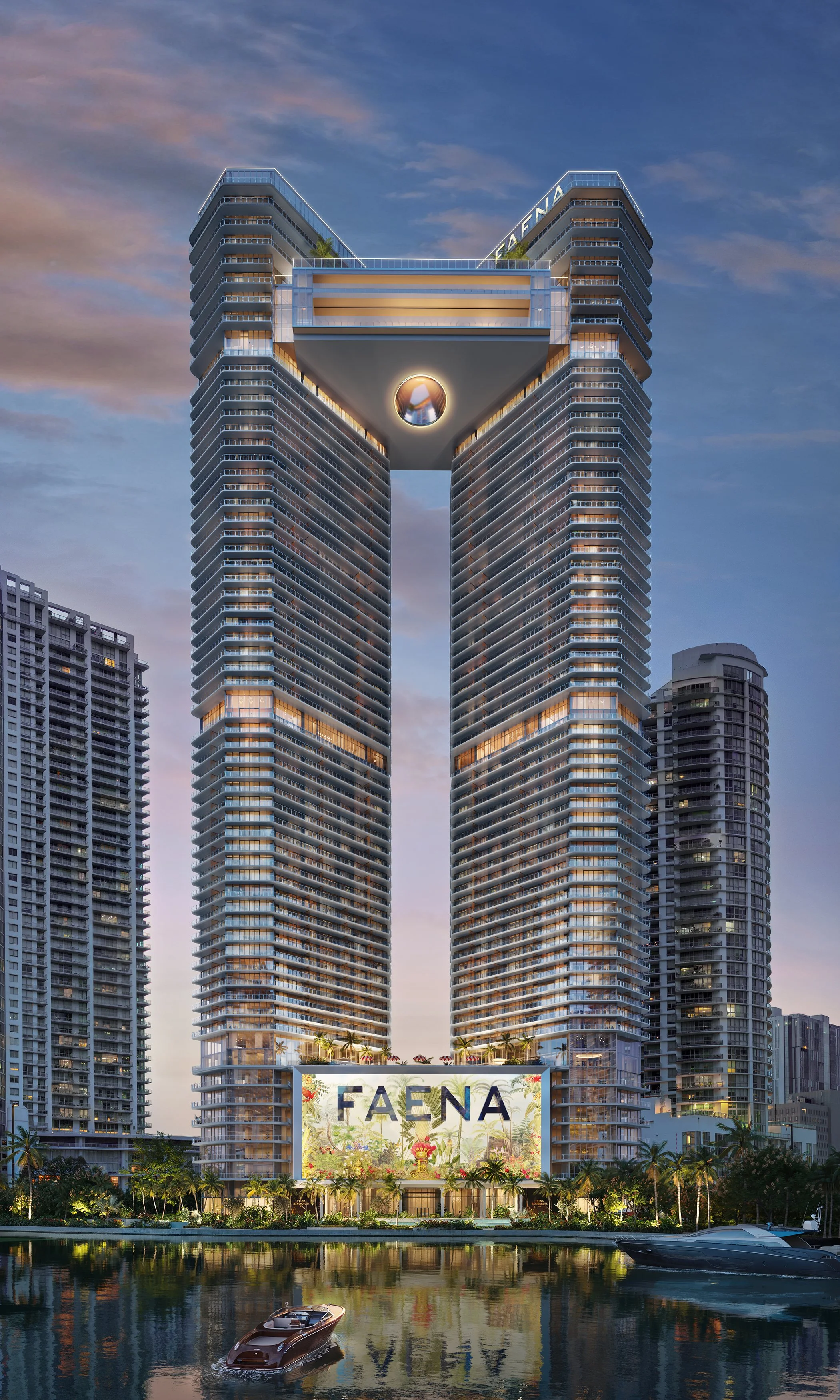
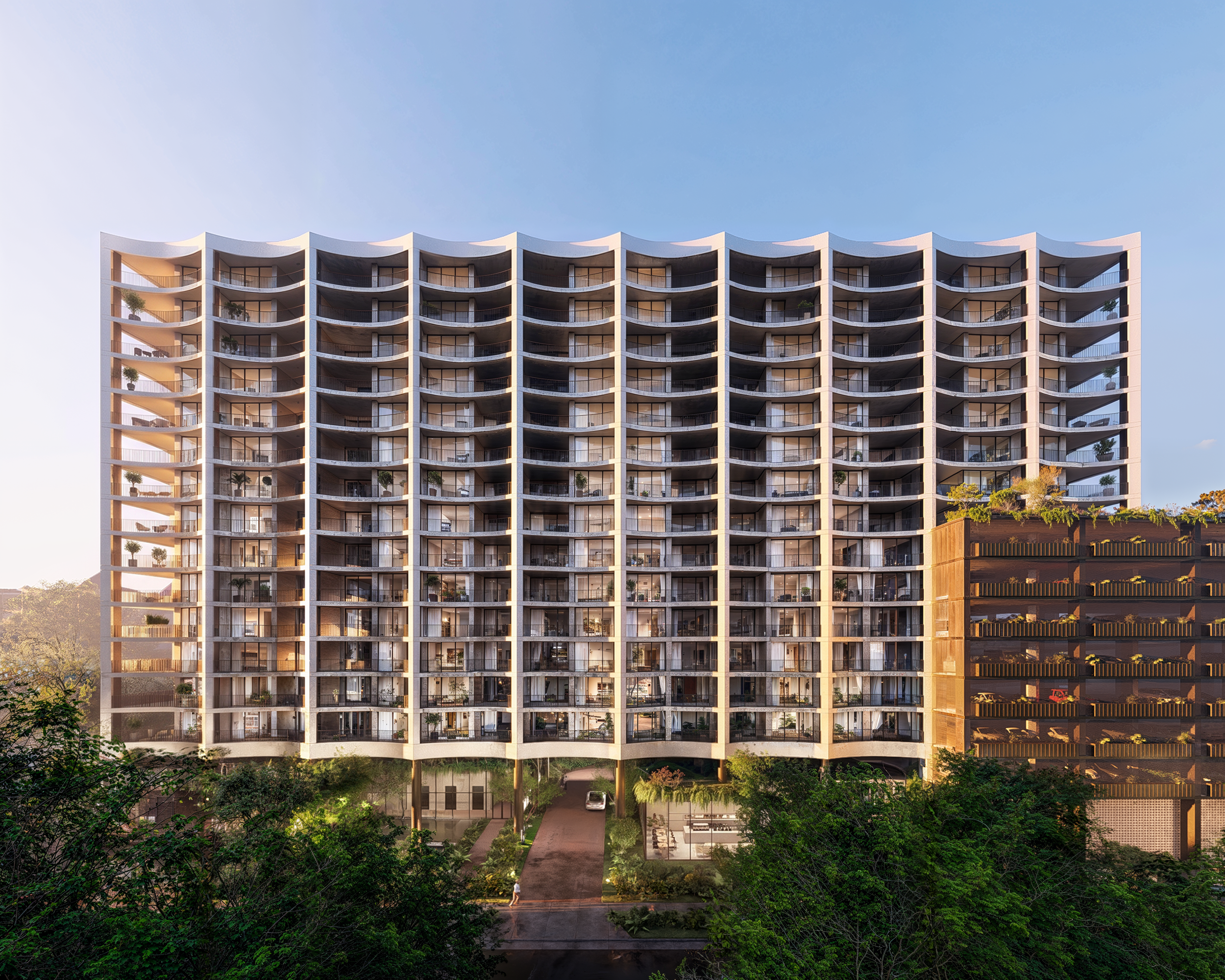
Mast Capital and BH Group have announced Raffles Residences Coconut Grove, the brand’s first standalone residential development, with 35 homes from $4.5 million and architecture by Brandon Haw.